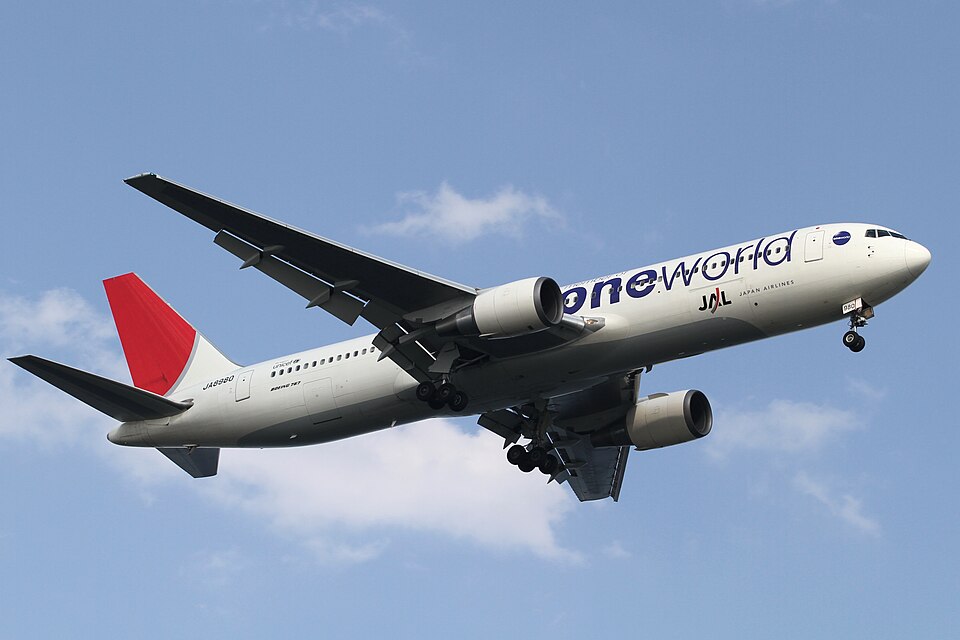
Incident Overview
On May 24, 2018, a Japan Airlines Boeing 767-300, registration JA8980, experienced an engine serious incident during climb from Kumamoto Airport. The aircraft was operating as a scheduled flight to Tokyo International Airport. At an altitude of about 7,500 feet and approximately 6 km southwest of Kumamoto Airport, the flight crew heard abnormal noise accompanied by vibration and observed on the instrument panel reduced rpm of the No. 1 (left) engine, increased exhaust gas temperature (EGT), and high engine vibration. The captain, who had been in the left seat as pilot monitoring, assumed pilot flying duties and followed the non-normal checklist for engine limit or surge or stall, setting the engine thrust to idle. The vibration and abnormal noise diminished after throttle reduction. When the captain slowly advanced the thrust lever per procedure, vibration and noise increased, prompting an immediate return to idle. The aircraft returned to Kumamoto Airport with air traffic control priority and landed safely at 16:17 JST. There were no injuries among the 217 persons on board.
Engine and Aircraft Damage
Post-flight inspection revealed significant damage to the No. 1 engine, a General Electric CF6-80C2B4F turbofan. The high-pressure turbine (HPT) stage 2 was fractured, with blade #13 broken at the shank, blade #12 fractured midway, blades #11 and #10 damaged near the tip, and all other blades having chipped tips. The low-pressure turbine (LPT) sustained extensive damage to blades and nozzles. A hole approximately 9 cm long and 2 cm wide was found in the LPT casing near stage 4. The core cowl outside the hole was undamaged. Fragments exhausted from the engine weighed about 73 kg, with the largest fragment weighing about 70 grams. The aircraft itself sustained slight damage, including rub marks and dents on the inboard and outboard flaps, horizontal stabilizer, and fairing aft of the No. 1 engine.
Ground Damage
Fragments from the engine damaged windows and roofs of buildings and windshields of vehicles on the ground near the incident site. Approximately 400 fragments were recovered. The affected area was in the vicinity of Kumamoto Airport.
Flight Data and Maintenance History
Analysis of flight data recorder and quick access recorder data showed no abnormalities before the incident. At 15:55 JST, the N2 vibration level abruptly increased to the maximum measurable value, immediately followed by N1 vibration and EGT peaking at about 950°C. N1 rpm then dropped rapidly, and N2 rpm decreased nearly simultaneously. The thrust lever was reduced to idle five seconds later. Vibration levels remained high until landing. The EGT readings after sensor damage may be inaccurate. The flight logbook and maintenance records revealed no prior malfunctions that could have contributed to the damage. The fractured HPT stage 2 blade #13 (serial number PCM80CH8) had a total time in service of 56,772 hours and 15,397 cycles, with 4,568 hours and 3,395 cycles since last overhaul. Metallurgical investigation of the blade identified a fracture surface with both fatigue and rapid fracture areas.