History of the Flight
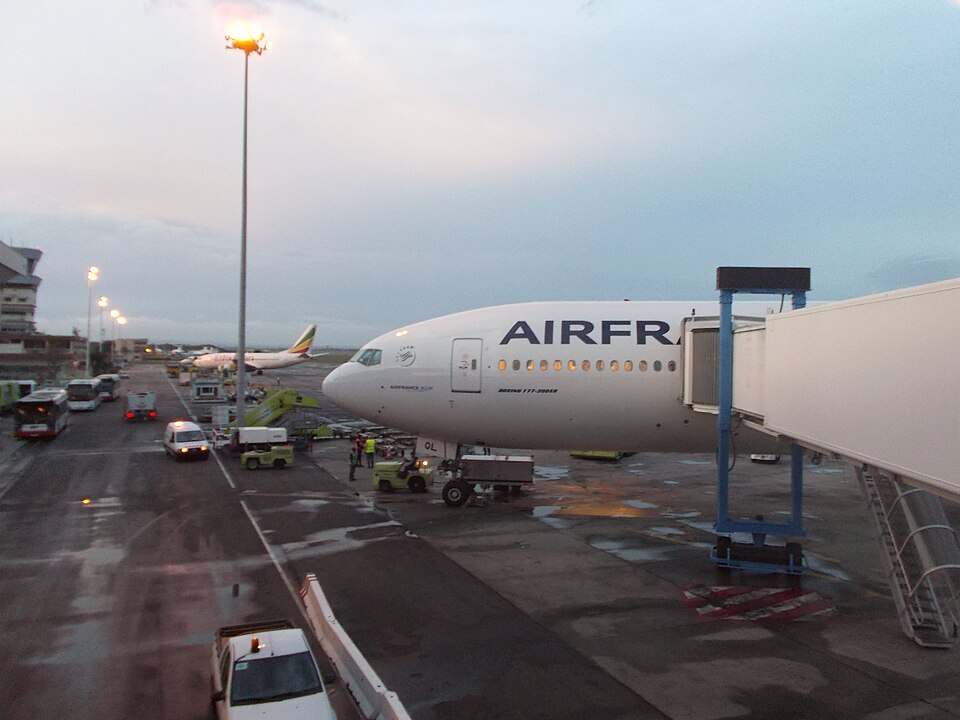
On 16 September 2018, Air France flight AF463 from Sir Seewoosagur Ramgoolam airport to Paris-Charles de Gaulle airport was operated with a Boeing 777-328ER registered F-GSQL. Due to an operating contingency, the aircraft used was not the one initially scheduled. This had an impact on the number of cabin crew, seat allocation, and travel class, disrupting flight preparation and boarding.
As thrust was applied for take-off, an in-flight retail trolley stowed at the front of the aircraft in galley G0 came out of its stowage slot, rolled down the right-hand aisle, and came to a stop at seat 39J. The trolley injured eight passengers along the way. A passenger seated in 25K, who was leaning into the aisle, suffered a serious face injury.
A doctor responded to the chief purser's appeal and attended to the injured passenger. During a teleconference between the doctor and an EMS dispatcher on the ground, it was decided that the passenger's condition did not require a diversion and that she would be taken care of on arrival. The passenger was monitored for the rest of the flight. The aircraft landed at Paris-Charles de Gaulle at 03:17 UTC, and medical services took charge at 03:28.
Additional Information
Aircraft Replacement and Configuration
The originally scheduled aircraft was replaced by F-GSQL, which had a different physical configuration than the Boeing 777-300s usually used on the route. The Operations Control Centre (OCC) controller misread the configuration catalogue, leading to an incorrect operating configuration being communicated. The intended configuration allowed for 11 cabin crew, while the communicated configuration specified 10 cabin crew but with a different distribution of pursers. As a result, the crew had one extra cabin crew member but was missing one purser. The OCC instructed the chief purser to designate an acting purser from the crew.
Pre-flight Procedures
On the day of the occurrence, the Flight Summary Sheets (FSS) were not available on the cabin crew's tablets. The chief purser found the documents in the on-board documentation cabinet upon entering the aircraft. Catering services had not completed loading, and the chief purser postponed boarding by a few minutes. The cabin crew held pre-flight briefings, but catering staff were still on board, preventing immediate boarding. The crew assisted with loading, which was not standard practice. The chief purser delegated the check of the in-flight retail trolley's lead seals to the acting purser, but due to the unavailability of the aircraft loading plan, it was agreed to perform this check in-flight to avoid further delays.
Trolley Details and Cabin Checks
The in-flight retail trolley was located at the front of the cabin opposite the right-hand aisle, locked into its stowage slot with red latches. It weighed approximately 80 kg including contents. Standard procedures require the chief purser or delegated crew member to check the integrity of lead seals by removing and replacing the trolley as part of initial aircraft checks. Before take-off, cabin crew must check their zones and report to pursers, who then report to the chief purser. The chief purser sends a "cabin ready" message to the flight crew only after receiving confirmation from all pursers that the cabin is secure and each crew member is seated and strapped in.
Chief Purser's Statement
The chief purser indicated that he and the purser were notified the day before departure about the aircraft replacement. During pre-flight, he noted that catering loading was significant and disorganized. The chief purser delegated the lead seal check to the acting purser, but agreed to perform it in-flight due to the missing loading plan. After boarding and safety demonstrations, the chief purser received reports from the two pursers and sent the "cabin ready" message to the flight crew. At the beginning of take-off, he heard a loud noise.