Incident Overview
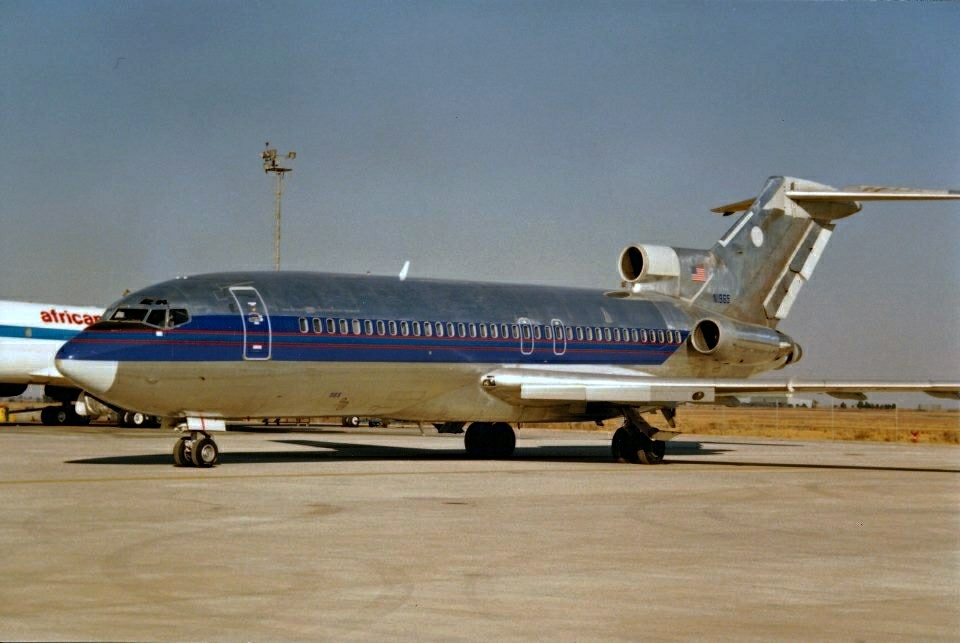
On a routine IFR flight plan, American Airlines Flight 803, a Boeing 727 registered as N1965, began a descent from flight level 190 to 9,000 feet. The first officer was at the controls. The seat belt sign was activated at 18,000 feet. While descending between cloud layers at approximately 13,000 to 12,000 feet, the captain observed a Cessna 421C, registered N1200L, converging from the opposite direction. The captain took control and executed a hard nose-over maneuver to avoid a collision.
Pilot Reports
The pilot of the Cessna reported that he was cruising in visual flight rules conditions at 12,500 feet when he saw the Boeing descending out of scattered clouds. He began descending, then entered an abrupt climbing turn to avoid a collision. Reports indicate that the aircraft passed within 50 to 100 feet of each other.
Injuries and Damage
During the evasive maneuver, an unrestrained passenger and one flight attendant sustained serious injuries. Two other flight attendants received minor injuries. After landing, wrinkles and skin damage were found on the Cessna's horizontal stabilizers.
Transponder Issue
The Cessna pilot was using his #2 transponder; air route traffic control center (ARTCC) was receiving its reply intermittently. Subsequent inspection revealed that the transponder was transmitting 3 MHz above the desired frequency (maximum limit). On April 12, 1984, the transponder was checked and written up as "#2 off freq high."
Radar Feature
After the near collision, the ARTCC controller noted that the 'all primary' feature of his radar was not in use.