Casualties unknown

USAir Flight 333 Encounters Severe Turbulence at FL 310 (N353AU)

Savannah, GA, US

On August 30, 1988, a Boeing 737-387 (registration N353AU) operated by Usair was involved in an aviation accident near Savannah, GA. Investigators recorded the probable cause as: The pilot's decision to maintain a speed higher than the recommended penetration airspeed while within 20 miles of a thunderstorm cell, which contributed to the severity of the turbulence encounter. This summary draws on records from the U.S. National Transportation Safety Board (NTSB) historical archive; 10 related events involving the same aircraft type or operator are linked below.

Sourcesthe U.S. National Transportation Safety Board (NTSB) historical archivePrimary reportUpdated 2026-06-10Data APIEditorial standards
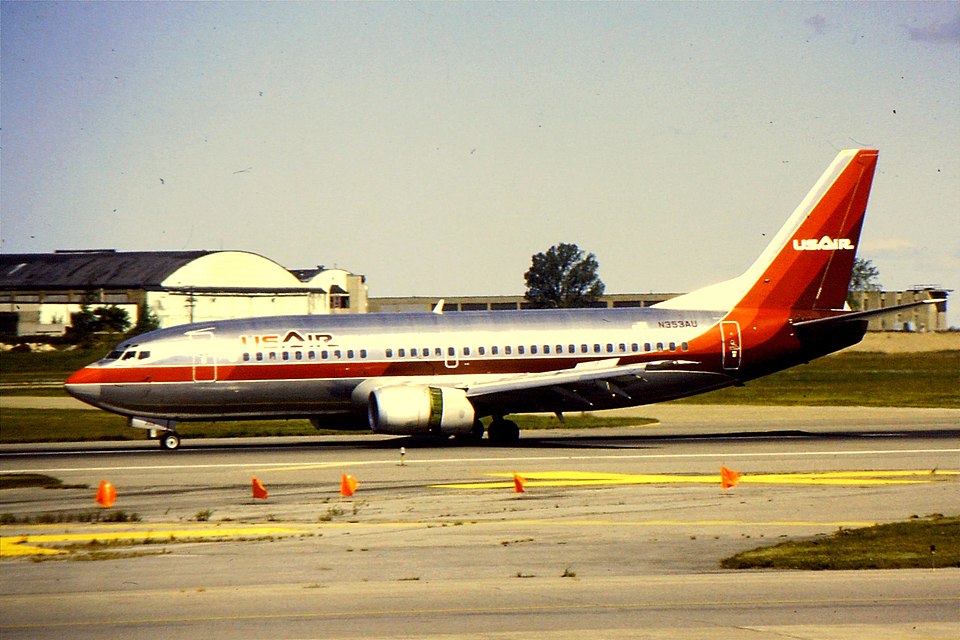
Aircraft registered N353AU
Aircraft registered N353AU. Photo: G B_NZ / CC BY-SA 2.0, via Wikimedia Commons

USAir Flight 333 experienced severe turbulence while cruising at flight level 310. The pilot observed thunderstorm activity on radar but took action to avoid the cell only after being within 20 miles of it.

What happened

While cruising at flight level 310, USAir Flight 333 encountered severe turbulence. The pilot reported observing thunderstorm activity on the airborne weather radar. The flight was within 20 miles of the cell before action was taken to avoid the encounter. The recommended penetration airspeed is .70 Mach or 280 knots. The pilot reported maintaining .76 Mach during the encounter.

The investigation

The investigation focused on the operational decisions made by the flight crew during the turbulence event. Analysis of the flight data revealed that the aircraft was traveling at a speed exceeding the recommended penetration airspeed for severe weather conditions. The pilot maintained a speed of .76 Mach, which is higher than the standard .70 Mach or 280 knots recommendation.

Findings

The primary finding relates to the timing of the avoidance maneuver and the aircraft's speed during the encounter. The flight crew identified the hazardous weather on radar but delayed evasive action until the aircraft was already within 20 miles of the thunderstorm cell. Furthermore, the aircraft was not slowed to the recommended penetration airspeed before entering the area of severe turbulence.

Safety message

Pilots should initiate avoidance maneuvers as early as possible when thunderstorm activity is detected on radar. Maintaining the recommended penetration airspeed can help reduce structural stress and improve controllability during severe turbulence encounters.

Probable cause

The pilot's decision to maintain a speed higher than the recommended penetration airspeed while within 20 miles of a thunderstorm cell, which contributed to the severity of the turbulence encounter.

Investigation report by the U.S. National Transportation Safety Board (NTSB) historical archive. Original record: https://carol.ntsb.gov/event/20001213X26441. This page is a structured re-presentation; facts and quotes are in the National Transportation Safety Board (NTSB), United States.