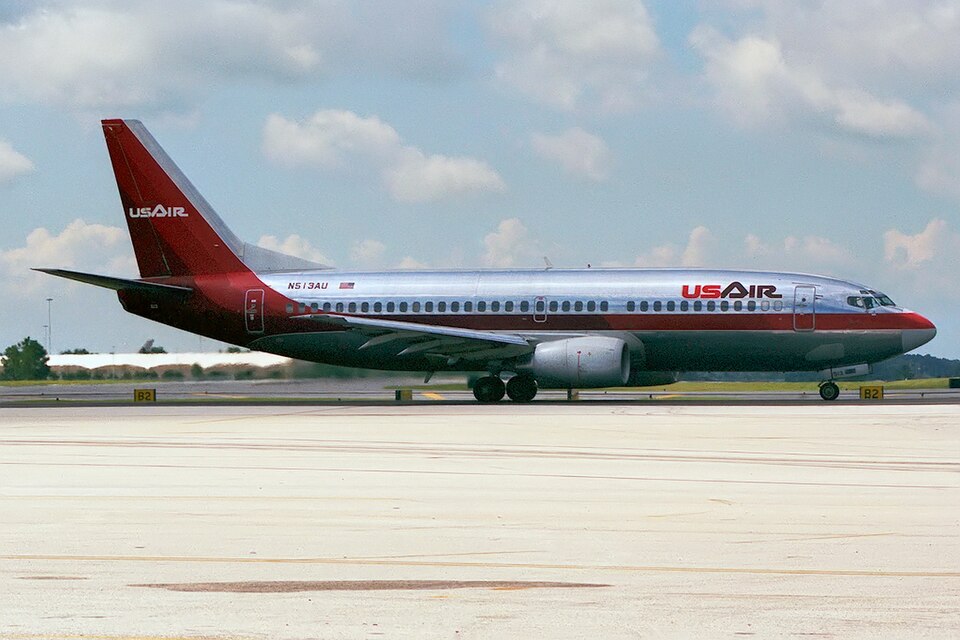
Accident Overview
On a scheduled domestic passenger flight from Chicago-O'Hare International Airport, Illinois, to Pittsburgh, Pennsylvania, the aircraft entered an uncontrolled descent and impacted terrain near Aliquippa, about 6 miles northwest of the destination airport. The flight, operating under 14 Code of Federal Regulations Part 121, had departed Chicago around 1810 with 2 pilots, 3 flight attendants, and 127 passengers. All 132 people on board were killed, and the airplane was destroyed by impact forces and fire.
Meteorological and Flight Conditions
Visual meteorological conditions prevailed for the flight, which operated on an instrument flight rules flight plan. The accident occurred while the aircraft was maneuvering to land at Pittsburgh International Airport.
Probable Cause
The official investigation determined the probable cause to be a loss of control of the airplane resulting from the movement of the rudder surface to its blowdown limit. The rudder surface most likely deflected in a direction opposite to that commanded by the pilots as a result of a jam of the main rudder power control unit servo valve secondary slide to the servo valve housing offset from its neutral position and overtravel of the primary slide.