Casualties unknown

Boeing 737-300 Aborts Takeoff After Right Engine Fire in Wichita, Kansas (N17317)

Wichita, KS, US

On March 17, 1990, a Boeing 737-300 (registration N17317) operated by Continental Airlines was involved in an aviation accident near Wichita, KS. Investigators recorded the probable cause as: Engine failure due to a disengaged lever arm of variable stator vane on a stage near the high pressure compressor area, resulting in high cycle fatigue of a stage 1 blade in the high pressure compressor. This summary draws on records from the U.S. National Transportation Safety Board (NTSB) historical archive; 16 related events involving the same aircraft type or operator are linked below.

Sourcesthe U.S. National Transportation Safety Board (NTSB) historical archivePrimary reportUpdated 2026-06-10Data APIEditorial standards
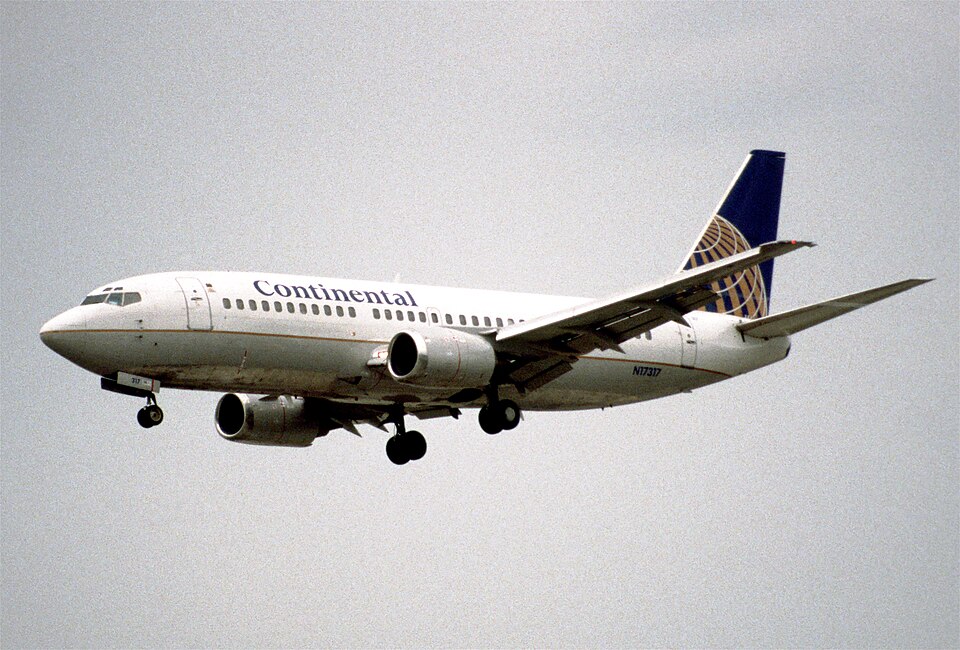
Aircraft registered N17317
Aircraft registered N17317. Photo: Aero Icarus from Zürich, Switzerland / CC BY-SA 2.0, via Wikimedia Commons

A Boeing 737-300 aborted takeoff in Wichita, Kansas after the right engine lost power and caught fire. Investigation found the failure was due to a disengaged variable stator vane lever arm, causing high cycle fatigue of a stage 1 blade. The emergency slide girt bar also suffered an overload failure during evacuation.

Event Summary

A Boeing 737-300 aborted its takeoff from Wichita, Kansas after the right engine experienced a power loss and caught fire. The crew subsequently initiated an evacuation, during which the emergency slide upper girt bar failed due to overload.

Investigation Findings

The investigation found no evidence of foreign object damage to the engine. A teardown examination revealed that the engine failure resulted from a disengaged lever arm of a variable stator vane on a stage near the high pressure compressor area. This condition led to high cycle fatigue of a stage 1 blade within the high pressure compressor, ultimately causing the power loss and fire.

Evacuation Incident

During the emergency evacuation, the upper girt bar of one of the emergency slides suffered an overload-type failure. The specific details of this failure and its consequences were not detailed in the source material.

Probable cause

Engine failure due to a disengaged lever arm of variable stator vane on a stage near the high pressure compressor area, resulting in high cycle fatigue of a stage 1 blade in the high pressure compressor.

Investigation report by the U.S. National Transportation Safety Board (NTSB) historical archive. Original record: https://carol.ntsb.gov/event/20001212X22783. This page is a structured re-presentation; facts and quotes are in the National Transportation Safety Board (NTSB), United States.