Casualties unknown

1996-06-06: Beech 1900 (N81538) — Lansing, MI

Lansing, MI, US

On June 6, 1996, a Beech 1900 (registration N81538) was involved in an aviation accident near Lansing, MI. Investigators recorded the probable cause as: Arcing of a damaged low power braided copper lead wire, with the damage having occurred during the windshield manufacturing process. This summary draws on records from the U.S. National Transportation Safety Board (NTSB) historical archive; 8 related events involving the same aircraft type or operator are linked below.

Sourcesthe U.S. National Transportation Safety Board (NTSB) historical archivePrimary reportUpdated 1781061362Data APIEditorial standards
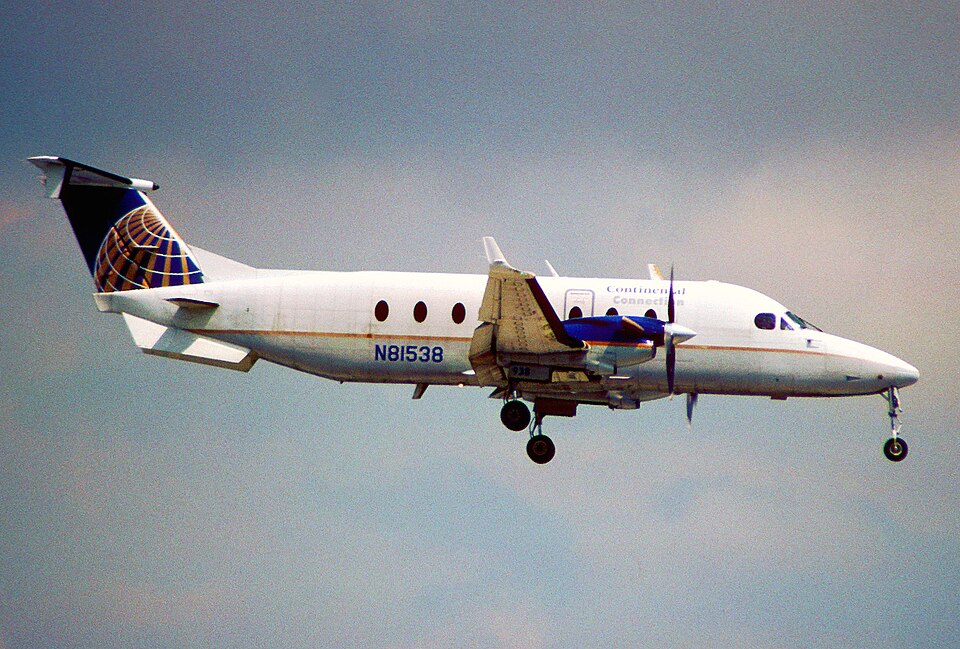
Aircraft registered N81538
Aircraft registered N81538. Photo: Aero Icarus from Zürich, Switzerland / CC BY-SA 2.0, via Wikimedia Commons

During descent, the crew detected smoke and a flame from the first officer's windscreen area. The first officer used a halon extinguisher to put out the fire. Investigation attributed the incident to arcing from a damaged wire during windshield manufacturing.

Event Narrative

The pilot-in-command reported smelling smoke while the aircraft was descending. Smoke was observed emanating from the bottom left corner of the first officer's windscreen. The first officer then used a portable halon fire extinguisher to extinguish a flame, approximately 6 to 8 inches in length, that had appeared from behind the glareshield. Following the incident, the pilot-in-command completed the approach and landing without further issues.

Examination Findings

The windshield was examined by its manufacturer. The examination determined that the source of the excessive heat, which caused the windshield and adjacent aircraft materials to smoke and ultimately burn, was arcing from a damaged low power braided copper lead wire. According to the examiner, it was their opinion that the damage to the braid wire occurred during the windshield manufacturing process.

Additionally, the origin of a fracture in the inboard glass ply was located in the bottom center post corner area near the low power terminal block. The examiner reported that the glass fracture occurred as a result of the intensive heat generated by the electrical arcing of the severed low power lead wire.

Probable cause

Arcing of a damaged low power braided copper lead wire, with the damage having occurred during the windshield manufacturing process.

Investigation report by the U.S. National Transportation Safety Board (NTSB) historical archive. Original record: https://carol.ntsb.gov/event/20001208X05914. This page is a structured re-presentation; facts and quotes are in the National Transportation Safety Board (NTSB), United States.