Incident Overview
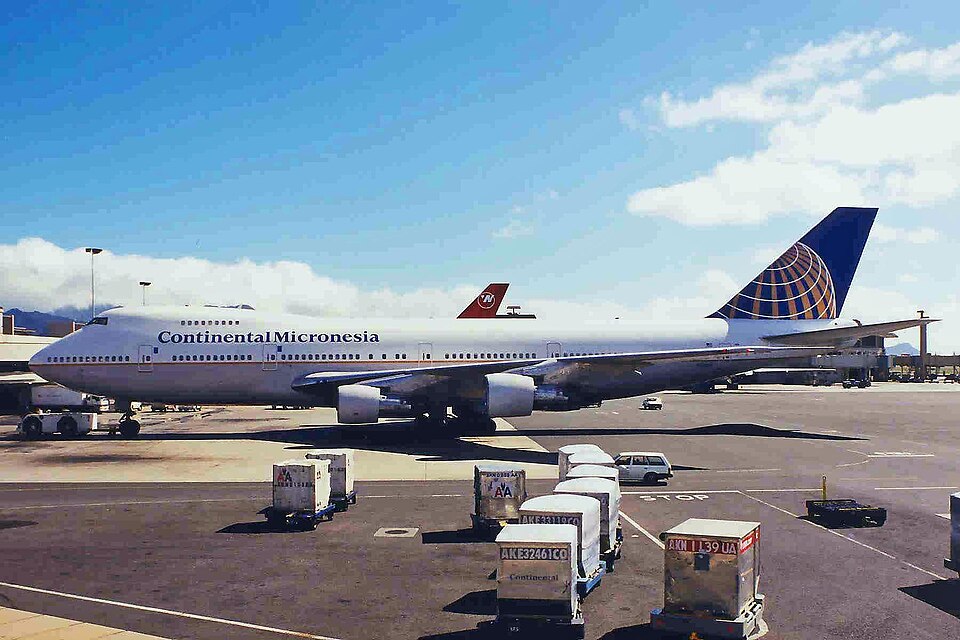
A Continental Airlines Boeing 747-238B, operating a scheduled passenger flight from Tokyo to Honolulu, encountered severe clear air turbulence (CAT) approximately 59 minutes after departure. The crew had been aware of turbulence forecasts. While cruising at Flight Level 330 in dark night conditions, the captain noted a sudden fluctuation in outside air temperature. Shortly thereafter, the aircraft entered an area of wave activity. The captain illuminated the seat belt signs, and within 5 to 8 seconds, the aircraft experienced severe CAT that persisted for roughly 10 minutes.
Meteorological Conditions
Review of meteorological data indicated two jet streams traversing the area at the time of the event. One jet stream was located at 34,000 feet with a speed of 160 knots, while the other, positioned to the south, was at 39,000 feet with a speed of 180 knots. These jet streams generally diverged in the vicinity of the encounter. A satellite image captured at the time showed a band of high-level clouds in the immediate area, oriented northwest to southeast and perpendicular to the wind flow pattern. This cloud formation resembled patterns observed in previous CAT encounters associated with transverse wave clouds.
Aftermath
Despite the severe turbulence, the aircraft continued to its destination of Honolulu, Hawaii. The cockpit voice recorder and flight data recorder provided no useful information for the event.