Incident Details
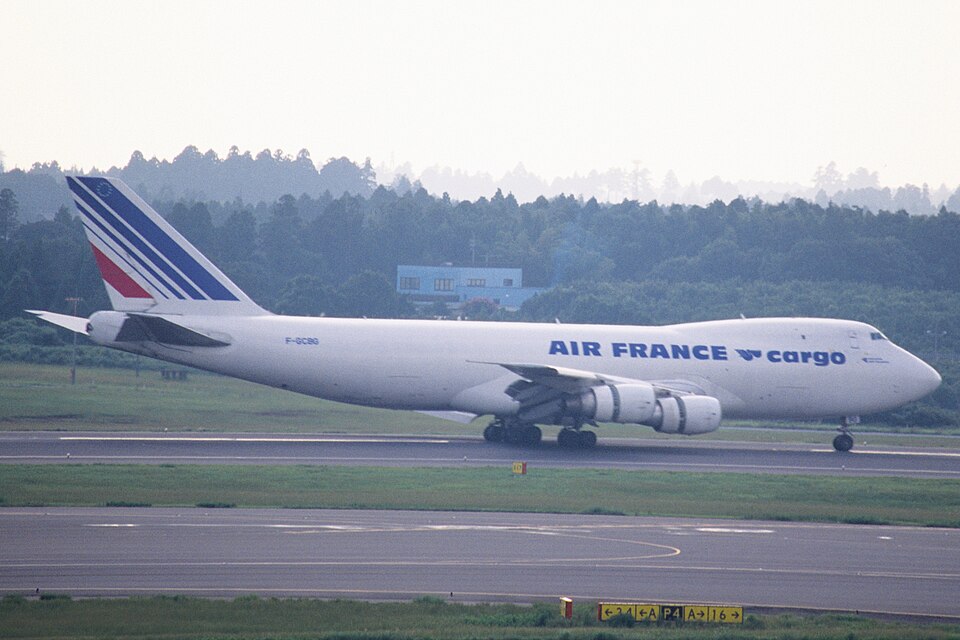
A Boeing 747 cargo aircraft completed a normal touchdown and rollout before exiting the runway onto a high-speed taxiway. The captain noticed that the aircraft was "dragging" to the right. The crew found that the need for additional power for taxi seemed excessive, prompting them to stop the aircraft and apply the parking brake.
Examination Findings
On-site examination revealed that the right outboard main landing gear trunnion was completely fractured and separated several inches inboard of the aft trunnion bearing. Visual inspection of the fractured area showed evidence of corrosion and what appeared to be a pre-existing crack on the upper portion of the outer cylinder of the trunnion. A metallurgical examination confirmed the presence of stress corrosion cracking (SCC).
Airworthiness Directives
The inspection criteria outlined in Airworthiness Directive (AD) 90-06-18 R1 required the operator to perform a visual inspection, or a visual plus eddy current inspection, of the wing landing gear at the trunnion for cracks and corrosion. AD 2001-17-25 required a detailed visual inspection using a bore scope to detect cracking and corrosion of the aft trunnion outer cylinders of the wing landing gear, with compliance required within 180 days from October 3, 2001. According to the operator's records, the bore scope inspection had not been performed because it was not due until April 3, 2002.
Historical Data
A review of Service Difficulty Reports (SDRs) revealed 19 occurrences of SCC associated with corrosion of the aft trunnion outer cylinder stressed areas. Based on these SDR data, the manufacturer issued Alert Service Bulletin (ASB) 747-32A2465 revision 1, which was mandated by AD 2001-17-25. The AD included a bore scope inspection because SCC propagation was internal on the cylinder and not readily detectable by visual or eddy current methods as required by the original AD 90-06-18 R1.