Casualties unknown

2003-01-11: Boeing 757-222 (N551UA) — United Airlines — Salt Lake City, UT

Salt Lake City, UT, US

On January 11, 2003, a Boeing 757-222 (registration N551UA) operated by United Airlines was involved in an aviation accident near Salt Lake City, UT. Investigators recorded the probable cause as: the arcing wires in the lavatory sensor that resulted in the subsequent fire. This summary draws on records from the U.S. National Transportation Safety Board (NTSB) historical archive; 12 related events involving the same aircraft type or operator are linked below.

Sourcesthe U.S. National Transportation Safety Board (NTSB) historical archivePrimary reportUpdated 1781061362Data APIEditorial standards
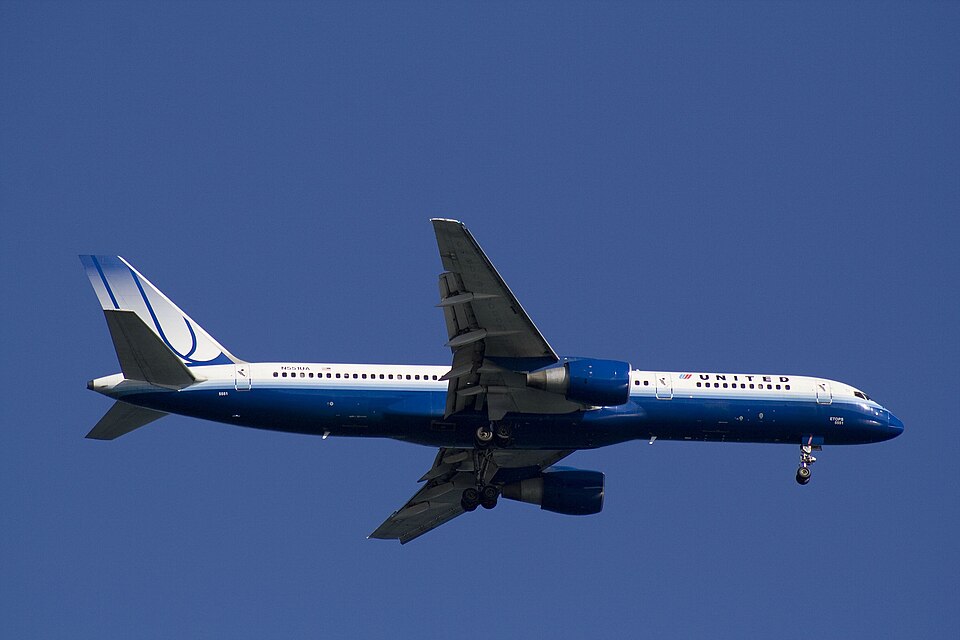
Aircraft registered N551UA
Aircraft registered N551UA. Photo: Luciof / CC BY-SA 3.0, via Wikimedia Commons

A passenger jet diverted to Salt Lake City after a fire in an aft lavatory. Examination revealed a melted water level sensor and arcing in electrical wiring.

Incident Summary

During cruise at 37,000 feet, approximately 95 nautical miles south of Salt Lake City, a flight attendant reported a fire in the left aft lavatory. Another flight attendant was actively suppressing the flames with a Halon extinguisher. The captain declared an emergency, requested priority handling, and subsequently landed without further incident.

Examination

Post-flight inspection of the aircraft revealed damage to the lavatory toilet water level sensor. The sensor was charred and melted, with the top left corner of its circuit board consumed. Several wires attached to the circuit board at the melted area were also melted and consumed, including a 115-volt AC input wire and a 28-volt DC ground wire. The left side of the circuit relay, adjacent to the consumed portion of the board, exhibited melting and had melted solder on its exterior. Additionally, the left hexagon-shaped mounting screw for the relay was melted.

Findings

The manufacturer determined that the melting point of the screw was between 2,550 and 2,650 degrees Fahrenheit. The investigation team concluded that for such temperatures to occur, one of the wires in the area of the left screw must have arced.

Investigation report by the U.S. National Transportation Safety Board (NTSB) historical archive. Original record: https://carol.ntsb.gov/event/20030116X00075. This page is a structured re-presentation; facts and quotes are in the National Transportation Safety Board (NTSB), United States.