No fatalities

Flight Crew Aligns with Taxiway During Visual Approach (N368SW)

Seattle, WA, US

On February 24, 2004, a Boeing 737-300 (registration N368SW) was involved in an aviation accident near Seattle, WA. No fatalities were reported. Investigators recorded the probable cause as: The First Officer's misidentification of the parallel taxiway as the active runway, resulting in the need for a sidestep maneuver while on short final for a full-stop landing. This summary draws on records from the U.S. National Transportation Safety Board (NTSB) historical archive; 8 related events involving the same aircraft type or operator are linked below.

Sourcesthe U.S. National Transportation Safety Board (NTSB) historical archivePrimary reportUpdated 2026-07-04Data APIEditorial standards
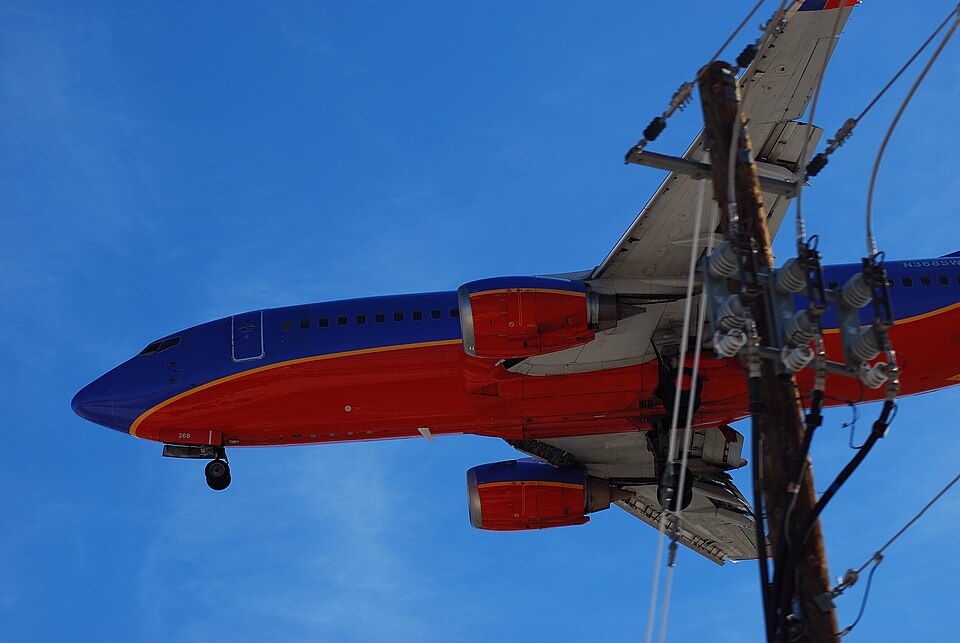
Aircraft registered N368SW
Aircraft registered N368SW. Photo: Eddie Maloney from North Las Vegas, USA / CC BY-SA 2.0, via Wikimedia Commons

During a Bay Visual Approach to Runway 16 Right, the First Officer lined up on Taxiway Tango instead. After spotting a yellow X marker, he sidestepped to the correct runway and landed safely.

Incident Overview

While west of the airport, the flight crew received clearance for the Bay Visual Approach to Runway 16 Right. The First Officer, who was flying, executed a right turn over Elliott Bay and aligned the aircraft with what he believed to be Runway 16 Right. In reality, the surface was Taxiway Tango. At approximately one mile from the end of the taxiway, the First Officer observed a yellow X marker located just off the northern end of the intended landing surface. Recognizing the error, he initiated a sidestep maneuver toward Runway 16 Right. The approach and landing on Runway 16 Right were completed without further incident, and the aircraft taxied to the gate for normal passenger deplanement.

Details from Investigation

According to recorded radar tracking data, at the time the First Officer began the sidestep turn, the aircraft was approximately 600 feet above ground level. The investigation noted that the size and shape of Taxiway Tango closely resembled a runway, contributing to the First Officer's misidentification. Glare on the wet surfaces prevented him from clearly seeing any markings identifying the surface as a taxiway, although he was eventually able to discern the Runway 16 Right identification markings. The Captain had correctly identified the runway when the aircraft first rolled out on final approach; however, flight deck distractions kept him from recognizing that the First Officer was lined up on the taxiway until the sidestep was initiated.

All Boeing 737-300 accidents →

Frequently asked questions

What happened in the 24 Feb 2004 Boeing 737-300 accident near Seattle, WA?

During a Bay Visual Approach to Runway 16 Right, the First Officer lined up on Taxiway Tango instead. After spotting a yellow X marker, he sidestepped to the correct runway and landed safely.

Were there any fatalities in the 24 Feb 2004 Boeing 737-300 accident?

No fatalities were recorded in this accident.

What aircraft was involved and where did it happen?

The accident on 24 Feb 2004 involved a Boeing 737-300, registration N368SW, at Seattle, WA.

What was the probable cause of the accident?

The First Officer's misidentification of the parallel taxiway as the active runway, resulting in the need for a sidestep maneuver while on short final for a full-stop landing. Factors include sun-glare from wet paved surfaces, a visual illusion created by the size and shape of the taxiway, and the Captain's failure…

Investigation report by the U.S. National Transportation Safety Board (NTSB) historical archive. Original record: https://carol.ntsb.gov/event/20040311X00316. This page is a structured re-presentation; facts and quotes are in the National Transportation Safety Board (NTSB), United States.