Incident Overview
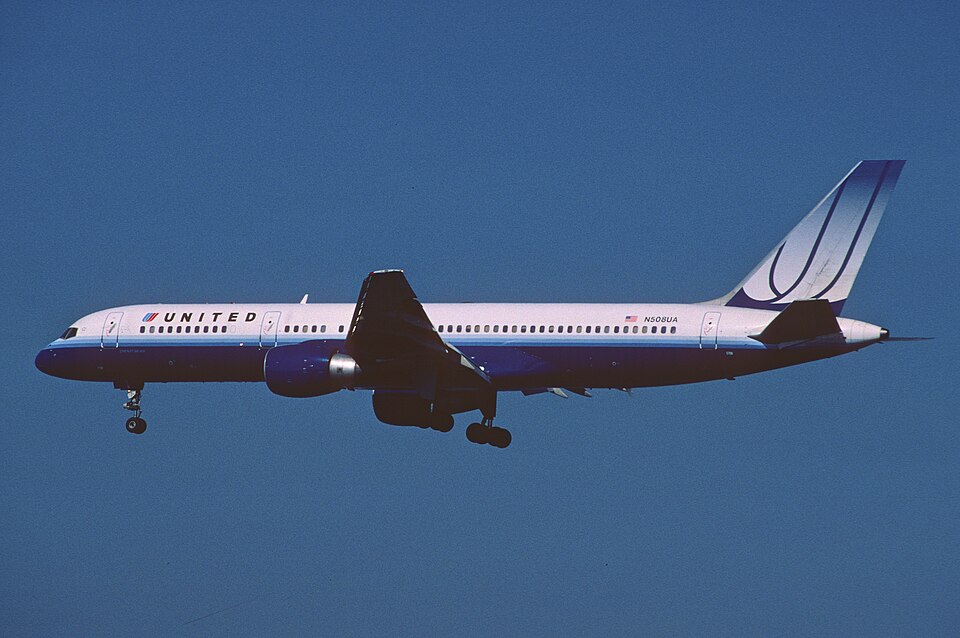
On January 13, 2008, at approximately 1929 Pacific standard time, a Boeing 757-222 (registration N508UA) operated by United Airlines was being towed by company maintenance personnel and collided with a stationary Bombardier Inc. CL-600-2C10 (registration N705SK) operated by SkyWest Inc. doing business as United Express at San Francisco International Airport (SFO), San Francisco, California. The Bombardier aircraft was operating as flight 6398 under Title 14 Code of Federal Regulations Part 121 scheduled passenger service. There were no injuries to the two airline transport pilots, two flight attendants, and 55 passengers on board the Bombardier, nor to the one maintenance personnel on board the Boeing. Both airplanes were substantially damaged. Night visual meteorological conditions prevailed, and an instrument flight rules flight plan was filed for the Bombardier with the intended destination of Boise Air Terminal/Gowen Field, Boise, Idaho.
Witness Accounts
Three witnesses located adjacent to terminal 3, gates 79 and 80, reported observing the Boeing 757 push back from gate 80 and subsequently collide with the Bombardier, which was stationary and in the final stages of disconnecting the tug from the airplane. The witnesses stated that prior to the collision, the ground crew from the Bombardier attempted to stop the tug operator of the Boeing 757. Two witnesses added that they did not observe anyone acting as a wing walker for the Boeing 757.
Flight Crew Statements
The captain of the Bombardier reported that after being cleared to push back onto taxiway Alpha from gate 79 by ground control, the ground crew proceeded to push back the airplane with wing walkers on both sides. During the final stages of pushback, both engines were running with the brakes set, and the ground crew was cleared to disconnect the tug. A few seconds later, the tug driver expressed concern about another aircraft pushing back from an adjacent gate. The captain saw the other aircraft and asked the first officer to verify clearance with the Boeing 757. The first officer stated that if the other aircraft stopped, "it would not be an issue." Subsequently, the captain observed the Bombardier's ground crew running toward the Boeing 757 just prior to the collision.
The first officer of the Bombardier reported that after pushback, they were setting the parking brake when the ground crew notified them of the Boeing 757 pushing back. The first officer stated the ground crew started running toward the Boeing 757 just prior to the collision and added that he did not see wing walkers for the Boeing 757.
Ground Crew Statements
Written statements from the Bombardier's ground crew revealed that the left and right wing walkers were disconnecting the tug as they observed the Boeing 757 being pushed back toward their position and started running toward the tug operator prior to the collision. The ground crew added that the Boeing 757 had no wing walkers during their pushback sequence.
Tug Operator and Flight Deck Employee Statements
The United Airlines tug operator reported that he was cleared to push back from gate 80 onto taxiway Alpha. During pushback, a United employee in the Boeing 757 flight deck asked if the tow bar had broken. The tug operator stopped to see and saw United Express ramp workers running toward him. He added that he was "continuously monitoring ground frequency" and did not hear any references to Tug 80. He reported to SFO Airport Authority shortly after the collision that during pushback, he was looking over his shoulder and did not see the other aircraft push back from gate 79.
The United employee in the flight deck stated he was operating the brakes during pushback. As the airplane approached the centerline of taxiway Alpha, he felt "several bumps" and asked the tug operator if he had broken the tow bar or hit something.
Aircraft Damage
Examination by a Federal Aviation Administration inspector revealed that the Bombardier exhibited damage to the vertical stabilizer, rudder, and elevator. The Boeing 757 sustained damage to the rudder and elevator. The SFO Airport Authority reported that the tug pushing the Boeing 757 remained connected by the tow bar and was facing away from the airplane.
Air Traffic Control Communications
Review of communication recordings between the San Francisco Air Traffic Control Tower and both aircraft revealed that the United maintenance crew initially transmitted at 1927:54 requesting pushback onto Alpha. The controller issued a clearance. At 1928:35, the Bombardier flight crew requested pushback from gate 79 with Yankee and was cleared onto taxiway Alpha. The recordings revealed the controller did not advise either aircraft of pushback from adjacent gates.
According to the SFO ATCT Quality Assurance Review report, the ground controller believed there was room for both aircraft to push back and did not foresee a traffic conflict.
Procedures and Manuals
According to the letter of agreement between the San Francisco Tower and San Francisco Airport Commission, controllers are required to ensure safe movement and separation of aircraft and vehicles on movement areas, and provide advisory service as practicable on non-movement areas.
SFO ATCT Order 7220.2G states that aircraft pushing back onto taxiway Alpha shall be instructed "push back onto taxiway Alpha approved." Workload permitting, traffic advisories in the non-movement area would be given, using only advisory phrases.
Review of United Airlines Maintenance Operating Procedures Manual revealed that for towing, aircraft will be pushed back with the tractor facing the aircraft (nose to nose). Maintenance towing may be accomplished with the tractor connected tail to nose only by properly trained A&P licensed technicians. When wing walkers are used, they are responsible for their assigned areas. If the tractor operator elects to move the airplane without assistance, they are responsible for the operation. In close quarters, the operator must have two assistants at each wing tip and, if the tail is not visible, a third at the tail. Only one person relays signals to the operator.
Review of United Airlines training records revealed that both the maintenance person on board the Boeing 757 and the tug operator had complied with company training requirements for towing and repositioning the aircraft.