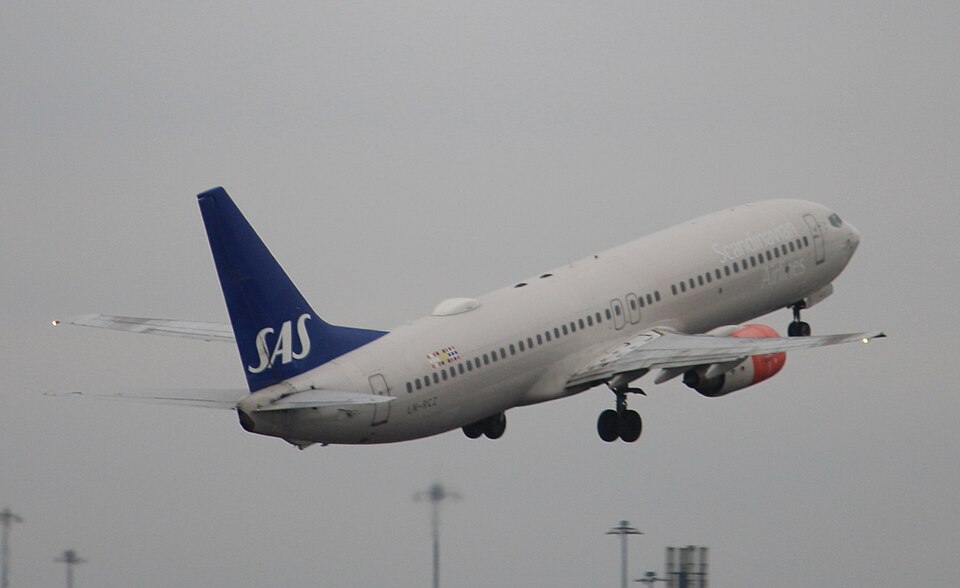
Incident Overview
On 25 May 2015, a Boeing 737-800 operated by Scandinavian Airlines System (SAS) as flight SAS4425 was involved in an aviation incident at Oslo Airport, Gardermoen. The aircraft, registration LN-RCZ, was on a scheduled flight. The incident was investigated by the Norwegian Safety Investigation Authority (Statens havarikommisjon for transport, SHT), which published its report (SL 2016/06) in April 2016.
Report Contents
The report details the sequence of events from flight preparations through approach and landing, as well as the immediate aftermath. It includes information on the flight crew of SAS4425, the personnel in the control tower and approach control, and the aircraft itself, a Boeing 737-800. Weather conditions are described, and a NOTAM regarding slippery concrete on the runway was issued. The report also presents friction measurements taken at the airport.
Key Findings from the Report
The investigation examined the runway mode selection, the use of runway 01L/19R, and the re-asphalting project that had taken place. The crew's landing calculations, use of thrust reversers, flap settings, and approach briefing were analyzed. The report also discusses the coordination between the control tower, approach control, and area control, as well as the visual step-over to the parallel runway.
Aftermath and Actions
Following the incident, SAS implemented internal actions, and Oslo Airport took steps to address runway conditions. The report includes a review of previous similar incidents and programs for runway excursion prevention.
Conclusion
The report's conclusion (not reproduced in full here) identifies significant safety investigation results. The probable cause, as stated in the source, is not explicitly provided in the available excerpt.