Incident Details
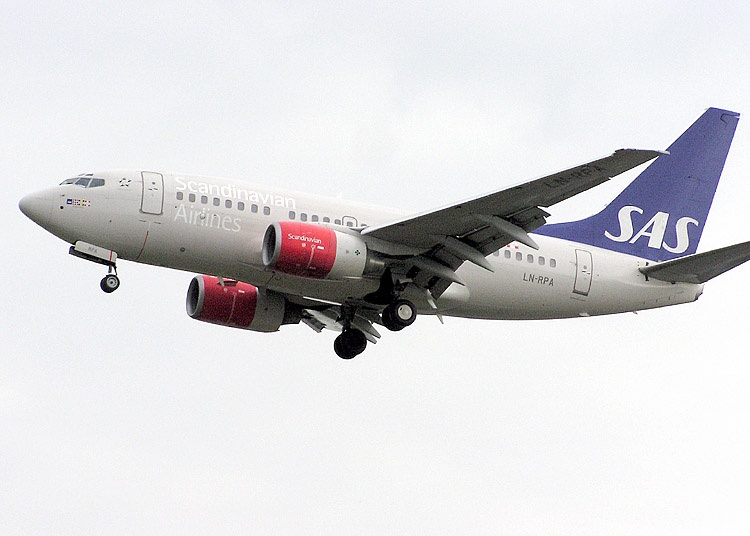
On 25 March 2015 at 0732 UTC, during the final approach to runway 01R at Oslo Airport, Gardermoen (ENGM), the flight crew of SAS4403 encountered an abnormality with the elevator control. The aircraft, a Boeing 737-600 registered LN-RPA operated by Scandinavian Airlines System, was on a scheduled flight from Tromsø Airport (ENTC). The pilot flying reported that after disengaging the autopilot at approximately 700 feet, the elevator control felt unusual. At 20 feet radio altitude, when initiating the flare, the control column resisted movement and felt locked. The pilot applied a force of 58 daN (130 lbs) to break it free, approximately four times the normal maximum of 12-16 daN. A normal landing was achieved. No injuries or aircraft damage occurred.
Flight and Weather Conditions
The flight was the first of the day for the aircraft and crew. At Tromsø, heavy snowfall and strong winds were present. The aircraft was deiced between 0532 and 0543 UTC using a two-step process with Type I and Type II fluids. The outside temperature during deicing was -1°C. The flight to Oslo was normal at FL400 with an outside temperature of -55°C. The approach at Gardermoen was in daylight and visual meteorological conditions (VMC) with light snow and light winds.
Post-Flight Inspection
After landing, the crew contacted technical services and performed a control column freedom check. The aircraft was removed from service. Inspection revealed a large amount of deicing fluid on the elevator balance panels. The elevator pitot-static system was flushed, yielding little water. A control column power force test was conducted and found to be within limits.
Comparison with Previous Incident
The investigation noted similarities to a serious incident on 26 December 2012 at Kittilä Airport, Finland, involving a Boeing 737-800 (LN-DYM). In that case, ice from deicing fluid ingress into the tail cone jammed the elevator PCU arms, causing a severe pitch-up. Both incidents occurred after heavy snowfall and deicing. The Norwegian Safety Investigation Authority (SHT) had previously issued safety recommendations (SL 2015/01T, 02T, 03T) regarding the risk of elevator system jamming on Boeing 737 aircraft. Boeing implemented procedural changes: setting elevator trim to the takeoff position during deicing and applying fluid from front to rear on the elevator surface. SHT simulations showed reduced but still significant fluid ingress.
Safety Actions
In response to the Kittilä incident, Boeing issued revised procedures aimed at minimizing fluid entry into the tail cone. The SHT questioned whether the residual risk complied with certification requirements. Boeing acknowledged the findings but did not fully implement the safety recommendations as intended.