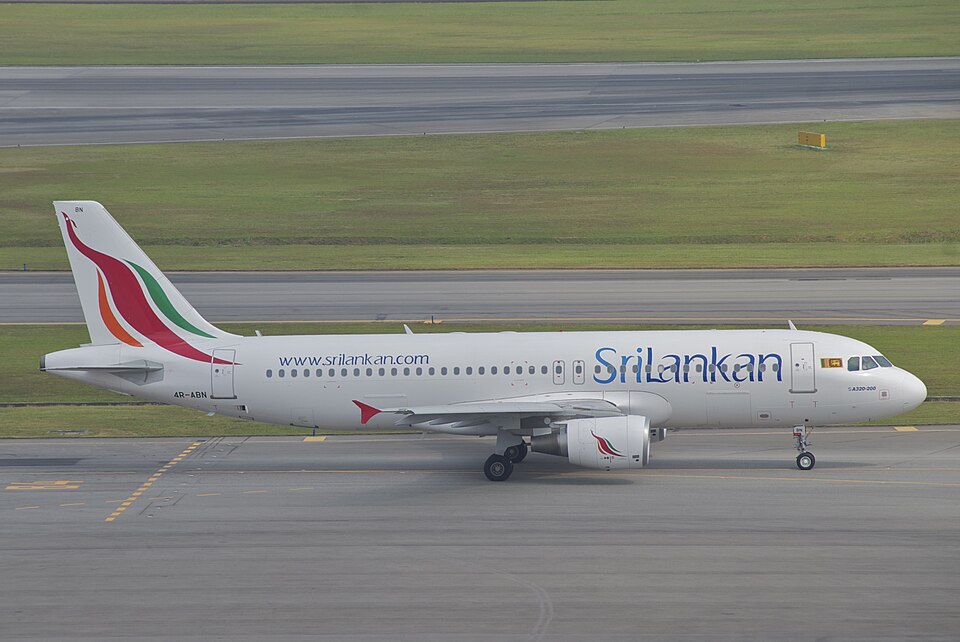
Synopsis
On 17 December 2022, SriLankan Airlines flight UL707, an Airbus A320-214 bearing registration 4R-ABN, experienced a lateral runway deviation during landing at Seychelles International Airport (FSIA). The incident occurred at approximately 01:24 UTC (05:24 local time) during night conditions. The aircraft was operating a scheduled round trip from Bandaranaike International Airport, Katunayake, Sri Lanka (VCBI) to Seychelles and back.
Factual Information
The flight departed VCBI at 2110 UTC on 16 December 2022. The flight was uneventful until the approach into FSIA. The Pilot-in-Command (PIC) was the pilot flying (PF) and the First Officer (FO) was the pilot monitoring (PM). Weather was prevalent throughout the final approach path.
History of Flight
On the first approach, at approximately 700 feet just prior to minima, the PF disconnected the autopilot and continued. The Precision Approach Path Indicator (PAPI) showed three whites and then four whites, which the FO called out, followed by an "unstable go around" call. The PF initiated a go-around.
On the second approach, air traffic control cleared the flight for an ILS Z approach to Runway 31. At about 400 feet, the aircraft deviated from the centerline but was corrected. The FO called out the deviation. The aircraft continued on profile until flare height. During the flare, the aircraft drifted to the right just prior to touchdown. The FO called "Go around," but as the aircraft was already touching down right of the centerline, the PIC landed and brought the aircraft back to the centerline, stopping on the runway.
Injuries and Damage
No injuries to persons were reported. The aircraft sustained no damage. Two runway edge lights were damaged.
Personnel Information
The PIC was a 56-year-old male holding a valid Airline Transport Pilot Licence (ATPL) issued by the Director General of Civil Aviation Sri Lanka. He had over 18,300 total flight hours, including over 11,000 as pilot-in-command and over 3,000 on the A320. The FO held a valid ATPL and was the pilot monitoring.
Aircraft Information
The aircraft was an Airbus A320-214, manufacturer serial number 4869, registered as 4R-ABN. Registered owner was ALC A320, 4869, LLC, United States of America. Operator was SriLankan Airlines Ltd.
Meteorological and Aerodrome Information
The incident occurred at night. Weather conditions included precipitation along the final approach path. The aerodrome was Seychelles International Airport, runway 31.
Flight Recorders
Digital Flight Data Recorder (DFDR) information was analyzed. Cockpit Voice Recorder (CVR) data was not mentioned in the source.
Other Information
The Civil Aviation Authority of Sri Lanka appointed an investigation board. The Bureau of Enquiry and Analysis for Civil Aviation Safety (BEA-France) appointed an accredited representative, an adviser from Airbus, and an adviser from EASA. The investigation aimed to prevent recurrence.
Findings
Findings listed in the source include that the aircraft was airworthy and the flight crew were licensed and qualified. No probable cause was stated in the provided excerpt.