History of the Flight
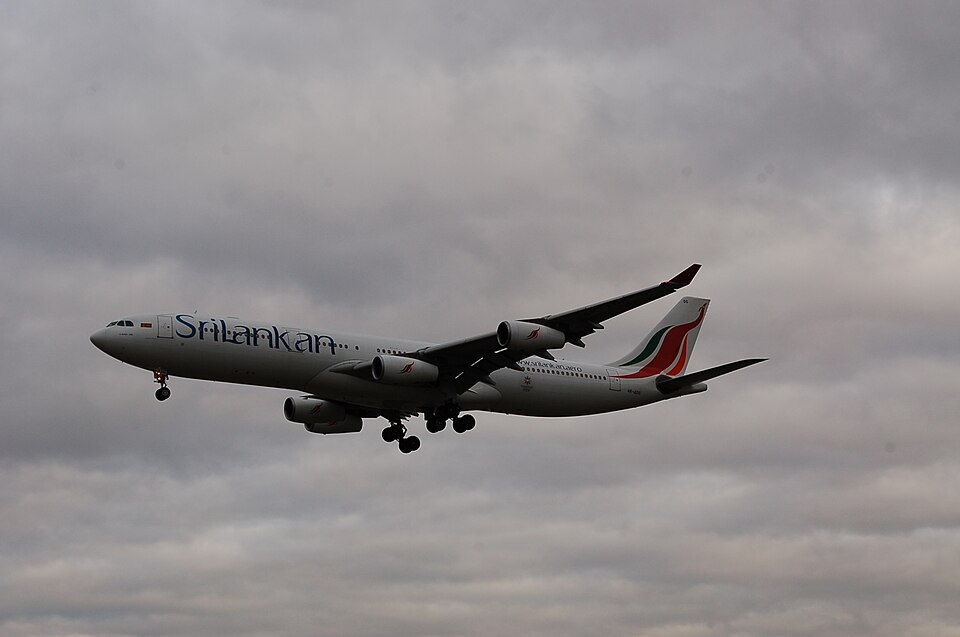
The aircraft, an Airbus A340-313 registered 4R-ADG, was scheduled to operate a commercial passenger flight from London Heathrow Airport to Colombo International Airport, Sri Lanka. The flight deck crew consisted of the commander, the co-pilot, and a cruise captain who was not on the flight deck during much of the pre-flight preparation. The pilots initially expected to use the full length of Runway 09R for departure. However, when the co-pilot requested ATC clearance, they were asked if they could accept a departure from the SB7 intersection. After discussion, the operating pilots accepted this intersection.
A Regulated Takeoff Weight (RTOW) chart for departure from SB7 was not available in the aircraft. The commander referred to a chart for a similar length runway at another aerodrome, though the crew did not recall which aerodrome. The commander calculated takeoff speeds and the flexible temperature (TFlex), which the co-pilot checked, and the data was entered directly into the Multi-function Control and Display Unit (MCDU). The co-pilot initially suggested using full power instead of a flexible takeoff, but after discussion, the crew elected to proceed with the flexible temperature takeoff. The commander indicated that the TFlex used was in the low to mid-thirties. The aircraft lined up on Runway 09R via the SB7 intersection and commenced takeoff.
Observers noted the aircraft lifted off closer to the end of the runway than expected. The aerodrome controller assessed the liftoff as significantly closer than normal, and a photographer outside the airport perimeter thought the aircraft was noticeably lower than usual during initial climb. Both operating pilots considered the takeoff normal, while the cruise captain on the jump seat sensed slightly slow acceleration and suggested full power, but neither operating pilot heard that suggestion. The takeoff was completed using flexible thrust, and the remainder of the flight to Colombo proceeded without further incident.
Performance Calculation
The airline instructs pilots in two methods of calculating takeoff performance. The first uses RTOW charts, each unique to a specific runway and intersection. The second uses quick reference tables (QRT) in the Flight Crew Operating Manual (FCOM), which are generic and allow consideration of runway length, slope, pressure altitude, wind, and obstacles. The QRT instructions state that flexible temperature determination is possible only when no obstacle is on the flight path.
For the conditions at the time, the investigation calculated a required takeoff run of 2,268 m and a maximum allowable TFlex of 38°C. The declared takeoff run available was 2,854 m. The airline had not provided guidance on obtaining performance data if neither standard method could be used.
Recorded Information
A delay in reporting the incident meant the flight data recorder (FDR) data was overwritten. The operator provided the optical disk from the quick access recorder (QAR), but QAR system issues also prevented data retrieval for the takeoff. Analysis of Heathrow ground movement radar indicated the aircraft became airborne at a position about 2,650±50 m from the SB7 intersection. The takeoff data entered into the MCDU was not recorded by the FDR or QAR.
Analysis
The crew lacked RTOW charts for the SB7 intersection and used a chart for a different runway of comparable length. Data from a different runway may not be correct because obstacles relevant to the runway in use are not considered. If the crew had used the QRT method, they would have been required to use full thrust due to obstacles on the Runway 09R takeoff path. It is possible the aircraft met performance class A requirements, as the commander recalled the TFlex was less than the maximum allowable, suggesting sufficient thrust. However, the method used was not in accordance with the airline's training.
Safety Action
As a result of this incident, the airline instructed its pilots that takeoffs must not commence without relevant takeoff data. It specified that a customized RTOW chart can be obtained from the dispatch center, or if unavailable, the QRT may be used if accurate obstacle data is available. Two safety recommendations were made to improve recording of takeoff performance data: one to EASA and one to ICAO.