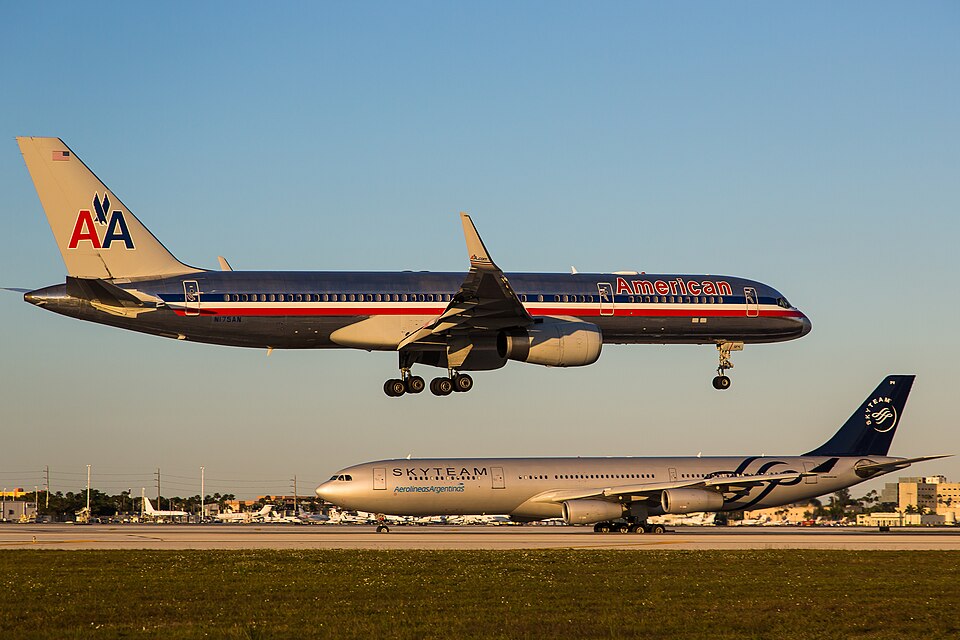
Runway Incursion at Barcelona Airport Avoided by Boeing 767 Go-Around

Casualties unknown • Aeropuerto de El Prat (Barcelona), ES

A Boeing 767-300 on final approach executed a go-around at Barcelona Airport after an Airbus 340-300 crossed the active runway during a period of poor controller coordination.

What happened

On 5 July 2014, at approximately 06:52 local time, a runway incursion occurred at Barcelona Airport (LEBL) involving an Airbus 340-300, registration LV-FPV, operated by Aerolíneas Argentinas, and a Boeing 767-300, registration VQ-MSX, operated by Utair.

The Airbus 340-300 was taxiing toward the holding point for runway 25R. Due to a non-standard flight schedule and a request to use a non-preferred runway, the aircraft was required to cross runway 02 multiple times. While taxiing through the intersection of runway 02 and taxiway M, the crew of the Airbus 340-300 received clearance to cross the runway. At the same moment, the Boeing 767-300 was on final approach for landing on runway 02.

Upon detecting the presence of the Airbus 340-300 on the runway, the crew of the Boeing 767-300 initiated a go-around maneuver. The minimum horizontal separation between the two aircraft was 1.15 NM, with a minimum vertical separation of 200 ft. There were no injuries and no damage to either aircraft.

The investigation

The CIAIAC investigation focused on the coordination between various air traffic control (ATC) stations during the transition from the nighttime to the daytime runway configuration, which occurs daily at 07:00. The investigation examined the hand-off processes between the North, Central, and South Ground controllers, as well as the communication between the supervisor and the controllers.

Investigators analyzed the use of phraseology and the management of runway stop bars. It was noted that the Central Ground controller authorized the crossing of the runway and subsequently turned off the stop bars, despite the runway being active. The investigation also reviewed the impact of the aircraft's unusual departure time and its requirement to cross the active runway multiple times due to the specific runway assignment.

Findings

  • The incident was caused by a lack of coordination between various control stations during the daily runway configuration change.
  • A series of errors occurred at different control posts that went undetected due to insufficient communication during the hand-over of responsibilities.
  • The supervisor used ambiguous phraseology (using the word "ok" instead of standard aeronautical phraseology) when communicating the status of arrivals to the controller.
  • The Central Ground controller authorized the crossing of an active runway and manually deactivated the stop bars, acting under the mistaken belief that the runway was inactive.
  • The flight of the Airbus 340-300 was scheduled at an unusual time, and its departure from a non-preferred runway necessitated multiple runway crossings.

Probable cause

The incident resulted from a breakdown in coordination between air traffic controllers during the transition between airport runway configurations, compounded by the use of non-standard phraseology and the unauthorized deactivation of runway stop bars.

Frequently asked questions

What happened in the 2014-07-05 aircraft accident near Aeropuerto de El Prat (Barcelona), ES?

A Boeing 767-300 on final approach executed a go-around at Barcelona Airport after an Airbus 340-300 crossed the active runway during a period of poor controller coordination.

What aircraft was involved and where did it happen?

The accident on 2014-07-05 involved a aircraft, registration LV-FPV, at Aeropuerto de El Prat (Barcelona), ES.

What was the probable cause of the accident?

The incident resulted from a breakdown in coordination between air traffic controllers during the transition between airport runway configurations, compounded by the use of non-standard phraseology and the unauthorized deactivation of runway stop bars.

Investigation report by the Spanish Civil Aviation Accident and Incident Investigation Commission (CIAIAC). Original record: https://www.transportes.gob.es/recursos_mfom/2014_015_in_eng_0.pdf. This page is a structured re-presentation; facts and quotes are in the Comision de Investigacion de Accidentes e Incidentes de Aviacion Civil (CIAIAC), Spain - Ministerio de Transportes y Movilidad Sostenible.

Loading the flight search…