Incident Overview
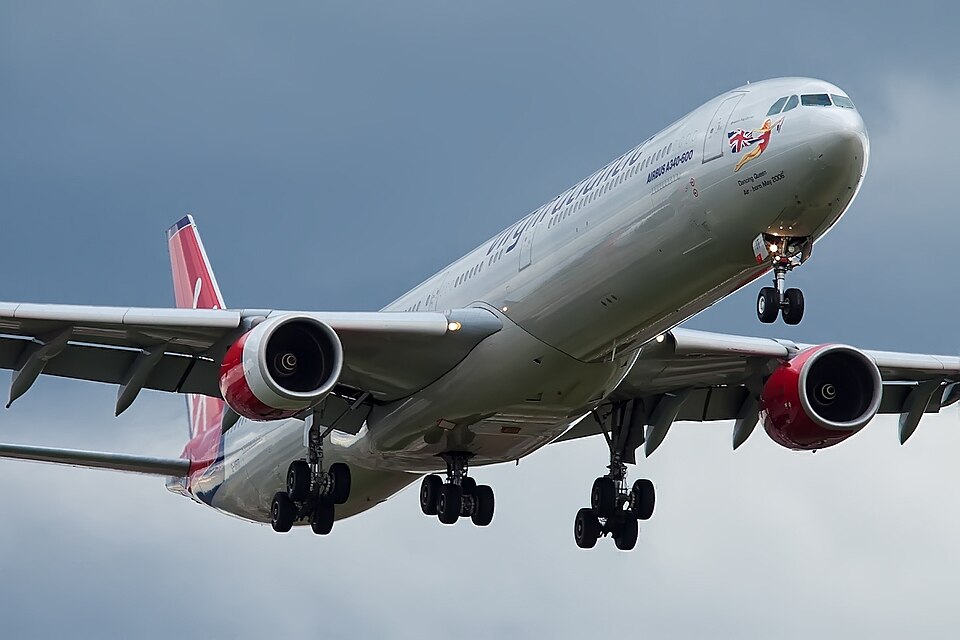
On 21 August 2019, an Airbus A340-642, registration G-VFIT, operated a commercial passenger flight from New Delhi, India to London Heathrow Airport. Approximately five and a half hours into the flight, at 1230 UTC, the aircraft was passing over northern Turkey at flight level 360. The crew consisted of 15 members, and there were 305 passengers on board.
Sequence of Events
The commander had just returned from his rest period, and the relief co-pilot was flying from the right seat. The weather forecast for the area indicated isolated embedded cumulonimbus clouds with tops at FL320. As the aircraft approached waypoint OLUPO, the commander observed a single "non-threatening" cloud on the flight path that was not displayed on the weather radar. The aircraft was cleared direct to waypoint ODERO, which took it clear of the cloud. However, as the aircraft passed abeam the cloud, it encountered moderate to severe turbulence. The co-pilot noted a rapid speed increase trend of +40 kt and selected a lower Mach number while extending speed brakes. The commander recalled a wind shift from a 40 kt tailwind to a 20 kt headwind within 2–3 seconds. The worst turbulence lasted about 5 seconds, followed by light turbulence until the aircraft climbed to FL380 at 1237 UTC.
Injuries
During the turbulence, a passenger in the rear galley fell and injured his ankle. He was moved to a more comfortable seat, and medical advice was obtained from a ground-based service. After landing at Heathrow, paramedics treated the passenger, who was hospitalized with a suspected broken ankle. Surgery was performed the following day, and the patient was released after seven days. One cabin crew member reported a shoulder injury from falling against a bulkhead but did not require medical treatment.
Weather and Forecasting
The significant weather chart issued before the flight showed an area of isolated embedded cumulonimbus with tops at FL320, but no clear air turbulence was forecast. The Ankara FIR had issued six SIGMETs reporting thunderstorms in the area, yet no turbulence was forecast or reported. The flight crew's tablet application, which could only be updated on the ground at that time, did not indicate turbulence. An aftercast satellite image revealed a large area of cloud tops between 30,000 ft and 35,000 ft over the region.
Flight Data
Recorded flight data showed that at 1230 UTC the aircraft was at FL360 and Mach 0.82. At 1231:08 UTC, vertical acceleration varied between +0.64 g and +1.56 g, speed increased to Mach 0.86, and roll varied by ±5°. The seatbelt signs were turned on at 1232:57 UTC, after the turbulence had subsided.