Accident
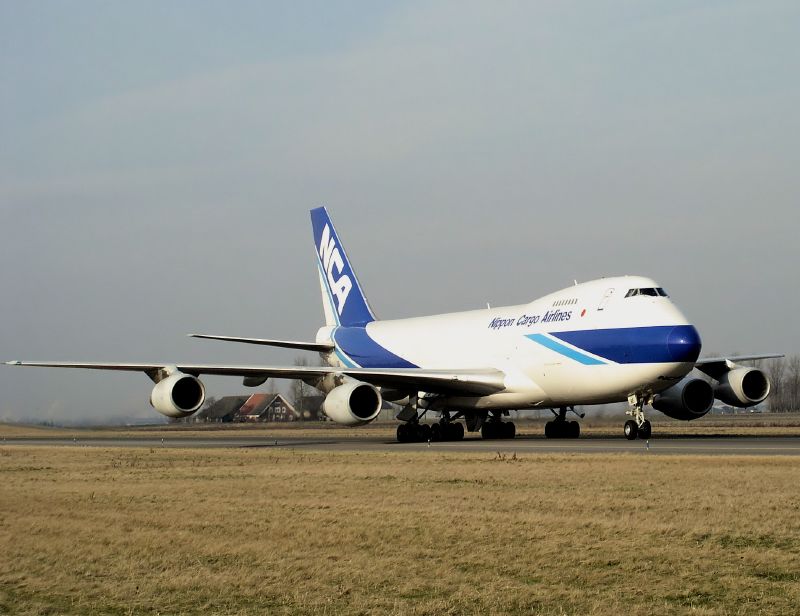
On Wednesday, October 22, 2003, at approximately 21:57 Japan Standard Time, Nippon Cargo Airlines (NCA) Flight 62, a Boeing 747-200F with registration JA8191, took off from New Tokyo International Airport (Narita Airport) as a scheduled cargo flight to Anchorage International Airport. During the takeoff roll, the aircraft's aft fuselage contacted the runway surface. The aircraft sustained moderate damage but continued its takeoff and became airborne. It subsequently returned to Narita Airport and landed safely. None of the four persons on board, including the captain, were injured, and there was no fire.
Flight Crew Statements
The captain, who was the pilot flying from the left seat, stated that after receiving takeoff clearance, he started rotation when the pilot not flying called Vr. He pulled the column back at a standard rate and the aircraft became airborne, but he felt that liftoff took slightly longer than normal. He did not recall any shock from a tail strike during rotation. The trainee pilot, seated in the right seat as pilot not flying, noted that during rotation, for about five or six seconds it seemed the aircraft had trouble getting airborne; he felt the aircraft lifted off momentarily, then stopped accelerating and the main gear touched down again before finally lifting off.
Flight Data Recorder Information
According to the Digital Flight Data Recorder (DFDR), the aircraft began its takeoff roll at 21:56:12. At 21:56:46, as the control columns were pulled back 2.3 degrees for rotation, the computed airspeed was 133 knots. The pitch angle increased, reaching a maximum of 11.9 degrees while the air/ground sensor was still in ground mode. At 21:56:57, the air/ground sensor changed to air mode, 11 seconds after rotation start; at that time, radio altitude was 9 feet and pitch angle was 11.5 degrees. The aircraft continued climbing, and at 21:57:02 the gear lever indication changed from DOWN to NOT, with radio altitude 35 feet and pitch angle 14.5 degrees.
Aftermath
After reaching 3,000 feet, the aircraft received a right turn instruction from departure control. During the turn, the stall warning stick shaker activated. The captain reduced pitch and requested the flight engineer to recheck the takeoff data, revealing that the V2 speed used was approximately 28 knots less than it should have been. The crew reset the bugs and retracted flaps per schedule. The captain, concerned about a possible tail strike at liftoff, decided to return. The aircraft dumped fuel for about 20 minutes and landed on runway 34L at 22:49. Post-flight inspection by a mechanic found abrasions on the lower part of the aft fuselage.