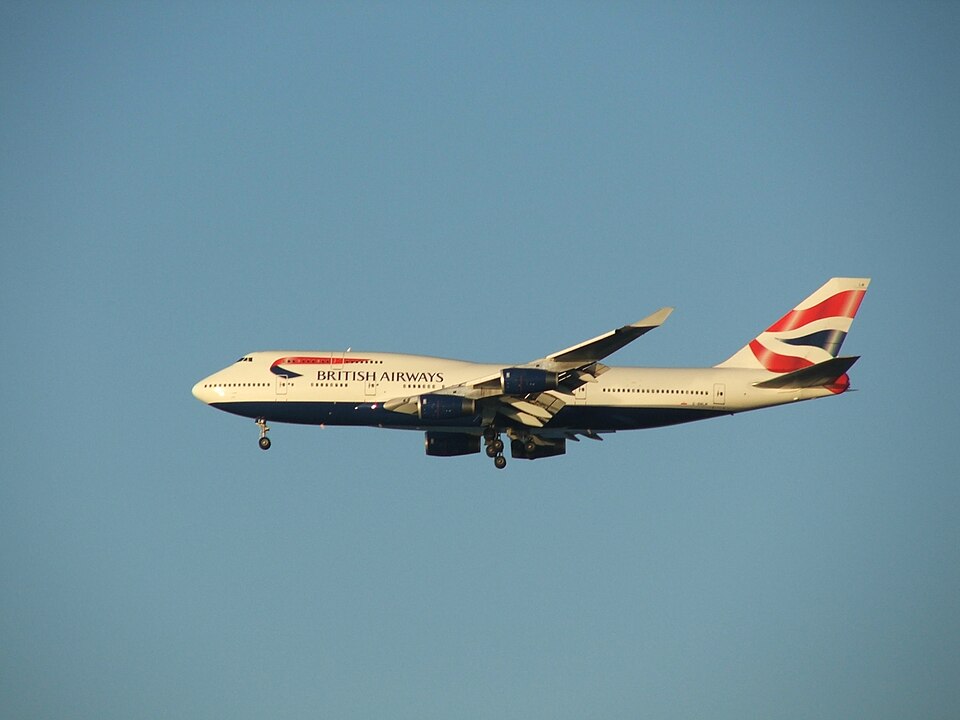
Synopsis
On 9 June 2019, a Boeing 747-436 (registration G-BNLN) operating a commercial passenger flight from London Heathrow to Phoenix experienced unreliable airspeed indications shortly after reaching top of climb. The crew received overspeed warnings and the stall warning system activated. The commander, co-pilot, and a training captain on a line check worked through the unreliable airspeed procedure, but also executed the stall recovery procedure, which was not required. The incident was believed to have been caused by a fault in the right Air Data Computer (ADC), though this could not be replicated after the flight.
History of the Flight
Takeoff was at 1428 hrs with the co-pilot as pilot flying. At the top of climb, FL330, with the right autopilot and autothrottle engaged, the Master Warning activated. EICAS displayed a red overspeed warning, ALT disagree, IAS disagree, and other alerts. The co-pilot recognized unreliable airspeed and carried out the recall drill, setting 4° nose-up and 80% N1 thrust after disengaging autothrottle. The crew declared a PAN with ATC and were cleared to a block altitude.
While referencing the QRH Unreliable Airspeed Table to refine pitch to 3.5° and thrust to 87.5% N1, the stick shakers activated. The crew discussed and agreed to execute the stall recovery. The co-pilot reduced pitch to 1° nose-down, stopping the stick shaker, then gradually increased pitch and thrust. The stall warning reoccurred each time pitch increased, so the co-pilot repeatedly reduced pitch until the warning ceased, eventually achieving the QRH datums. The aircraft descended about 2,800 ft during these maneuvers. Once stable, the crew switched the air data source from the right to the centre ADC, allowing autopilot and autothrust re-engagement. Contact with the operator's maintenance office confirmed the right ADC had failed via the health monitoring system. The flight continued to Phoenix without further issues.
Aircraft Information
After the incident, the aircraft flew five more sectors under an Acceptable Deferred Defect (ADD) before rectification actions, including leak checks and replacement of the right ADC. The aircraft then flew eight additional sectors without problems before being permanently removed from service.
Recorded Information
The Cockpit Voice Recorder and Flight Data Recorder had overwritten, but the Quick Access Recorder (QAR) provided data. The QAR showed that after top of climb, right ADC airspeed spiked from 300 to 407 kt while left ADC remained at 300 kt, causing autothrottle to reduce thrust. After crew intervention, airspeed from left ADC stabilised at about 266 kt. Stick shaker activation was not recorded by the QAR.
Analysis
The investigation found no evidence for the initial malfunction, but the sequence matched a known fault mode of the ADC model fitted. A non-mandatory modification designed to address a periodic malfunction had not been incorporated. This modification could have prevented an incorrect Mach number from being supplied to the stall warning system, which would cause erroneous stick shaker activation at a safe airspeed. Post-incident inspection of the right ADC could not identify the fault because fault codes were accidentally erased before testing. The ADC underwent extensive functional tests without exhibiting incorrect behaviour.