Incident Overview
On 30 January 2016, a Boeing 747-436 (registration G-CIVX) operated by an airline as a commercial passenger flight experienced a landing gear lever jam shortly after takeoff from London Heathrow Airport. The aircraft was on its first flight following an 'A' Check maintenance input, which included replacement of the Landing Gear Control Module (LGCM). The crew consisted of 17 crew members and 293 passengers; no injuries were reported and no damage occurred.
History of the Flight
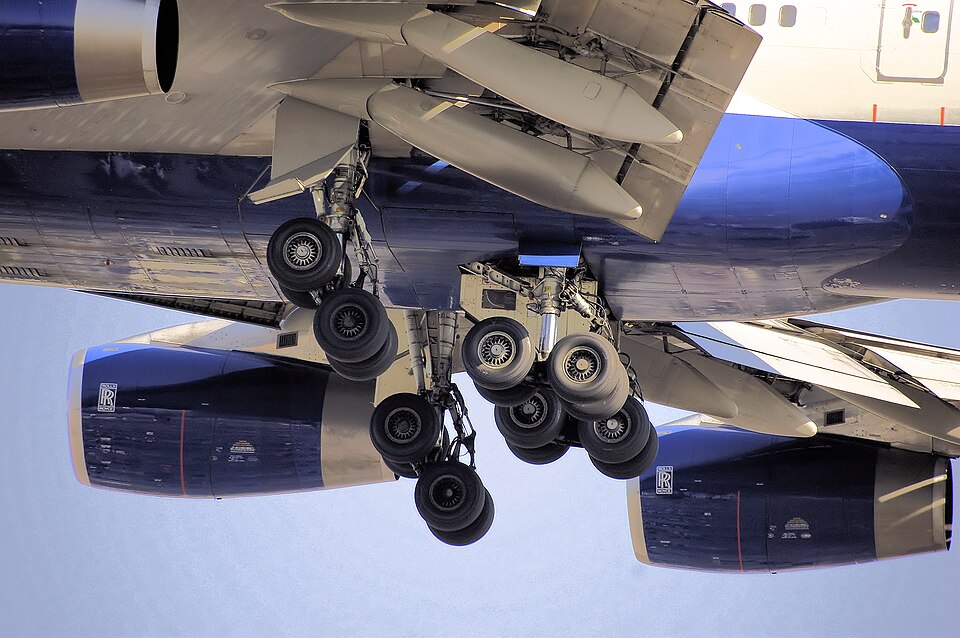
After takeoff, the crew observed that the landing gear lever felt unusual when moved from the down to the up position. Subsequently, they found that the lever could not be moved from the up to the off detent, which depressurises the landing gear hydraulic system. The crew consulted with engineering staff on the ground and decided to return to Heathrow. In accordance with the 747 Flight Crew Operations Manual Non-Normal Checklist, the landing gear was lowered using the alternate extension system, deploying only the nose and body landing gear. The aircraft landed safely.
Aircraft Inspection
Post-incident inspection at the operator's main base revealed that the LGCM was mechanically jammed in the up position. The lever could only be moved to the off or down positions with excessive force.
Maintenance Investigation
The maintenance tasks involved a night shift that raised task cards for removal and re-rigging of the original LGCM, which included fitting a rig pin in the selector valve quadrant, function checks, and a duplicate inspection. The night shift removed and re-rigged the LGCM but did not complete the function checks, leaving the task cards uncertified. The re-rigged LGCM failed a function check by the day shift, which then fitted a replacement serviceable LGCM. The day shift's task cards did not include fitting and removing rig pins in the selector valve quadrants. Three day shift engineers worked on the installation. They had access to relevant Aircraft Maintenance Manual (AMM) sections and a Temporary Revision (TR) generated by the operator, but the TR did not specify the need to fit rig pins. The engineers focused on achieving correct adjustment using the TR. One engineer noticed the rig pin was not fitted and the quadrant was moving; concerned about injury, he took a planned break, causing a distraction that led to omission of the rig pin.
Causal Factors
The jammed landing gear lever was attributed to a rig pin not being inserted during maintenance, resulting in additional shims being used to rig the lever. The operator's maintenance investigation identified the following causal factors: (i) distraction of the engineer when he saw the quadrant move and took his break; (ii) deficiencies in the operator's task card system; (iii) omission of the need to fit the rig pin in the operator's TR; (iv) inadequate handover between night and day shifts.
Safety Actions
The operator implemented several safety actions, including: updating the TR to require consultation if more than three rigging shims are used, mandating rig pin fitment and verification; holding staff briefings on handover procedures; publishing a bulletin highlighting the incident and distraction; and introducing additional skills training in task card generation.