Incident Overview
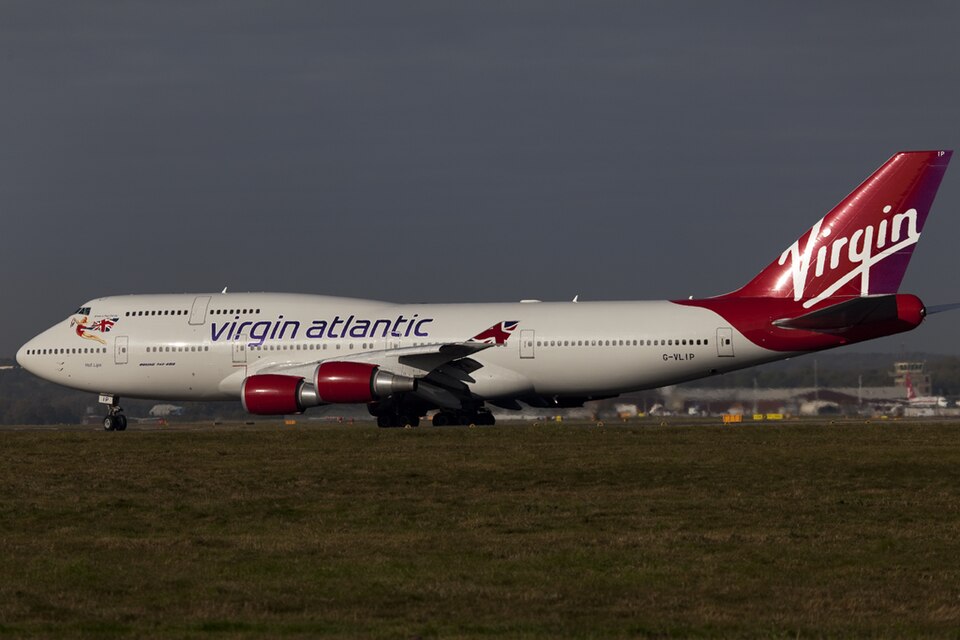
On 14 November 2013 at 0400 UTC, a Boeing 747-443, registration G-VLIP, experienced a brief period of severe turbulence while cruising at FL370 over the North Atlantic, approximately 300 nm south of St John’s, Newfoundland. The aircraft was operating a scheduled commercial passenger flight from Montego Bay, Jamaica, to London Gatwick Airport, with 3 flight crew, 15 cabin crew, and 400 passengers on board. The turbulence resulted in minor injuries to 9 passengers and 1 cabin crew member. No damage to the aircraft was reported.
Flight Crew Report
The flight crew reported that the flight progressed normally until near the midpoint, about 350 nm south of Newfoundland at FL370. They had been monitoring light to moderate weather radar returns indicating a line of weather across the intended track. The commander’s radar tilt was set to 1° down, the co-pilot’s to 2° down. The crew requested a track deviation to the left (north), but air traffic control approved a deviation to the right. The wind was from astern, so the crew were not concerned about possible turbulence downwind of the weather. As the aircraft flew abeam the weather line, radar returns reduced and disappeared.
The commander described flying in smooth air, likely just above cloud tops, when turbulence began. The seat belt signs were switched on. The commander recalled seeing a flash outside, possibly lightning from a thunderstorm cell below. Turbulence increased markedly to severe. The crew felt a sudden climb, and a brief stick shaker activation occurred, but attitude remained normal, and the autopilot and autothrottle remained engaged, though manual inputs were needed to prevent exaggerated throttle changes. Engine ignition systems were turned on. The aircraft had been instructed to descend to FL360 but had not yet done so; the commander initiated a slow descent. Vertical speed showed significant momentary climbs and descents, but attitude stayed within normal limits.
After the turbulence, it was determined that several passengers and one cabin crew member had been injured, the most significant being a passenger’s knee laceration. The commander consulted medical specialists by radio and decided to continue to London Gatwick. Cabin crew attended to the injured, assisted by medically qualified volunteers. After landing, medical staff boarded; two passengers and the cabin crew member were taken to hospital.
Cabin Crew Reports
Two senior cabin crew members provided accounts. Both recalled smooth air initially, with the evening meal service just completed and most passengers seated. At the first sign of light turbulence, the seat belt signs illuminated. One crew member in the forward cabin checked passengers’ seat belts before sitting down, but turbulence increased as she did so, becoming severe by the time she secured herself. Another crew member, attending passengers further aft, made a standard address including an instruction for cabin crew to take their seats, as turbulence increased. She experienced a significant jolt as she sat down.
Due to the recent service, most passengers were already seated with belts fastened. All injured passengers were in the rear right side of the aircraft. The injured cabin crew member, who suffered a head/neck injury, was on a horizontal bunk in the crew rest area, also at the rear right.
Meteorological Information
Before the flight, the crew received a briefing pack including meteorological reports and forecasts for the planned route. Two charts from the Met Office’s World Area Forecast Centre, valid at 0000 hrs and 0600 hrs on the day, showed the incident area just south of a jetstream with core speeds of about 120 kt. Moderate turbulence associated with the jetstream was forecast in the area up to about FL420. At that point, the intended track crossed an extensive area of significant weather, with isolated, embedded cumulo-nimbus clouds between FL360 and FL410.
Recorded Flight Data
Flight Data Recorder (FDR) data showed the aircraft cruising at FL370 in calm conditions until 0349 hrs, when light turbulence began. At 0358 hrs, turbulence markedly increased, indicated by normal acceleration changes. The aircraft began a descent almost immediately. At 0400 hrs, it experienced a short but severe turbulence period. Peak acceleration values were minus 0.7 g and plus 1.7 g, both occurring during the descent. After about five minutes at FL360 in moderate turbulence, the aircraft climbed back to FL370, where turbulence was much reduced but still observable for another 15 minutes.