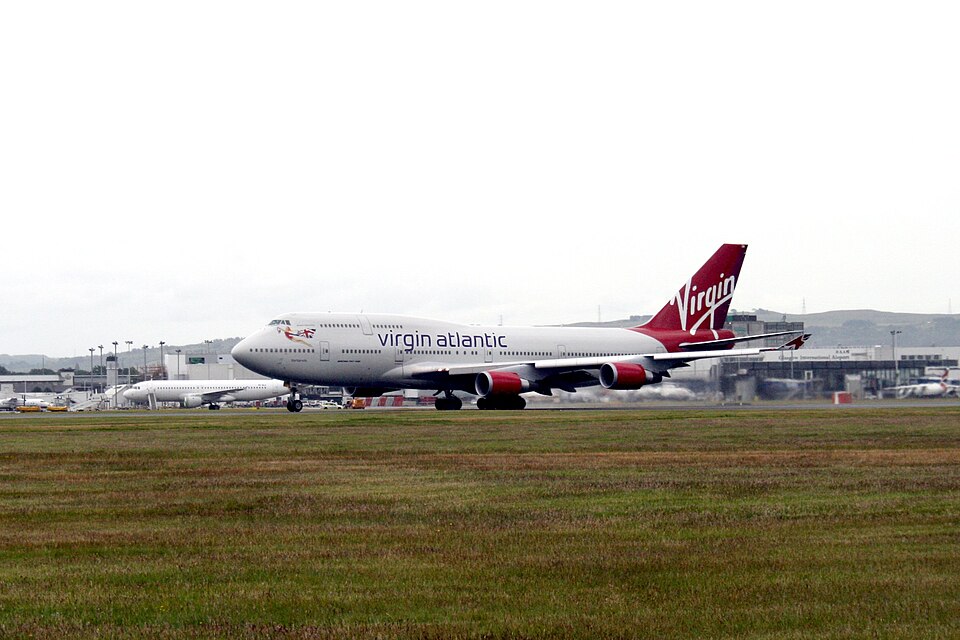
Incident Overview
On 29 December 2014, a Boeing 747-443, registration G-VROM, departed London Gatwick Airport on a scheduled passenger flight to Las Vegas. The aircraft carried 18 crew and 447 passengers. No injuries were reported among crew or passengers. The aircraft sustained damage to the right wing landing gear door and strike board.
Hydraulic System Failure
After takeoff, as the aircraft climbed through approximately 1,000 feet with the landing gear retracted, an Engine Indicating and Crew Alerting System (EICAS) advisory message 'HYD QTY LOW 4' appeared. The crew observed rapid depletion of hydraulic system 4 quantity. Shortly after, a 'HYD PRESS SYS 4' caution activated. The crew completed the corresponding checklist and consulted the operator's maintenance control, who instructed a return to London Gatwick.
Landing Gear Issue
During the return, the aircraft held for fuel jettison. On approach, the crew initiated the alternate gear extension procedure. After the procedure, the right wing landing gear failed to lock down. ATC confirmed the gear was not visible. The crew conducted troubleshooting, including recycling the gear lever and alternate gear extend switches, and maneuvering the aircraft, but could not secure the gear. They then prepared for a non-normal landing.
Landing and Post-Flight Inspection
The commander assumed the pilot flying role for the second approach. The aircraft landed at 1545 hrs on Runway 26L, maintaining the centerline with a right wing low attitude of about 4°. No evacuation was required. Passengers remained seated until fire crews and maintenance personnel inspected the aircraft externally. Disembarkation began at 1630 hrs and was completed 90 minutes later.
Inspection revealed the right wing landing gear door partially open, with the outboard rear wheel resting on the deformed door. Hydraulic fluid was present near the gear leg. The lower section of the strike board in the right wing gear bay was missing (later found by a farmer near Tonbridge, Kent, and confirmed as belonging to G-VROM via radar data). The left wing and body landing gears were undamaged. The aircraft was towed to the operator's hangar for detailed examination, which found the right wing landing gear retract actuator installed 180° out of alignment, with a damaged hydraulic port boss allowing fluid leakage.