Ultralight Crash in Chonburi Kills Pilot Due to Wing Fabric Failure
An X-AIR HAWK ultralight crashed in Chonburi, Thailand, killing the pilot and injuring a passenger. The accident was caused by deteriorated wing fabric and…
On June 24, 1975, a Boeing 727-225 operated by Eastern Air Lines was involved in an aviation accident near Jamaica, New York. Investigators recorded the probable cause as: The National Transportation Safety Board determined that the probable cause of this accident was "the aircraft's encounter with adverse winds associated with a very strong thunderstorm located astride the ILS localizer course, which resulted in a high descent… This summary draws on records from the U.S. National Transportation Safety Board (NTSB) Aircraft Accident Reports; 12 related events involving the same aircraft type or operator are linked below.
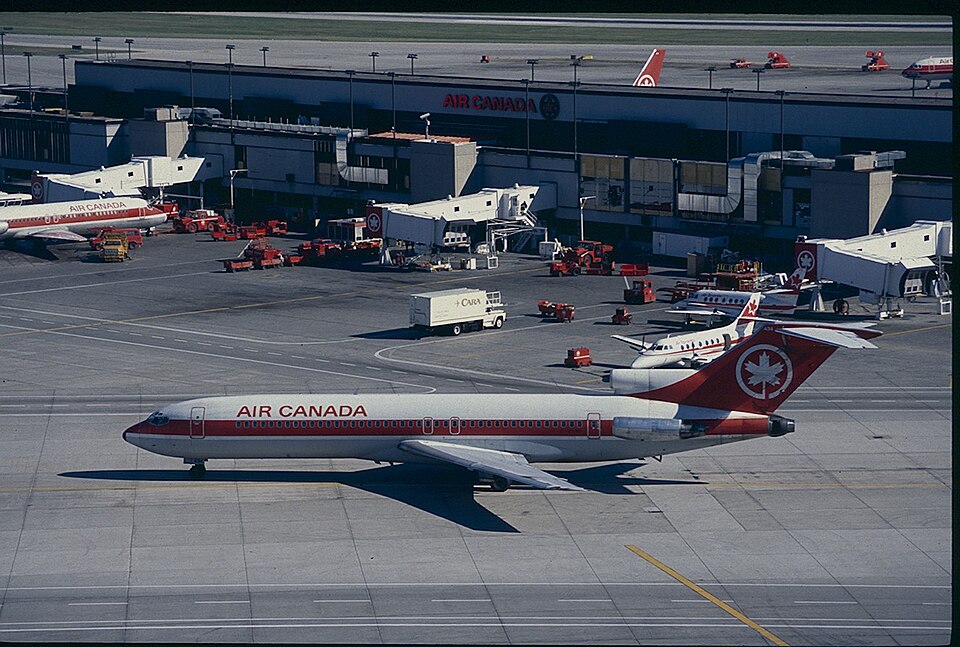
The National Transportation Safety Board determined that the probable cause of this accident was "the aircraft's encounter with adverse winds associated with a very strong thunderstorm located astride the ILS localizer course, which resulted in a high descent rate into the nonfrangible approach light towers. The flightcrew's delayed recognition and correction of the high descent rate were probably associated with their reliance upon visual cues rather than on flight instrument references. However, the adverse winds might have been too severe for a successful approach and landing even had they relied upon and responded rapidly to the indications of the flight instruments." The Board found that contributing to the accident was "the continued use of runway 22L when it should have become evident to both air traffic control personnel and the flightcrew that a severe weather hazard existed along the approach path."
— NTSB Determination
About 1605 e.d.t. on June 24, 1975, Eastern Air Lines Flight 66, a Boeing 727-225, crashed into the approach lights to runway 22L at the John F. Kennedy International Airport in Jamaica, New York. The aircraft was on an instrument landing system (ILS) approach through a very strong thunderstorm located astride the localizer course. Of the 124 persons aboard, 113 died of injuries received in the crash. The aircraft was destroyed by impact and fire.
### The Flight
Eastern Air Lines Flight 66 operated as a scheduled passenger flight from New Orleans, Louisiana, to New York, New York. The flight departed New Orleans about 1319 e.d.t. with 116 passengers and eight crewmembers aboard.
The flightcrew was properly certificated. Captain John W. Kleven had accumulated about 17,381 flight-hours, including 2,813 in the Boeing 727. First Officer William Eberhart had 5,063 flight-hours, with 4,327 in the Boeing 727. Second Officer Gary M. Geurin was the flight engineer, and Second Officer Peter J. McCullough, a flight check engineer, was aboard to give the flight engineer an annual line check.
### The Approach
Flight 66 arrived in the New York City terminal area without reported difficulty. Beginning at 1535:11, Kennedy approach control provided radar vectors to sequence the flight and position it for the ILS approach to runway 22L. The flight received an automatic terminal information service broadcast reporting visual flight rules (VFR) weather, an estimated 4,000-foot broken ceiling, 5 miles visibility with haze, and a 10-knot wind from 210 degrees.
At 1552:43, the controller broadcast to all aircraft that the airport had gone to instrument flight rules (IFR) with 2 miles visibility in very light rain showers and haze. Flight 66 was cleared to descend to 4,000 feet. The final vector controller continued to provide radar vectors around thunderstorms in the area. At 1557:21, the flightcrew discussed the problems of carrying minimum fuel loads when confronted with terminal delays, and one crewmember stated he would check the weather at their alternate airport, LaGuardia.
At 1559:19, the final vector controller broadcast that a "severe wind shift" had been reported on the final approach. Shortly after, Eastern Air Lines Flight 902, a Lockheed 1011 that had abandoned its approach to runway 22L, reported to the controller that they had experienced "a pretty good shear pulling us to the right and...down" and that at 200 feet visibility was "nothing." Flight 902 reported their airspeed dropped about 10 knots below the bug and their rate of descent reached 1,500 feet per minute before they applied takeoff power and went around at 100 feet.
Flight 902's report was recorded on Flight 66's cockpit voice recorder. The captain of Flight 66 said, "You know this is asinine," and an unidentified crewmember responded, "I wonder if they're covering for themselves." The controller asked Flight 66 if they had heard the report; they affirmed. The flight was then cleared for the ILS approach. The captain stated he had the radar on standby in case he needed it.
At 1602:50.5, the first officer, who was flying the aircraft, said, "Gonna keep a pretty healthy margin on this one." An unidentified crewmember suggested that he do so, and the first officer responded, "In case he's right."
Flight 66 reported over the outer marker at 1602:58.7 and was cleared to contact the Kennedy tower. At 1603:44, the local controller cleared the flight to land. The captain asked about braking action, and the controller replied that there were no adverse reports, though the first half of the runway was wet. At 1604:58.0, the controller broadcast that the only adverse reports about the approach was a wind shear on short final. Flight 66 did not acknowledge.
### The Crash
Flight data recorder and cockpit voice recorder data showed the aircraft intercepted the glideslope at 3,000 feet. The airspeed varied between 160 and 170 knots. At 1603:05.5, the first officer requested 30 degrees of flaps, and the airspeed oscillated between 140 and 145 knots.
At 1604:38.3, the flight engineer called "500 feet." The airspeed was oscillating between 140 and 148 knots. The sound of heavy rain was recorded, and the windshield wipers were switched to high speed. At 1604:40.5, the captain said, "Stay on the gauges," and the first officer replied, "Oh, yes. I'm right with it."
At 1604:52.6, the captain said, "I have approach lights." Two seconds later, he again told the first officer to "Stay on the gauges," and the first officer replied, "I'm with it." As the aircraft passed through 400 feet, its rate of descent increased from an average of 675 feet per minute to 1,500 feet per minute. The aircraft rapidly deviated below the glideslope. Four seconds later, the airspeed decreased from 138 knots to 123 knots in 2.5 seconds.
At 1605:06.2, at an altitude of 150 feet, the captain said, "runway in sight." Less than a second later, the first officer said, "I got it." The captain replied, "got it?" An unintelligible exclamation was recorded, and the first officer commanded, "Takeoff thrust.
Initial impact was recorded at 1605:11.4. The aircraft struck the No. 7 approach light tower at an elevation of 27 feet, 2,400 feet from the runway threshold. The left wing was severely damaged as the aircraft struck several more nonfrangible towers. The aircraft rolled into a steep left bank, contacted the ground, struck more towers, caught fire, and came to rest on Rockaway Boulevard. The fuselage collapsed and disintegrated. Fourteen survivors were found in the inverted rear portion of the passenger cabin; three died later in the hospital.
### What the Investigation Found
The National Transportation Safety Board found no evidence of preexisting structural damage, control malfunction, in-flight fire, bird strike, explosion, or lightning strike. All three engines were operating normally until impact, and damage to the engine components was consistent with high power settings.
About eight minutes before the accident, weather radar showed an area of thunderstorm activity centered along the northern edge of Kennedy Airport. The largest group of cells merged over the approach course to runway 22L.
Performance analyses indicated that Flight 66 encountered an increasing headwind as it descended, changing from a 10-knot headwind at 600 feet to a 25-knot headwind at 500 feet. Near 500 feet, the aircraft encountered a downdraft with peak speeds of about 16 feet per second. As the aircraft descended to 400 feet, the downdraft abruptly increased to about 21 feet per second, and the headwind suddenly decreased from 20 knots to 5 knots over a 4-second period. This sequence caused the rapid deviation below the glideslope.
The investigation noted that Flying Tiger Line Flight 161 had preceded Eastern 66 on the approach by 8 minutes 59 seconds. The captain had experienced severe changes in wind direction, turbulence, and downdrafts, and had recommended to the local controller that they change runways. The controller did not respond to the recommendation. The controller later testified he did not consider a runway change because the surface wind was most nearly aligned with runway 22L. The Board believed air traffic control did not consider a runway change because it would have increased traffic delays and workload.
The Board conducted simulator tests using a Boeing 727 simulator programmed with the dynamic winds Flight 66 encountered. Fourteen pilots flew 54 approaches; 18 ended in impact with the approach lights. The tests showed that pilots were prepared for the cues but hesitated to switch from instrument to visual references. Pilots who crashed in the simulator were reluctant to interrupt their instrument scan to verify engine thrust settings, often adding less thrust than they thought. The back pressure needed on the control column to rotate the aircraft 9 degrees nose-up to stop the descent was greater than normally required due to the rapid loss of airspeed.
The Board concluded that the flightcrew of Eastern 66 probably realized too late how rapidly they were descending. The captain was likely looking outside, and the first officer's response of "I got it" indicated he also had probably been looking outside or alternating his scan. The Board believed that visual references available in rain and reduced visibility are often inadequate to provide timely recognition of flightpath deviations.
### Probable Cause
The National Transportation Safety Board determined that the probable cause of this accident was "the aircraft's encounter with adverse winds associated with a very strong thunderstorm located astride the ILS localizer course, which resulted in a high descent rate into the nonfrangible approach light towers. The flightcrew's delayed recognition and correction of the high descent rate were probably associated with their reliance upon visual cues rather than on flight instrument references. However, the adverse winds might have been too severe for a successful approach and landing even had they relied upon and responded rapidly to the indications of the flight instruments."
The Board found that contributing to the accident was "the continued use of runway 22L when it should have become evident to both air traffic control personnel and the flightcrew that a severe weather hazard existed along the approach path."
An X-AIR HAWK ultralight crashed in Chonburi, Thailand, killing the pilot and injuring a passenger. The accident was caused by deteriorated wing fabric and…
A Challenger II Special ultralight aircraft (U-B23) landed off-runway at Pai Airport, Mae Hong Son, on September 17, 2024, due to a gust of wind. No injuries…
The Polish aviation safety authority is investigating a serious incident involving an AT-3R100 aircraft that occurred on September 2, 2024. The investigation…
A SZD-48-3 glider suffered damage when its left wing struck a ground obstacle during a low final approach at EPWK on June 20, 2025. The pilot was uninjured.
A 39-year-old skydiver died after a hard landing near Leszno on May 1, 2026. The PKBWL preliminary report indicates the fatal impact resulted from a late,…
A student pilot crashed an SZD-50-3 Puchacz glider into the airfield fence during a solo training flight on June 6, 2026. The pilot was uninjured, but the…