Ultralight Crash in Chonburi Kills Pilot Due to Wing Fabric Failure
An X-AIR HAWK ultralight crashed in Chonburi, Thailand, killing the pilot and injuring a passenger. The accident was caused by deteriorated wing fabric and…
On October 25, 1986, a Boeing 737-222 operated by Piedmont Airlines was involved in an aviation accident near Charlotte, North Carolina. Investigators recorded the probable cause as: The National Transportation Safety Board determined that the probable cause of the accident was the captain's failure to stabilize the approach and his failure to discontinue the approach to a landing that was conducted at an excessive speed beyond the normal… This summary draws on records from the U.S. National Transportation Safety Board (NTSB) Aircraft Accident Reports; 10 related events involving the same aircraft type or operator are linked below.
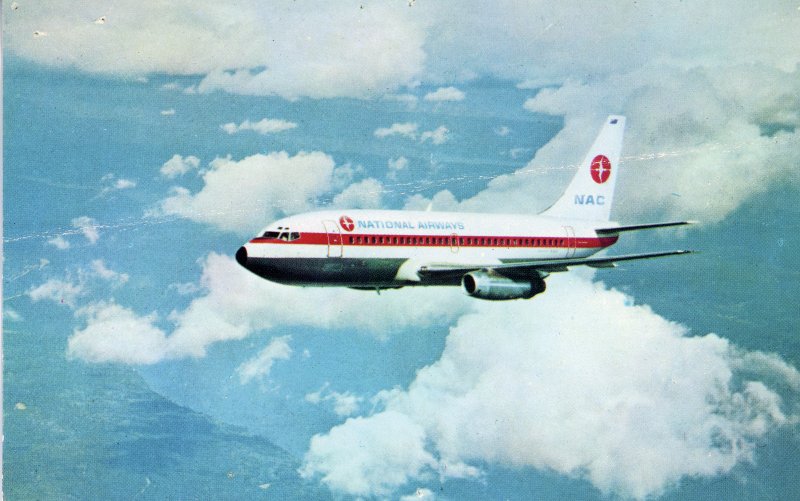
The National Transportation Safety Board determined that the probable cause of the accident was the captain's failure to stabilize the approach and his failure to discontinue the approach to a landing that was conducted at an excessive speed beyond the normal touchdown point on a wet runway. Contributing to the accident was the captain's failure to optimally use the airplane decelerative devices. Also contributing to the accident was the lack of effective crew coordination during the approach. Contributing to the severity of the accident was the poor frictional quality of the last 1,500 feet of the runway and the obstruction presented by a concrete culvert located 318 feet beyond the departure end of the runway.
— NTSB Determination
On October 25, 1986, Piedmont Airlines Flight 467, a Boeing 737-222, overran runway 36R while landing at Charlotte Douglas International Airport in Charlotte, North Carolina. The airplane struck a localizer antenna array and a concrete drainage culvert before coming to rest near a set of railroad tracks 440 feet beyond the departure end of the runway. The airplane was destroyed. Of the 119 people on board, three passengers sustained serious injuries, while three crewmembers and 28 passengers sustained minor injuries.
### The flight
Flight 467 was a regularly scheduled passenger flight from Newark International Airport to Myrtle Beach, South Carolina, with an en route stop at Charlotte. There were 114 passengers, two flightcrew members, and three flight attendants aboard.
The captain had accrued about 10,000 total flight hours, including about 2,500 hours in the Boeing 737, with about 500 of those hours as captain. The first officer had accrued about 4,100 flight hours, including about 500 hours in the Boeing 737.
### Sequence of events
The flight was routine until its arrival in the Charlotte area, where instrument meteorological conditions prevailed. At 1953:06, the flight contacted Charlotte approach control and was told to expect an instrument landing system (ILS) approach to runway 36R. At 2001:02, the controller directed the flight to fly a heading of 195 degrees for a "close in base leg." At 2002:42, the controller informed a preceding flight of a right-to-left wind of 20 to 25 knots on the final approach course. Flight 467 received this information, but neither crewmember commented on the winds or discussed changes to the approach.
At 2004:17, the controller informed Flight 467 that it was 3 miles southeast of the final approach fix, HAYOU, and cleared the airplane for the ILS approach. At 2005:01, the first officer called for standard callouts, and the captain simultaneously said, "Gear down, it's going to be tight." The landing gear was not lowered until 2005:40. At 2005:38, the Charlotte tower cleared the flight to land, reporting surface winds of 100 degrees at 4 knots. At that time, the flaps were set to 5 degrees. The captain subsequently called for flaps 10, 15, and 25.
At 2006:22, the captain remarked that the autopilot "didn't do me any favors there." At 2006:37, the first officer stated that the speed brake was in manual, the landing gear was down, and the flaps were "to go." The captain called for the final setting of flaps 30. At 2007:03, the first officer called 100 feet above minimums, and the ground proximity warning system (GPWS) alerted "Glideslope." At 2007:09, the first officer called minimums, and the GPWS alerted "Whoop whoop pull up."
The airplane touched down at 2007:19, over 3,000 feet from the approach end of the runway. The captain later stated that he cracked the thrust reversers to the detent, noted the speed brake had not deployed automatically, manually deployed the speed brake, and then applied the wheel brakes. He stated he felt no sensation of the antiskid system cycling and did not get full reverse thrust.
At 2007:43, the first officer said, "We're gonna get the lights on the overrun." Two seconds later, the airplane departed the runway, struck the localizer antenna array 300 feet from the departure end, hit a concrete culvert 18 feet beyond the localizer, and passed through a chain link fence.
The flight attendants initiated an emergency evacuation. Because the public address system was rendered inoperable by impact damage, the flight attendants shouted instructions. The evacuation was orderly and completed in about one and a half minutes. Passengers reported that two individuals who appeared to be intoxicated slept through the accident and had to be physically shaken awake during the evacuation.
### What the investigation found
The Board found no evidence of preexisting damage or defects in the airplane's structure, systems, powerplants, or antiskid system. Air traffic control services were conducted in accordance with acceptable procedures, and weather factors did not contribute to the accident.
The investigation determined that the approach was flown contrary to Piedmont operating procedures. The airplane was not configured for landing upon crossing the final approach fix. Instead, the final flap setting was not selected until the airplane was 500 feet above the ground. The airspeed was excessive throughout the approach; the airplane crossed the final approach fix at 194 knots, crossed the threshold at 165 knots, and touched down at 147 knots. The required reference speed (Vref) was 131 knots. The Board believed the GPWS alerted before touchdown because of an excessive rate of descent close to the ground. The Board concluded the captain should have discontinued the approach because it was unstabilized.
The Board also found that crew coordination was deficient. The first officer failed to point out that the airplane was not configured for landing and that the airspeed was excessive. The Board noted that the first officer's statement about the speed brake lever being in manual was a subtle reminder that the captain failed to respond to.
Following the touchdown, which occurred over 3,200 feet beyond the approach end of the runway, the spoilers were not deployed immediately. The Board noted that the captain probably applied the wheel brakes prematurely, which may have resulted in a loss of brake effectiveness on the outboard wheels.
An examination of runway 36R revealed that the first one-third met recommended standards, but the last 1,500 feet had unacceptable friction, flat transverse slopes, ungrooved asphalt patches, and longitudinal depressions that allowed water to pool. The Board believed that the airplane experienced dynamic and viscous hydroplaning as it entered the last 1,500 feet of the runway, which led to reverted rubber hydroplaning. While the runway condition was not a primary cause of the accident due to the airplane's excessive speed, the Board concluded that the poor friction contributed to the severity of the accident. The Board also found that the concrete culvert located 318 feet beyond the runway caused most of the damage to the airplane.
The emergency response was found to be deficient because only three ambulances were initially dispatched to the site, and the dispatcher was unaware of the number of people on board.
### Probable cause
The National Transportation Safety Board determined that the probable cause of the accident was the captain's failure to stabilize the approach and his failure to discontinue the approach to a landing that was conducted at an excessive speed beyond the normal touchdown point on a wet runway. Contributing to the accident was the captain's failure to optimally use the airplane decelerative devices. Also contributing to the accident was the lack of effective crew coordination during the approach. Contributing to the severity of the accident was the poor frictional quality of the last 1,500 feet of the runway and the obstruction presented by a concrete culvert located 318 feet beyond the departure end of the runway.
An X-AIR HAWK ultralight crashed in Chonburi, Thailand, killing the pilot and injuring a passenger. The accident was caused by deteriorated wing fabric and…
A Challenger II Special ultralight aircraft (U-B23) landed off-runway at Pai Airport, Mae Hong Son, on September 17, 2024, due to a gust of wind. No injuries…
The Polish aviation safety authority is investigating a serious incident involving an AT-3R100 aircraft that occurred on September 2, 2024. The investigation…
A SZD-48-3 glider suffered damage when its left wing struck a ground obstacle during a low final approach at EPWK on June 20, 2025. The pilot was uninjured.
A 39-year-old skydiver died after a hard landing near Leszno on May 1, 2026. The PKBWL preliminary report indicates the fatal impact resulted from a late,…
A student pilot crashed an SZD-50-3 Puchacz glider into the airfield fence during a solo training flight on June 6, 2026. The pilot was uninjured, but the…