Incident Overview
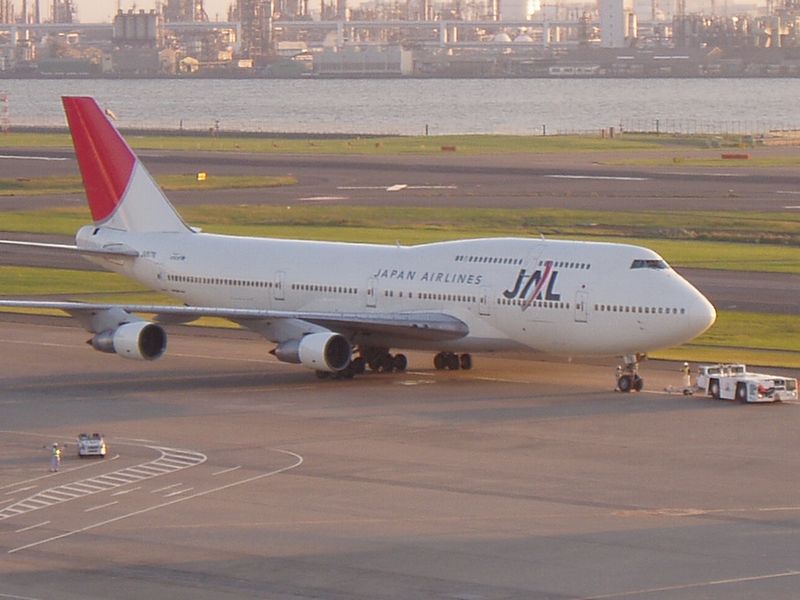
On November 5, 2003, at approximately 10:44 JST, a near collision occurred between Japan Airlines flight 933, a Boeing 747-100B SUD (registration JA8176), and a United States Air Force McDonnell Douglas F-15C (part of a two-ship formation) over the sea approximately 12 nautical miles north of Naha Airport, Okinawa, Japan.
Flight Paths
JA8176 was operating a scheduled passenger flight from Tokyo International Airport under Instrument Flight Rules (IFR). It was descending from 3,000 ft to 1,200 ft for an approach to Naha Airport's runway 18. The F-15C formation, callsign "Knife 01", was flying under Visual Flight Rules (VFR) outside the north downwind of runway 05R at Kadena Airfield, intending to land. Kadena Tower instructed the formation to turn right due to other landing traffic.
Encounter and Avoidance
The crew of JA8176 sighted the two-ship formation before they began their turns. As the F-15Cs turned right and flew toward JA8176, the 747's Traffic Alert and Collision Avoidance System (TCAS) issued a Traffic Advisory at 10:43:57, followed by a Resolution Advisory "descend, descend" at 10:43:59. The 747 increased its rate of descent in response. The F-15C continued north-bound and climbing, maintaining visual contact with JA8176. At 10:44:08, another RA "adjust vertical speed" was issued. JA8176 leveled off at 900 ft.
Closest Proximity
At their closest point, around 10:44:16, the horizontal separation was estimated at 2–3 nautical miles with an altitude difference of approximately 200–300 ft. The 747 had 509 persons on board: 494 passengers, a captain, and 14 crew members. Each F-15C had one pilot. No injuries were reported, and neither aircraft sustained damage.
Investigation
The Japan Aircraft and Railway Accidents Investigation Commission (ARAIC) investigated the serious incident. The United States, as the state of design and manufacture, did not designate an accredited representative. The investigation involved analysis of radar recordings, AIDS data, and crew interviews.