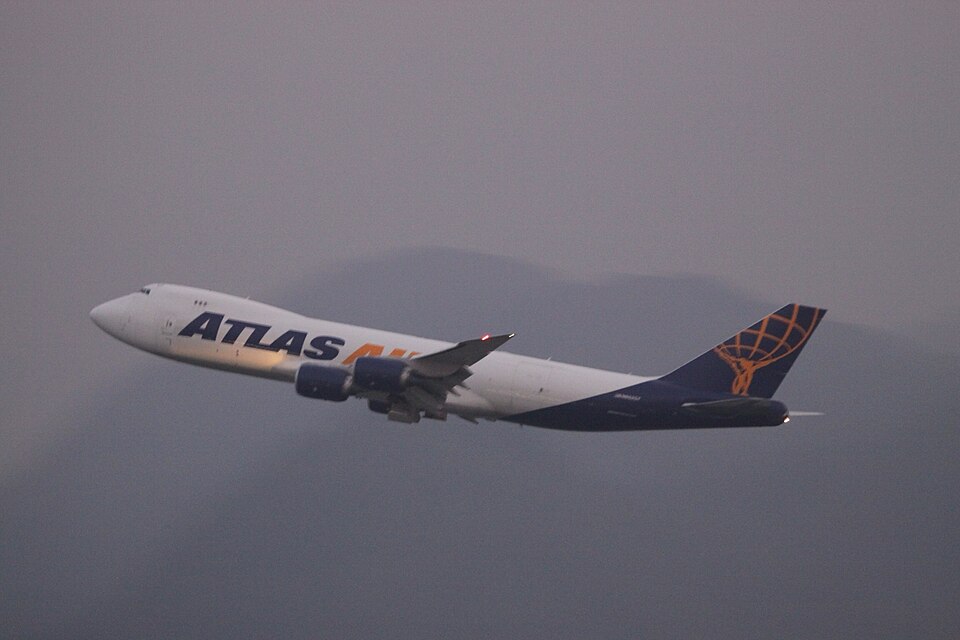
Boeing 747-8F Near Runway Overrun at Narita Due to Incorrect Thrust Settings

Casualties unknown • Narita International Airport, JP

A Polar Air Cargo Worldwide, Inc. Boeing 747-8F lifted off near the end of the departure runway at Narita International Airport after failing to correctly update takeoff performance data.

What happened

On July 15, 2017, at 22:41 JST, a Boeing 747-8F, registered N852GT, operated by Polar Air Cargo Worldwide, Inc., experienced a serious incident at Narita International Airport. While performing a scheduled flight to Shanghai Pudong International Airport, the aircraft began its takeoff roll on runway 16L. However, the aircraft failed to achieve rotation until it reached the vicinity of the end of the departure runway, creating a situation equivalent to a runway overrun. There were no injuries to the crew, and the aircraft sustained no damage.

The investigation

The Japan Transport Safety Board (JTSB) investigated the event, examining flight data recorder (FDR) and quick access recorder (QAR) data, cockpit voice recorder (CVR) transcripts, and interviews with the flight crew. The investigation focused on the takeoff performance parameters and the crew's preparation for the departure. Investigators analyzed the Flight Management Computer (FMC) settings and the engine indication values (N1) during the takeoff roll. The investigation also looked into the company's procedures for communicating runway assignments and the crew's verification processes during runway changes.

Findings

At the time of the incident, the crew had expected to use runway 16R, which offered a shorter taxi route from their parking position. Although they were assigned runway 16L, the captain updated the FMC with the new runway information but failed to correctly adjust the takeoff thrust settings. Specifically, while the assumed temperature was updated, the rated takeoff thrust remained set to a de-rated value.

During the takeoff roll, the actual N1 engine values reached only 89.1%, significantly lower than the 97.2% required for the aircraft's weight and the specific runway conditions. The crew did not recognize this discrepancy as abnormal, partly because the N1 values were similar to what they had expected for a takeoff from runway 16R. The heavy workload of navigating a complex taxi route to runway 16L likely distracted the crew from verifying the takeoff performance data. Consequently, the insufficient takeoff thrust resulted in an extended takeoff roll that ended just 340 feet before the runway terminus.

Safety action

Following the incident, Polar Air Cargo Worldwide, Inc. implemented several safety measures, including:

  • Conducting retraining for flight crews on FMC performance data input and verification.
  • Establishing a specific checklist for runway changes to ensure strict adherence to standard operating procedures.
  • Revising airport information provided to crews to clearly communicate runway assignment procedures at Narita.
  • Integrating the findings of this incident into recurrent training programs based on Threat and Error Management (TEM) principles.

Probable cause

The incident was caused by the aircraft commencing its takeoff roll with thrust levels lower than required for the assigned runway. This occurred because the captain failed to correctly update the FMC takeoff thrust settings when transitioning from the assumed runway (16R) to the assigned runway (16L), and the crew failed to verify the thrust settings prior to takeoff.

All Boeing 747-400 accidents →

Frequently asked questions

What happened in the 2017-07-15 Boeing 747-8F accident near Narita International Airport, JP?

A Polar Air Cargo Worldwide, Inc. Boeing 747-8F lifted off near the end of the departure runway at Narita International Airport after failing to correctly update takeoff performance data.

What aircraft was involved and where did it happen?

The accident on 2017-07-15 involved a Boeing 747-8F, registration N852GT, operated by Polar Air Cargo Worldwide Inc., at Narita International Airport, JP.

What was the probable cause of the accident?

The incident was caused by the aircraft commencing its takeoff roll with thrust levels lower than required for the assigned runway. This occurred because the captain failed to correctly update the FMC takeoff thrust settings when transitioning from the assumed runway (16R) to the assigned runway (16L), and the crew…

Investigation report by the Japan Transport Safety Board (JTSB). Original record: https://jtsb.mlit.go.jp/eng-air_report/N852GT.pdf. This page is a structured re-presentation; facts and quotes are in the Japan Transport Safety Board (JTSB) - Ministry of Land, Infrastructure, Transport and Tourism.

Loading the flight search…