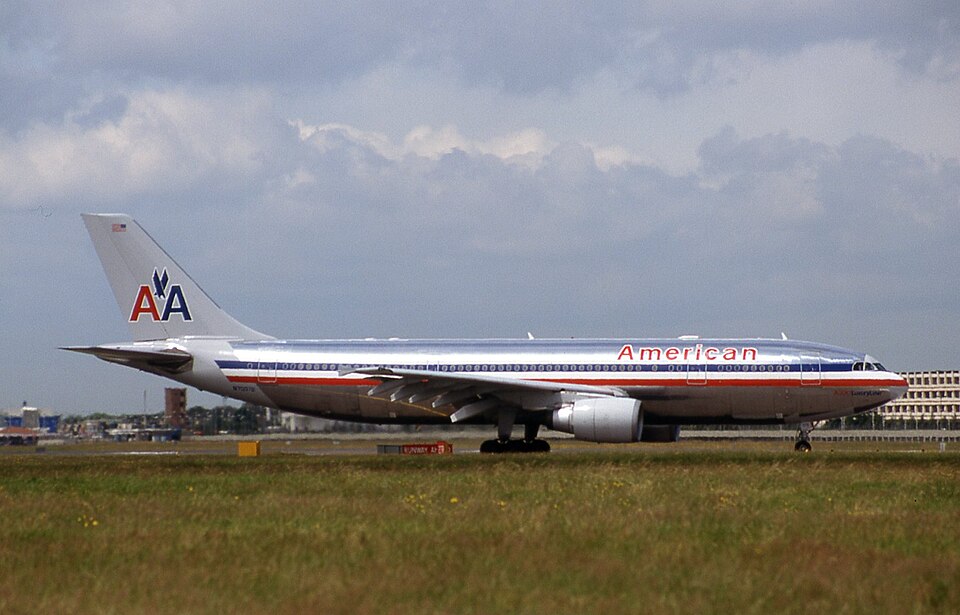
History of Flight
The flight was a scheduled public transport service from London Heathrow to Boston, with 11 crew and 174 passengers. During climb through FL 100, the first officer observed a right 'Oil Filter Clog' caution light that initially flickered then became steady. The crew checked other engine indications and found no abnormalities. The commander leveled the aircraft at FL 150 and, following emergency drills, retarded the No 2 throttle to idle. After three minutes at idle, the caution remained steady, and the crew decided to shut down No 2 engine. They declared an emergency and returned to Heathrow, landing on Runway 27 Right at 1230 UTC. The aircraft weight on landing was 368,000 lb, exceeding the normal maximum landing weight of 308,700 lb but within the maximum take-off weight of 378,590 lb. The crew selected autobrakes to 'LO' and used slat 15/flap 20 with Vref 166 kt. Touchdown was smooth at approximately 165 kt, and the crew used reverse thrust on the left engine. The autobrake disconnected after manual braking. After clearing the runway, the fire service reported smoke from the right main gear; a small grease fire was controlled and passengers disembarked normally.
Flight Recorders
The cockpit voice recorder (CVR) captured the landing and initial conversations with fire crew. The flight data recorder (FDR) showed a touchdown speed of 173 kt, reverse thrust selected 2 seconds after touchdown, and a maximum longitudinal deceleration of 0.413 G. Rudder deflection increased right after 100 kt, indicating yaw. The aircraft turned off the runway about 2 minutes after touchdown.
Engineering Investigation
Examination of the No 2 engine revealed no external damage or debris in the oil. The scavenge oil filter differential pressure switch had shorted internally, likely due to water contamination. After replacement, the system operated normally. The right main landing gear had all four tyres deflated, brake units overheated, and soot on wheels and bogie. Melted grease from axles indicated a small, limited fire of melted grease, with no significant damage to tyres.
Discussion
The incident involved a spurious oil filter caution leading to engine shutdown and an overweight landing. The brake overheating was influenced by the high landing weight and asymmetric braking due to yaw. The aircraft manufacturer noted that crosswind can cause temperature differences between left and right brake legs. The operator observed that over-lubrication of main landing gear wheel bearings can occur, as displaced grease remains hidden. The design requirements for wheel brake energy absorption did not account for overweight landings or asymmetric braking; certification focused on rejected take-offs with equal energy sharing.