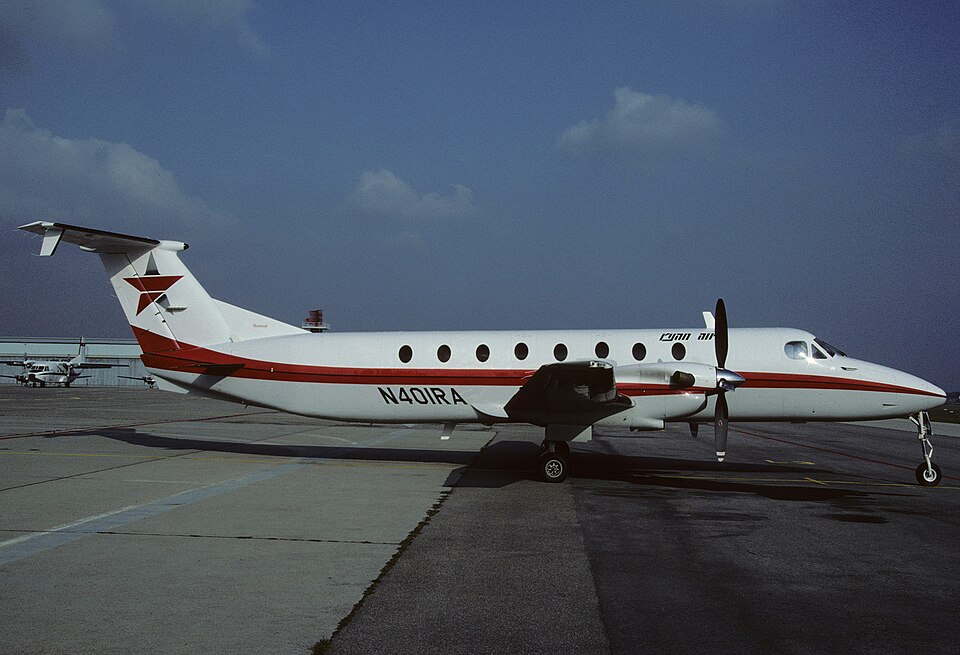
Impact and Rescue
The aircraft, operating as Ryan flight 103, crashed short of runway 03 during arrival. The fuselage remained intact upon impact, but the belly structure was compressed, and vertical deceleration forces exceeded the design capability of the seats. Rescue personnel experienced difficulty shutting off the aircraft's electrical power, which delayed the removal of the first officer from the aircraft.
Weight and Balance
Investigation revealed that the aircraft was loaded with approximately 600 pounds more cargo than the first officer had requested. The center of gravity was calculated to be 8 to 11 inches behind the allowable aft limit. The flight crew did not comply with company and Federal Aviation Administration procedures in computing the center of gravity.
Ice Accumulation
During the flight, up to 3/8 inches of ice accumulated on the aircraft's leading edges. Flight tests showed that there would be no significant difficulty in controlling the aircraft with up to 1.5 inches of ice on the leading edges, but static stability would deteriorate during flap extension with an aft center of gravity configuration.
Flight Control Evidence
There was evidence that the crew lost control of the aircraft as the flaps were lowered. The right flap actuator was found in the 7 to 12 degree position, and the stabilizer trim was found at the full nose-down position.
Probable Cause
The official probable cause of the accident was the failure of the flight crew to properly supervise the loading of the airplane, which resulted in the centre of gravity being displaced to such an aft location that airplane control was lost when the flaps were lowered for landing.