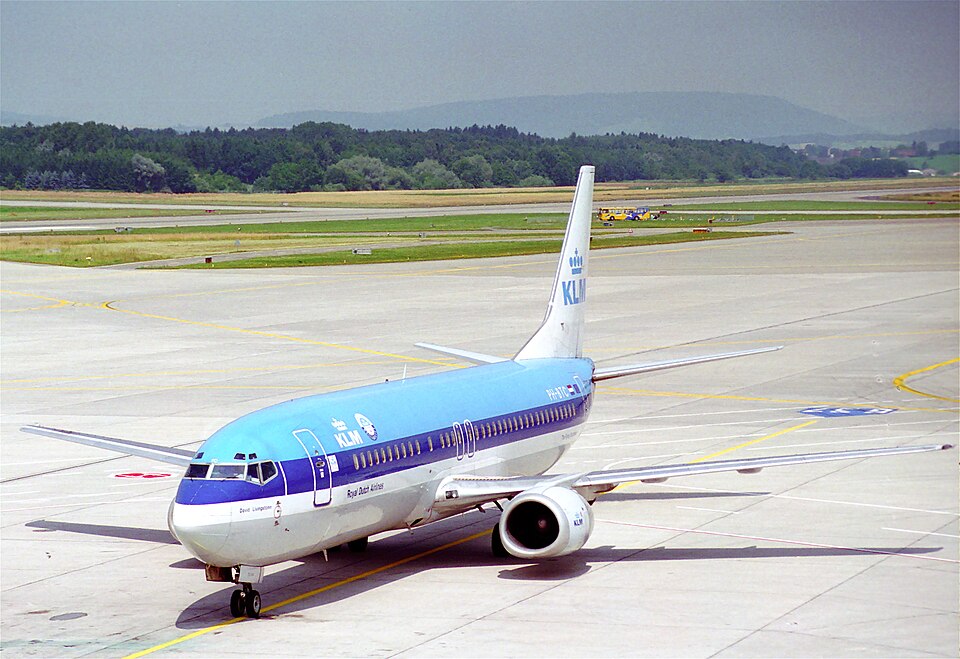
Departure and Bird Strike
KLM Flight 1673 departed from Amsterdam at 16:46, bound for Barcelona. During takeoff from runway 18L, the aircraft experienced a bird strike when a bird collided with the nose landing gear. The gear retracted without abnormal cockpit indications, and the crew reported the impact to air traffic control. The flight continued normally to Barcelona.
Landing and Runway Excursion
The flight landed on Barcelona's runway 25R. After the nose landing gear made contact with the runway, the aircraft began to veer left. The deviation continued, causing the aircraft to leave the paved surface and enter an area of soft sand where construction work was underway. The nose landing gear leg collapsed rearward, and the left main landing gear leg detached from its fittings shortly before the aircraft came to a stop near the edge of a rain drainage canal. The final position was approximately 1606 meters from the runway 25R threshold and 84 meters left of the runway centerline.
Damage and Findings
The aircraft sustained damage to the landing gear. The condition of the runway strip, due to airport construction, increased the extent of the damage.
Probable Cause
The official investigation determined that the accident probably occurred because a bird strike during takeoff broke one cable of the nose wheel steering system and jammed the other. This caused the nose wheels to be rotated left during landing, resulting in a leftward veer that full rudder deflection could not arrest as the aircraft decelerated. Subsequent braking and crew actions did not prevent leaving the runway. The cable that broke was severely worn locally, attributed to incorrect application of grease during maintenance. Despite the flight crew's training and experience, they could not quickly identify the cause of the deviation or keep the aircraft on the runway.