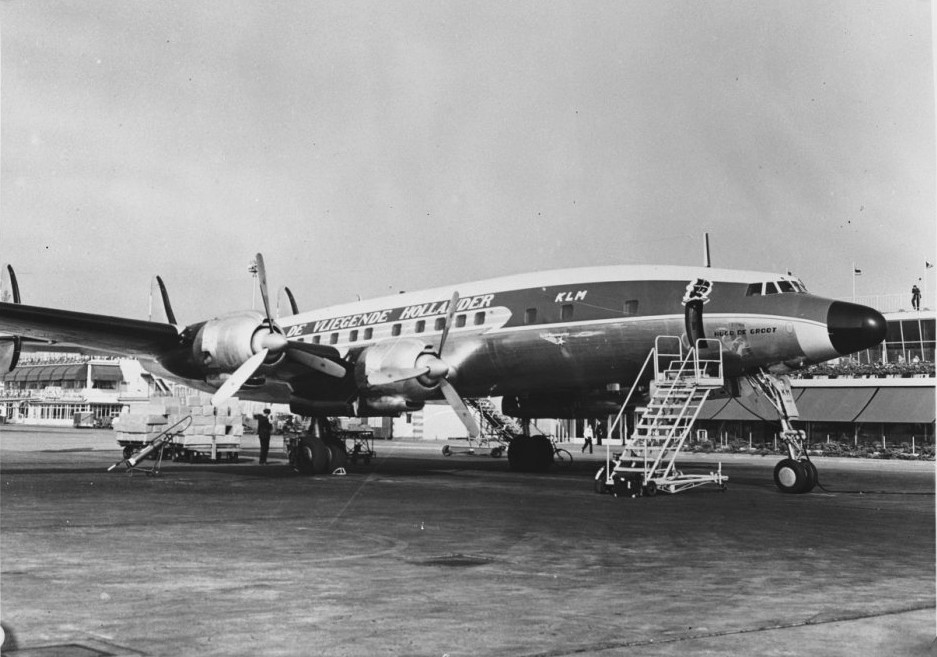
Incident
The aircraft was cruising at an altitude of 4,000 meters during nighttime. The crew made contact with air traffic control to report their position and indicated that all was well on board. Approximately ten minutes later, the aircraft vanished from radar screens and crashed into the Atlantic Ocean roughly 180 kilometers northwest of the Irish coast.
Search and Recovery
Search and rescue operations were dispatched to the scene. Debris and bodies were recovered in the early morning hours. After several days, all search operations were suspended, and all 99 occupants of the aircraft were considered deceased.
Investigation Findings
The investigation board determined that the cause of the accident could not be established with certainty based on available evidence. The possibility of a bomb explosion was investigated but yielded no conclusive supporting facts. The board attributed a high degree of probability to a hypothesis that the accident was caused by an overspeeding of one of the outboard propellers, resulting from oil pollution after a gear was damaged when the supercharger of the corresponding engine was accelerated. This likely occurred close to the time of the accident.
The overspeeding may have been caused by metal particles obstructing regulator valves, leading to a decrease in propeller pitch and preventing the propeller from being feathered. This condition could have provoked a flight disturbance that could only be corrected by prompt and powerful manipulation of aileron and rudder controls. Due to the rapid development of the malfunction and the time required to recognize its nature, the crew may not have been able to intervene early enough to restore controlled flight.
The board found no grounds to attribute the presumed malfunction to negligence by maintenance personnel or incorrect actions by the crew, nor to fault the crew's piloting after the malfunction occurred.
Probable Cause
The official probable cause states that the board cannot establish the cause of the accident with certainty. However, a high degree of probability is assigned to the hypothesis that the accident was related to an overspeeding of one outboard propeller due to oil pollution following gear damage from supercharger acceleration, leading to a flight disturbance that could not be corrected in time.