Accident
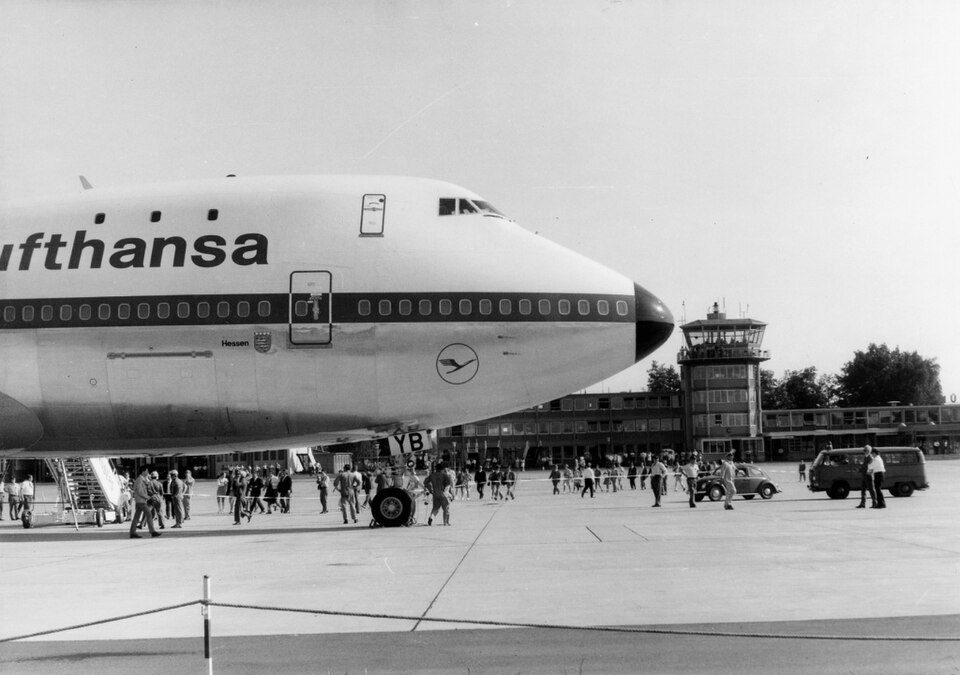
The aircraft named 'Hessen' departed from runway 24 after lifting off at a speed of 145 knots. During initial climb at an altitude of 100 feet, the airplane stalled and struck the ground 1,120 meters past the runway end. It then became airborne again for approximately 114 meters before striking an embankment and crashing in flames 340 meters further. The aircraft was destroyed by impact forces and a post-crash fire.
Occupants
There were 55 passengers and 4 crew members onboard. All 59 occupants were killed, and 98 other occupants sustained injuries.
Probable Cause
According to the official investigation, the probable cause was wrong takeoff configuration on the part of the flying crew. The accident was caused by the crew initiating a takeoff with the leading edge flaps retracted because the pneumatic system which operates them had not been switched on. This resulted in the aircraft becoming airborne in a partially stalled condition, which the pilots did not identify in the short time available for recovery. Major contributory factors included the lack of warning of a critical condition of leading edge flap position and the failure of the crew to satisfactorily complete their checklist items.