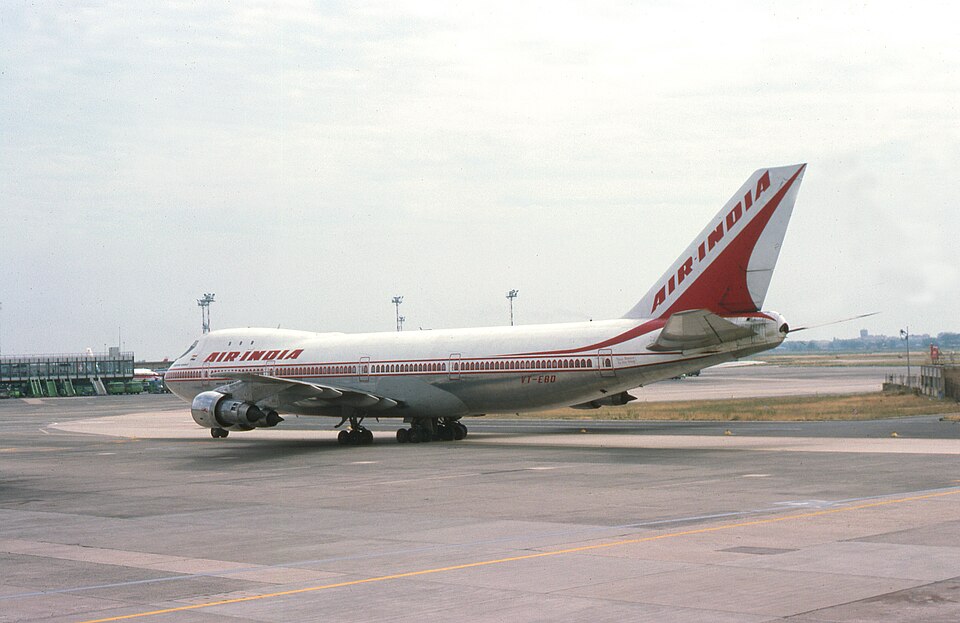
Accident
After takeoff from Bombay-Santa Cruz Airport runway 27, the aircraft climbed at night to an altitude of 2,400 feet. The captain contacted air traffic control and wished a Happy New Year, then received clearance to climb to 8,000 feet. He initiated a right turn in accordance with departure procedures. Once the turn was completed and the aircraft was leveling, the captain noticed that his Attitude Director Indicator (ADI) still showed a right-bank indication. The copilot confirmed that his own ADI was correct, and the flight engineer noted a discrepancy between the captain's ADI and the third ADI system. Despite these confirmations, the captain began a left turn, believing the aircraft was still in a right-bank attitude. The aircraft entered a left bank, which increased to 40°, then to an excessive angle of 108°, at which point control was lost. From an altitude of 2,000 feet, the aircraft entered a dive and crashed into the Arabian Sea. The airplane disintegrated on impact, and all 213 occupants were killed. Most debris was found in shallow water approximately 3 km offshore.
Investigation
The investigation determined that control was lost while the pilot-in-command was flying over the sea by night without visual references to the ground. The official findings attributed the loss of control to the captain's irrational control wheel inputs following his complete unawareness of the aircraft's attitude after his ADI malfunctioned. The crew failed to regain control using other flight instruments, including the standby horizon indicator. The captain did not determine the aircraft's attitude using the associated flight instruments. The copilot failed to monitor the flight instruments and did not assist the captain in ascertaining the attitude.
Probable Cause
The probable cause of this accident was due to the irrational control wheel inputs given by the captain following complete unawareness of the attitude of the aircraft on his part after Attitude Director Indicator (ADI) had malfunctioned. The crew failed to gain control based on the other flight instruments. He had failed to determine the attitude of the aircraft with the associated flight instruments including Standby Horizon Indicator. The co-pilot had failed to monitor the flight instruments and did not render any assistance to the captain in ascertaining the attitude of the aircraft.