History of the Flight
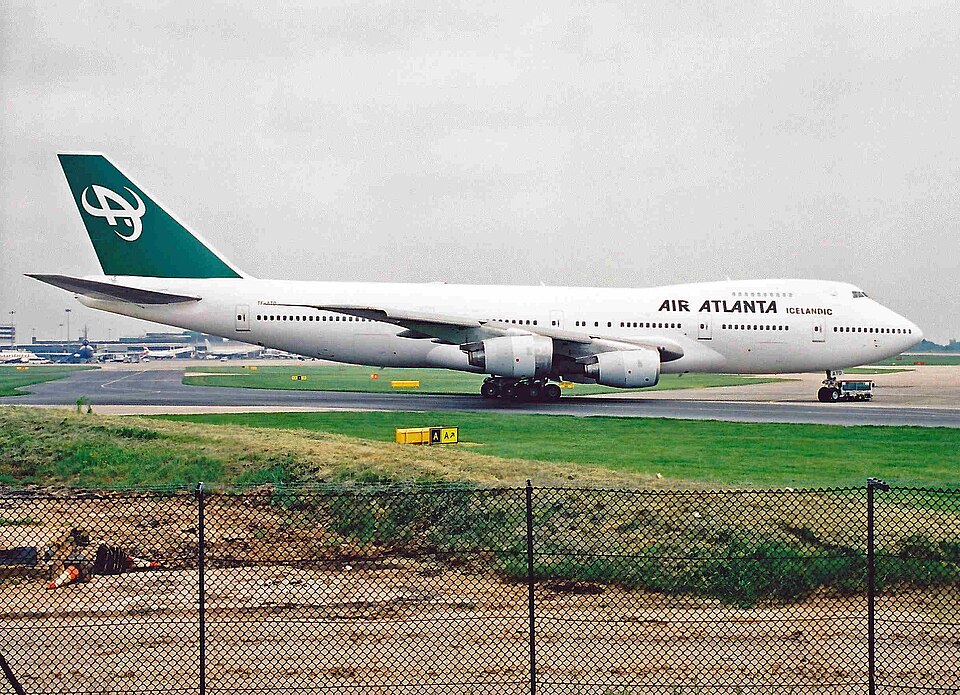
The aircraft departed Calgary Airport at 2220 hrs on 15 October 2002 for a charter flight to Teesside Airport, UK. The flight crew comprised two pilots and a flight engineer. The commander was the handling pilot. An uneventful North Atlantic transit was made at FL350. The crew briefed for an ILS approach to Runway 05 at Teesside, noting the short, wet runway. The commander calculated the approach speed (VAPP) as 146 kt based on the flight manual. The aircraft was configured for landing with 30° flap, gear down, and medium autobrake set. The autopilot was disengaged at 1,500 feet, with airspeed at 142 kt, 4 kt below VAPP. At 200 feet, airspeed dropped from 144 kt to 132 kt in four seconds, and the aircraft descended half a dot below the glideslope, activating the GPWS glideslope warning. The commander corrected, but at 40 feet the co-pilot called attention to the speed, which had reduced to 129 kt. The aircraft touched down heavily, deploying speed brakes and reverse thrust. It stopped by Taxiway B after a landing distance of about 4,400 feet. Post-flight inspection revealed tail contact with the runway.
Meteorological Information
At 0600 hrs, an area of low pressure in the southern North Sea produced moderate northeasterly airflow over Teesside. Rain showers were in the vicinity at the time of the accident. Visibility was 20 km, reducing to 7 km in showers. Wind at the runway 05 threshold backed from 354° to 349° and reduced from 17 kt to 11 kt at 0631 hrs, remaining steady until 0636 hrs.
Examination of the Runway and Aircraft
Tyre marks began about 70 metres from the start of the runway, indicating touchdown slightly to the right of centreline with a small left bank. A 17-metre scrape mark of paint and aluminium dust started 28 metres before the first tyre mark, located to the right of centre, consistent with a left yaw (sideslip to the right). The rear toilet drain mast had been flattened, and the left cabin outflow valve was ground down. The right valve was undamaged, confirming the left roll attitude. Damage to the underside of the rear fuselage extended over 28 feet, reaching as far as the rear pressure bulkhead. Some minor frame damage was found. The forward limit of damage was 40 feet aft of the wing gear. The slant distance between the rear wing gear wheels and the aft limit of fuselage damage was about 70 feet, while the distance from the start of the scrape mark to the first tyre mark was 28 metres, indicating that the rear fuselage contacted the ground fractionally before the wheels. The grounding line angle was approximately 12°. Scratches indicated a yaw angle of 8.25° left of the ground track. Hydraulic and flight control systems functioned normally during post-event testing.
Pitot/Static System Testing
While being repaired in Amsterdam, pitot/static system tests found leaks in the auxiliary static systems, but these are not connected to the altimeters or airspeed indicators. No leaks were found in the main systems, and altitude and airspeed indications were within limits.
Recommended Landing Technique
A manufacturer's Operations Manual Bulletin (71-4, reissued 79-2) advised initiating the flare at about 30 feet, with a touchdown attitude of about 5°. Fuselage contact occurs at approximately 10° pitch with compressed oleos, leaving about 4 feet of clearance. The margin can reduce to zero if airspeed decreases 10–15 kt below VREF before touchdown. The bulletin emphasized proper altitude, airspeed, rate of descent, and thrust setting at flare initiation.