Background
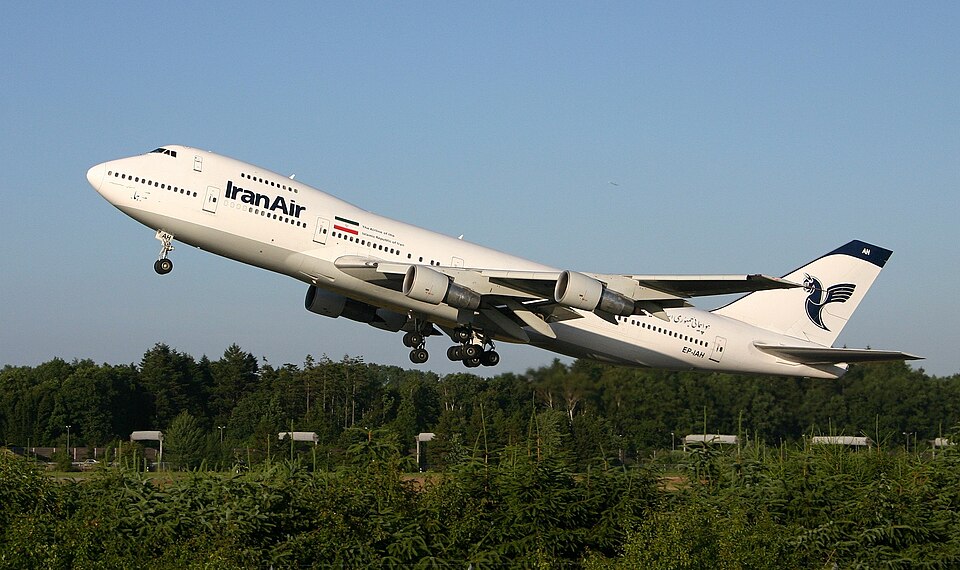
The aircraft involved was a Boeing 747-286B, registered EP-IAH, manufactured in 1977 and powered by four Pratt & Whitney JT9D-7F turbofan engines. It was operating a public transport flight with approximately 25 crew and 295 passengers. No injuries were reported.
Incident
Boarding was complete and the aircraft was ready to depart from Stand M30 at Terminal 3. The handling agent's airbridge controller, qualified per Airport Authority requirements but unfamiliar with the specific airbridge type at that stand, attempted to back the airbridge away from Door 2 Left. Concerned about the proximity to the wing root, she turned the drive axle to avoid hitting the wing. However, applying reverse drive caused the airbridge head to move left along the fuselage side.
A ramp crew member noted the drive axle's orientation and advised the controller to stop and seek assistance from engineering. An inspection revealed scratches on the paintwork below Door 2 Left. Despite this, the controller made another attempt to realign the axle and retract the airbridge, which dented the fuselage skin. She then sought help from the handling agent's airbridge training officer. During the subsequent retraction attempt, the airbridge's front punctured the pressure hull. Airport engineers arrived but declined to assist, fearing further damage. The aircraft was withdrawn from service and a substitute was flown in.
Airbridge Types at Heathrow
Two main categories exist: Rail Drive and Apron Drive. The controller was familiar with an older Apron-drive type featuring an axle position indicator and a forward-facing console. The airbridge at Stand M30 was a newer Apron-drive type with different geometry and controls. It lacked an axle position indicator; axle orientation was determined via a CCTV monitor, which was difficult to see clearly when the airbridge was extended. The monitor's image was small, indistinct, and barely visible in bright sunlight.
Conditions
The weather was very fine at the time of the incident. The sun shone directly through the airbridge head's sideways-facing window into the controller's face when she faced the control panel, making the monitor image barely visible.