Incident Overview
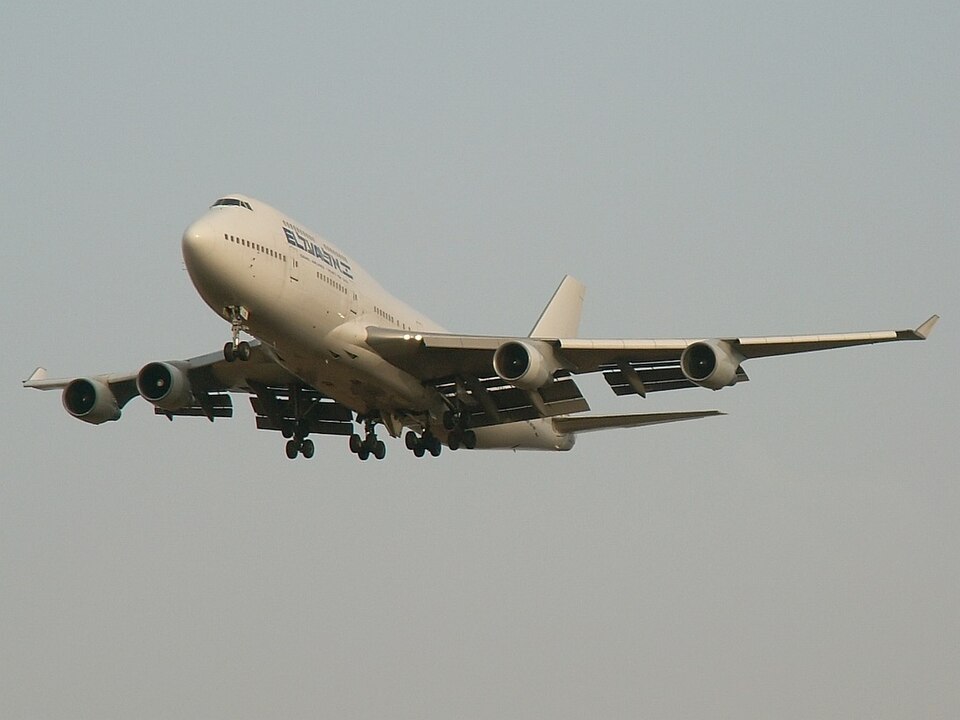
On 10 January 2006, at 1220 UTC, a Boeing 747-412 (registration 4X-ELS) was conducting a public transport passenger flight into London Heathrow Airport. The aircraft was on an ILS approach to Runway 27R, about 14 nm from touchdown, with the autopilot engaged. The flight crew had been instructed by ATC to descend with the glideslope.
Sequence of Events
The aircraft was established on the localiser in level flight at 4,000 ft. At approximately 8 nm from the runway threshold, the autopilot captured the glideslope and the aircraft began to descend. Shortly thereafter, the flight crew observed that the glideslope indications showed progressively greater 'fly down' commands. The autopilot responded by pitching the nose down. Seconds later, a glideslope failure indication appeared, and the EICAS caution message 'no autoland' was displayed to both pilots. The co-pilot (PNF) attempted to query ATC about a possible glideslope fault but frequency congestion and a misunderstanding impaired communication.
The ATC controller noticed the aircraft's unusually low altitude (about 1,600 ft) and instructed the aircraft to climb, reassuring the crew that the glideslope was serviceable. The aircraft reached a minimum altitude of about 1,200 ft at some 8 nm from touchdown, with a maximum rate of descent of approximately 1,800 ft/min. The commander (PF) disconnected the autopilot and climbed to 1,800 ft. After the glideslope indications appeared normal again, the commander re-engaged the autopilot, which successfully captured the glideslope. A manual landing was completed.
Post-Incident Reports and Investigation
As the aircraft taxied to its parking stand, the flight crew informed ATC of the glideslope fluctuation. Controllers queried subsequent landing aircraft, none of which reported any glideslope issue. The incident was reported by ATC as a 'Level Bust'; the flight crew did not submit an incident report but entered a note in the aircraft's Technical Log. The AAIB did not become aware of the incident until weeks later, by which time the Flight Data and Cockpit Voice Recorders had overwritten the incident flight.
Engineering Findings
After arrival, the aircraft's central maintenance computer was interrogated. It recorded a fault code '22873' at 12:16 hours, relating to an 'ILS BEAM ERROR (FCC)'. The Fault Isolation Manual (FIM) indicated no maintenance action required. The aircraft manufacturer confirmed that this code indicates a loss of the external ILS signal, and the additional diagnostic codes 'L205 and R205' show that both left and right ILS receivers detected the error. For these fault messages to be recorded, the glideslope must have been captured and then an error occurred; deliberately flying below the glideslope after capture would not generate these messages.
A review of the aircraft's technical log entries before and after the incident revealed multiple occurrences of 'no land 3' messages. Troubleshooting actions included swapping FCCs, replacing the left ILS receiver, and suspecting faulty go-around switches. However, it was not determined whether those faults were related to this incident. The only other significant reported defect during December 2005 to February 2006 was an intermittent fault with the heading select switch.
Ground Equipment
The ILS at Heathrow is self-monitoring with backup systems; electronic logs showed no faults on the day of the incident.
Conclusion
The available evidence suggested that an error in the glideslope signal arriving at the aircraft was sensed by both FCCs after autopilot capture. However, ground monitoring equipment showed no fault and no cause could be found for the error recorded on board. The AAIB is not aware of similar incidents immediately before or after this event. The problem was likely either external to the aircraft but experienced only by 4X-ELS, or an unidentified internal fault. The lack of recorded flight data and delayed reporting made further investigation impracticable.