History of the Flight
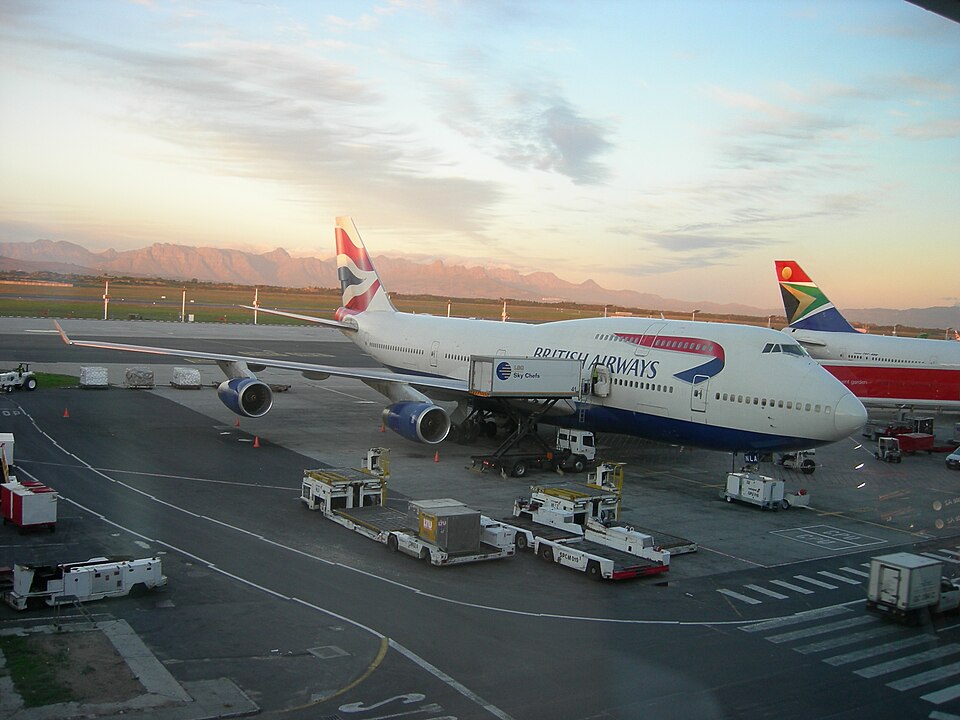
The aircraft, a Boeing 747-436 registered G-BNLA, was arriving at London Heathrow Airport after a flight from Singapore on 29 July 2009. The flight crew consisted of four pilots divided into two crews, with the heavy crew operating the return sector. Before descent, the stand allocation was received via ACARS, indicating Stand 409. The commander, who had not parked at Terminal 4 in 18 months, reviewed the Aerodrome Booklet but found no information for Terminal 4 stands.
The aircraft landed on Runway 27R and taxied to Taxiway 'T' as instructed by ATC, after which the commander took control for the turn onto the stand. The stand was equipped with an Aircraft Parking Information System (APIS), which provides lateral and distance-to-stop guidance when activated by the Turn Round Manager (TRM).
Aircraft Parking Information System (APIS)
The APIS at Stand 409 had been installed 15 years prior. When not activated, the lateral guidance display should remain unilluminated. However, due to a wiring defect in the lateral guidance module, the azimuth guidance board was illuminated despite the system being deactivated. This condition was not detected during routine six-month checks, which did not include verification of unintended illumination.
When the TRM arrived at the stand, he found a number of metal baggage containers incorrectly parked and protruding into the stand area. He attempted to contact HAL Marshalling to have them moved and to request a marshaller, but left the stand to enter the terminal. The commander, taking control, visually checked the stand but did not see the protruding container, likely hidden behind other vehicles. He observed the illuminated lateral guidance and assumed the system was activated.
Turn Round Manager Actions
The TRM, upon hearing the aircraft taxiing onto the stand, returned and attempted to signal the commander to stop using hand signals, which were not seen. He then ran around the front of the stand and activated the emergency stop button. The commander, monitoring the distance bar, did not see it activate and felt uneasy about proximity to the terminal, stopping the aircraft just as the word 'STOP' illuminated on the display.
Damage
Upon shutdown, it was found that the forward left side of the No 1 engine cowling had contacted a baggage container protruding onto the stand. The resulting damage was a minor dent and abrasion to the paintwork. No injuries were reported among the 19 crew and 237 passengers. The aircraft had passed approximately 11 meters beyond its correct stopping point.
Fault History
The APIS logic computer recorded no history of the wiring defect, and no prior reports of the problem existed. The system was scheduled for replacement with a more modern system. The operator's procedures required pilots to ensure the stand is clear before entry, and the illumination of a guidance system does not guarantee a clear stand. The TRM's pre-activation check did not include verifying that all display panels were unilluminated when the system was off.