History of the Flight
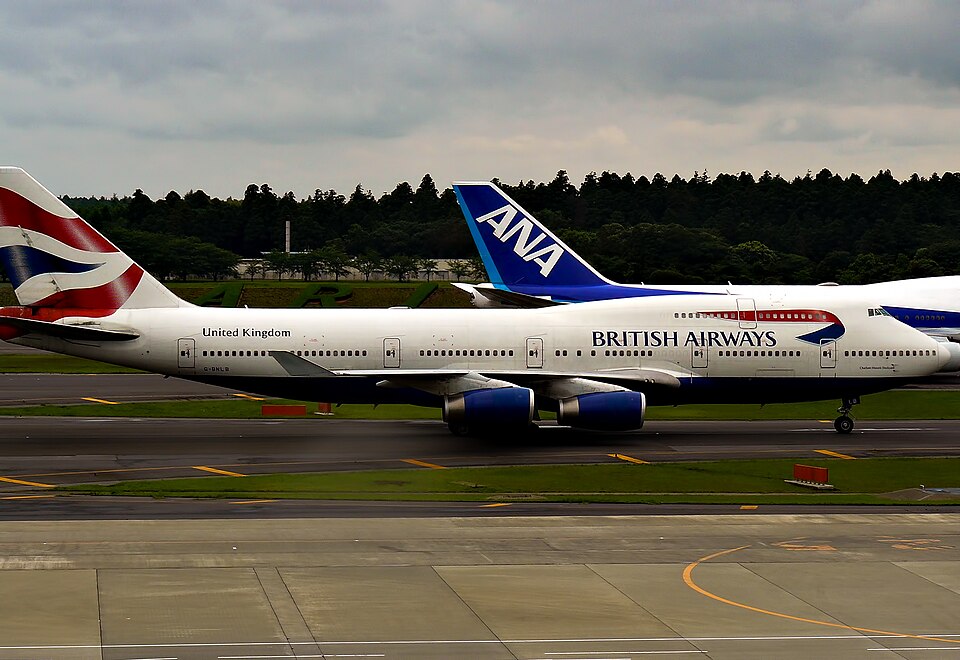
The aircraft, a Boeing 747-436 registered G-BNLB, operated a scheduled flight from Orlando, USA, to London Gatwick on 25 February 2000. After takeoff at 0110 UTC and reaching FL370, the flight deck crew observed fluctuating vertical speed indications on the Primary Flight Displays, varying around ±200 feet per minute. Altitude deviation was less than 100 feet. The crew initially attributed this to clear air turbulence reported in the area. Cabin crew reported some passengers experiencing airsickness.
The commander noticed unusual motion at the rear of the flight deck during his break. He instructed the two first officers to disengage the autopilot, check aircraft trim, and re-engage a different autopilot. The pitch oscillations continued, with vertical speed fluctuations increasing to ±300 feet per minute. All three autopilot systems were used in turn, but intermittent pitch disturbances persisted. Manual handling also showed continued disturbances, with the control column feeling stiff and exhibiting a 'notchy' feel, leading to overcontrolling.
The crew contacted the operator via satellite telephone and were advised of holding delays at Gatwick. Concerned about the pitch control phenomenon during landing, the commander declared a 'PAN' status with ATC, obtaining a priority approach. The cabin crew briefed passengers to adopt the brace position as a precaution. The aircraft landed smoothly on Runway 26L at 0852 UTC.
After landing, smoke was reported in the cabin from door 5L, later attributed to tyre smoke from the auto-brake landing. The Airport Fire Service attended. During taxi, smoke from engine number 4 was observed, and the engine was shut down. The aircraft parked and passengers disembarked after a visual inspection.
Flight Recorder Data
The aircraft was equipped with an Optical Quick Access Recorder and a solid-state FDR. Data showed normal takeoff and climb. At 0250 UTC, approximately 4 minutes after levelling at FL370, a pitch oscillation began, lasting about 5 minutes, with pitch attitude changes of ±0.25° and a period of 15 seconds. Elevator movements of ±0.3° were recorded. Altitude varied between 37,013 and 37,030 feet. Further oscillations occurred; at 0330 UTC, disconnecting the right autopilot caused a pitch-up to 3° and pitch-down to 1.8°, with altitude excursions to 37,071 and 36,960 feet. Subsequent autopilot engagements and disconnections continued. The aircraft began descent at 0816 UTC with oscillations still present. The landing was normal.
FDR data from 55 hours of operation across six flights revealed similar oscillations on four flights.
Control System Description
The 747-400 uses four elevator surfaces for pitch control, operated by control columns connected to a cross-shaft. Cables route to a vertical shaft at the rear fuselage, where pitch feel and autopilot actuators connect. Hydraulic Power Control Units (PCUs) drive the elevators. The horizontal stabilizer trim automatically activates when elevators are deflected for more than 3.5 seconds. Rotary Variable Differential Transformers (RVDTs) detect stabilizer angle, alternating between active and monitoring functions.
Examination and Maintenance Actions
Initial assessment found no defects in the No. 4 engine; smoke after landing was attributed to oil breather and tyre smoke. No fault codes related to pitch control were found. A detailed mechanical examination of pitch control and trim systems revealed no defects. The stabilizer RVDT and flap computer were replaced due to potential unreliable signals. A test flight at 38,000 and 40,000 feet found no pitch control problems, though elevator synchronisation issues were noted and corrected.
After five days of service, recorded data showed similar low-amplitude oscillations persisted. The aircraft was withdrawn, and both inboard elevator PCUs were replaced. The elevator feel computer was found to have fluid contamination and was replaced. A subsequent test flight showed no pitch control faults, and monitored FDR data confirmed no recurrence.
Probable Cause
The investigation did not state a probable cause.
Conclusion
The aircraft was returned to service after component replacements and no further pitch oscillations were detected.