Introduction
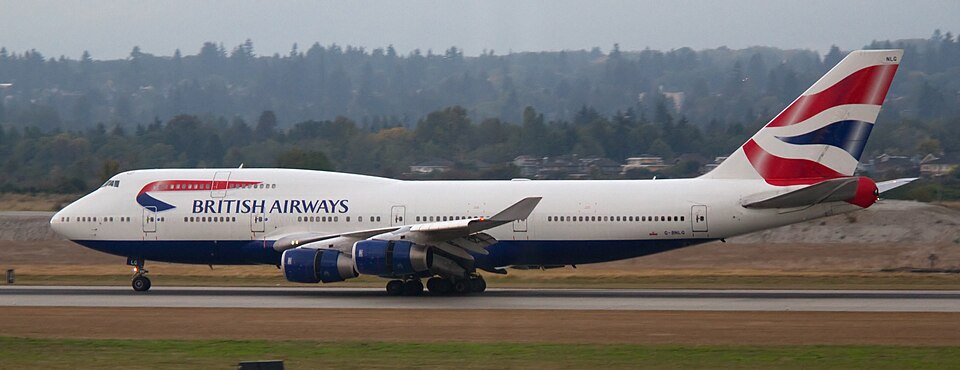
On 20 February 2005, a Boeing 747-436 (registration G-BNLG) operated a public transport passenger flight from Los Angeles International Airport to London Heathrow. The aircraft was powered by four Rolls-Royce RB211-524G turbofan engines and had been manufactured in 1989. The flight crew comprised three pilots: a commander (age 48, with 12,680 total flying hours, including 1,855 on type) and two first officers. There were 18 crew and 352 passengers on board. No injuries were reported, and the engine surge resulted in major damage to the No 2 engine.
History of the Flight
The crew had added an extra 4,000 kg of fuel due to forecast weather and air traffic flow restrictions, resulting in a total ramp fuel of 119 tonnes. The takeoff from Runway 24L at 0524 hrs proceeded normally until, just after the landing gear was selected up at approximately 100 ft above ground level, an audible continuous "BUMP, BUMP, BUMP" sound was heard from the left side. The handling pilot noticed a slight yaw to the left. All three flight crew observed a reduction in indicated No 2 engine pressure ratio and an increase in exhaust gas temperature (EGT), which continued above normal limits and was annunciated in red. Air traffic control reported flames visible down the left side of the aircraft.
Engine Surge and Shutdown
The crew identified the issue as a surge on No 2 engine. The commander, who had previous experience with airborne engine surges, performed memory items from the quick reference handbook (QRH) for "ENGINE LIMIT/SURGE/STALL" by retarding the No 2 thrust lever until conditions ceased at idle. The aircraft climbed through approximately 1,500 ft, and the crew declared a "PAN" to ATC, who cleared them to continue climbing to 5,000 ft and provided radar vectors. After configuring the aircraft clean, the crew attempted to re-advance the thrust lever, but the surge recurred. A further attempt at higher airspeed had the same effect. The crew then shut down the No 2 engine according to the QRH. The heavy first officer inspected the left side of the aircraft from the cabin but could not see damage due to darkness; several passengers reported flames, and one passenger (a pilot) opined it was an engine surge.
The commander, after consulting with the operator's base and reviewing company manuals and the QRH, decided to continue the flight rather than jettison fuel and return to Los Angeles. Factors included an "Eng Out" fuel prediction showing sufficient fuel for destination, the availability of diversion airfields across the USA, and company policy to continue if safe. The crew monitored the situation and cancelled the "PAN" status. The flight proceeded across the USA at FL270 and Mach 0.75. During the Atlantic crossing, the crew faced stronger-than-forecast headwinds and less favorable flight levels, reducing predicted landing fuel. They agreed on a minimum landing fuel of 6.5 tonnes.
Fuel Imbalance
As total fuel decreased below 55 tonnes, the crew noted that with normal fuel feed set to "Tank to Engine", the No 2 tank contents remained constant until the crew manually balanced them by selective use of the override/jettison pumps. Approaching Ireland, total fuel was about 12 tonnes, evenly balanced. However, the FMC predicted only 6.5 tonnes at London, prompting the crew to discuss the situation. In the latter stages, a "FUEL QTY LOW" caution message illuminated, and No 4 tank indicated 0.9 tonnes. The crew completed the QRH procedure, switching all main fuel pumps on and opening all cross-feed valves. Concerned that usable fuel at landing would fall below the minimum reserve of 4.5 tonnes, the commander declared a "MAYDAY" and assumed handling pilot duties. The aircraft diverted to Manchester and landed uneventfully. Post-landing, the auxiliary power unit was started, and the aircraft taxied to its stand. Flight data recorder data indicated fuel on landing was approximately 5.8 tonnes.
Investigation Findings
The AAIB investigation determined that the engine surge was caused by excessive wear to the high-pressure compressor casing. Combined with the standard fuel controller software installed, this resulted in turbine over-temperature damage. No evidence of fuel system malfunction was found, and the fuel system in the selected configuration should have continued to feed the operating engines until all tanks emptied. The investigation recommended that the operator ensure flight crews receive relevant instruction on three-engined fuel handling during initial and recurrent training, and that regulators review the policy on flight continuation for public transport aircraft after an in-flight shutdown. Eight recommendations were made, six relating to flight data recorders.
Probable Cause
The probable cause was excessive wear to the high-pressure compressor casing, which, with the standard fuel controller software, led to an engine surge and turbine over-temperature damage.