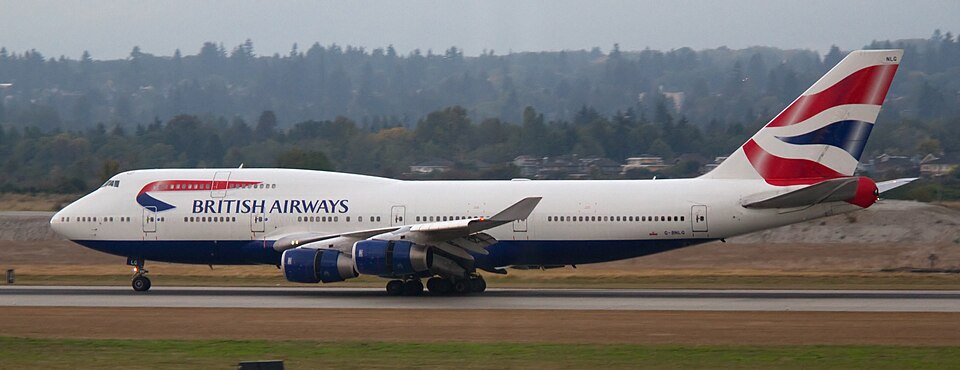
Incident Overview
On 21 April 2004 at 1002 UTC, a Boeing 747-436 (registration G-BNLG) operating a passenger flight from San Francisco to London Heathrow struck a passenger airbridge while attempting to park on Stand 127L. The aircraft had 18 crew and 326 passengers on board; no injuries were reported. The aircraft's left wing leading edge was punctured, and the No. 2 engine ingested debris from the damaged airbridge mechanism.
History of the Flight
After vacating Runway 27R, the flight crew taxied to the allocated stand. The commander, who was the handling pilot, along with the co-pilot and a third pilot on the jump seat, identified the correct centreline markings and confirmed no equipment infringed the parking area. They also checked that the airbridge was parked within a marked box. Using the AGNIS (Azimuth Guidance For Nose In Stands) system, the commander turned onto the stand. As the aircraft neared the stopping position, the commander shifted attention to the PAPA (Parallax Aircraft Parking Aid) board. Shortly after, the aircraft rocked slightly, requiring increased power. At that moment, the jump-seat pilot observed a ground staff member standing in a terminal window with arms crossed, signaling the stop signal. The commander halted the aircraft. After engine shutdown, ground staff indicated concern about the left wing. Fire services arrived and reported the aircraft had struck the airbridge. No emergency evacuation was ordered; passengers disembarked via steps at Door 1L.
Ground Perspective
The dispatcher, on duty since 0530 local, prepared the stand for arrival. He removed an infringing aircraft power unit, identified the correct AGNIS and PAPA, and turned them on. He accessed the airbridge via passenger stairs instead of the usual engineers' stairs due to broken hinges on the door. On the airbridge, he raised it to an appropriate height for the expected Boeing 747-400. When the aircraft taxied past, the dispatcher expected it to slow once the second passenger door passed the airbridge. When it did not, he realized a collision was imminent and ran back up the airbridge just before impact. After escaping, he crossed his arms in front of a terminal window to signal the aircraft to stop, which it did, and then contacted emergency services.
Engineering Examination
The 1989-manufactured aircraft (serial number 24049, first registered 23 Feb 1990) was found correctly aligned with the centreline markings but stopped a few feet short of the B747 stop mark. The airbridge's self-levelling mechanism had penetrated the wing leading edge by about one to two feet, inboard of the No. 2 engine. The airbridge rotated and moved backwards, with skid marks indicating a potential contact zone of about 10 feet if the aircraft had been correctly stopped. The airbridge was parked in a circular box intended for smaller aircraft, not the rectangular box for B747 operations.
The wing leading edge skin was penetrated, with a hole about one by one and a half feet, including damage to composite skin behind the leading edge. No wing systems or primary structure were damaged. The No. 2 engine suffered impact damage to fan blades and the acoustic liner. Debris in the engine intake and bypass duct included torn and bent grey painted aluminium alloy from the airbridge mechanism, confirmed by material analysis.
Stand Description
Changes had been made to Stand 127's layout to accommodate different aircraft types. The stand was divided into three positions: Stand 127, 127L, and 127R. Two airbridges were provided: one for Stand 127L and one for Stands 127 and 127R. The latter had two parking areas marked on the ground: a yellow square for Stand 127 and a yellow circle for Stand 127R. The airbridge intended for Stands 127 and 127R was found parked in the circular box, which was the correct position for Stand 127R, not for Stand 127.
Lateral guidance was provided by AGNIS units, stopping points by PAPA boards, and emergency STOP signs could be illuminated from ground level.
Analysis from Investigation
The dispatcher stated he had read the Airport Operator's Operational Safety Instruction (OSI) 07/04, issued on 6 April 2004, but did not carry a copy. The instruction referred to a "standard parking box," which the dispatcher interpreted as possibly the circle or rectangle. The dispatcher noted that prior to the realignment, the airbridge was commonly parked in the circle. OSI 07/04 required the airbridge to be parked in the rectangular box after use from Stand 127 or 127R, but this was frequently not done due to time pressures, as noted by another dispatcher. The flight crew had checked that the airbridge was within a box but had no indication it was incorrectly positioned.