History of the Flight
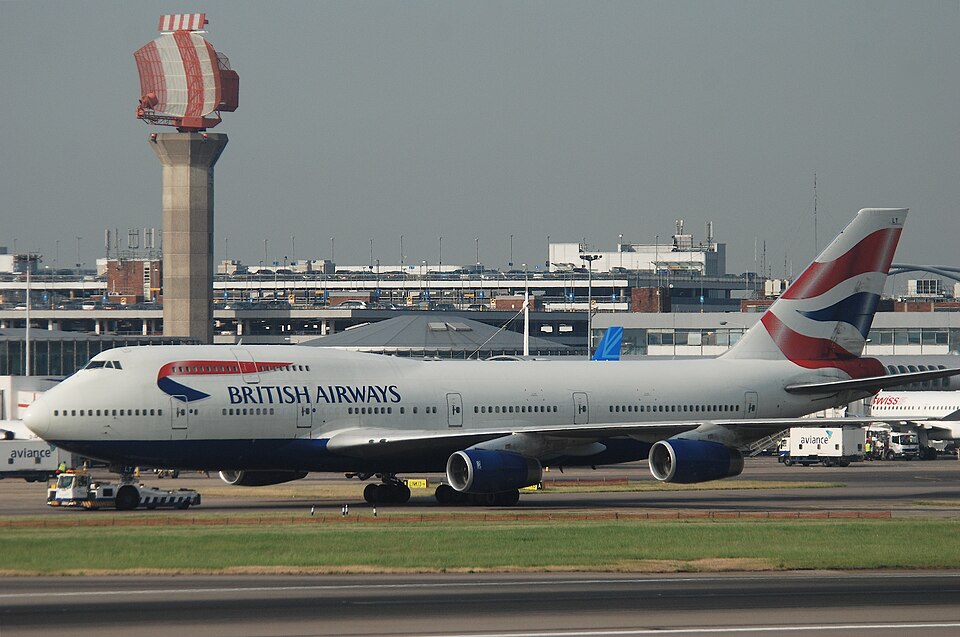
On 23 June 2000, at approximately 0630 UTC, a Boeing 747-436 (registration G-BNLT) was on final approach to London Heathrow Airport at the end of a scheduled passenger flight from New York. When the aircraft was at about 2,000 feet above ground level, the flight crew detected a strong smell of equipment overheating and fine whitish smoke on the flight deck. Suspecting the flight deck humidifier as the source, the crew immediately switched it off. The autopilot was then engaged, and the crew donned their oxygen masks. The smoke did not appear to increase as the approach continued. Air Traffic Control was informed of the problem as the aircraft descended through about 500 feet. After landing, the aircraft was met by Airport Fire Service vehicles and escorted to its stand. There were 16 crew and 295 passengers on board; no injuries were reported, and no damage to the aircraft occurred.
Humidifier System
The aircraft was equipped with two humidifiers that generate atomized water sprays to improve air quality during cruise. One supplied the flight deck, the other the crew rest area. The flight deck humidifier introduced atomized water spray into the air conditioning ducts. The spray was produced by a rotating vaned disc driven by a three-phase, 115-volt AC motor. Water was drawn from a chamber at the base of the unit via an aspiration tube. The system was designed to operate only during cruise when the flight deck is subject to dry conditions. Operation was automatically controlled by a solid-state switch on an Environmental Control System (ECS) Miscellaneous printed circuit card. The logic required signals of 'sufficient airflow' and 'cruise clamp' (indicating cruise phase) from the Flight Management System (FMS). The system should automatically disable via 'descent detect' or 'two hours prior to descent' signals.
Examination of the Flight Deck Humidifier
The flight deck humidifier was removed and examined by the operator's engineering department. The aircraft had a history of humidifier removals and excessive moisture production. No evidence of overheating was reportedly found in the workshop, which was apparently common when such units were returned for similar suspected defects. It was considered that the reported 'smoke' might have been associated with continued operation of the unit during approach, producing excessive moisture in an already humid atmosphere. However, this assessment did not explain the reported smell of equipment overheating.
Action by the Operator
Following the incident, the ECS control card was changed. However, another incident of reported smoke on the flight deck occurred on 5 July 2000. After this second incident, the humidifier system was locked out.
Improved Humidifier Motors
Although humidifiers had a reputation for unreliability, this incident appeared unrelated (based on the workshop findings) to a series of incidents in 1996 reported in AAIB Bulletins 3/96 and 9/96, which led to Safety Recommendation No 96-62. That recommendation focused on motors overheating and generating smoke. The FAA responded by stating that the units were unreliable but loss of function alone did not represent an unsafe condition, and the low number of smoke/fume events did not warrant airworthiness directive action. Design changes being incorporated were expected to improve reliability and prevent smoke and fumes. The FAA classified the recommendation as 'Closed - Acceptable Alternate Action'.
The humidifier manufacturer issued Service Bulletin M01AB-21-07 dated 5 February 1999, introducing a new motor with three automatic reset snap thermoprotectors, one on each phase.
Humidifier Replacement with Ozone Converters
The operator intended to progressively replace humidifier motors with improved ones across the fleet as units were returned to the workshop. However, subsequent to this incident, the operator decided to remove all humidifiers from this fleet and replace them with ozone converters.