History of the Flight
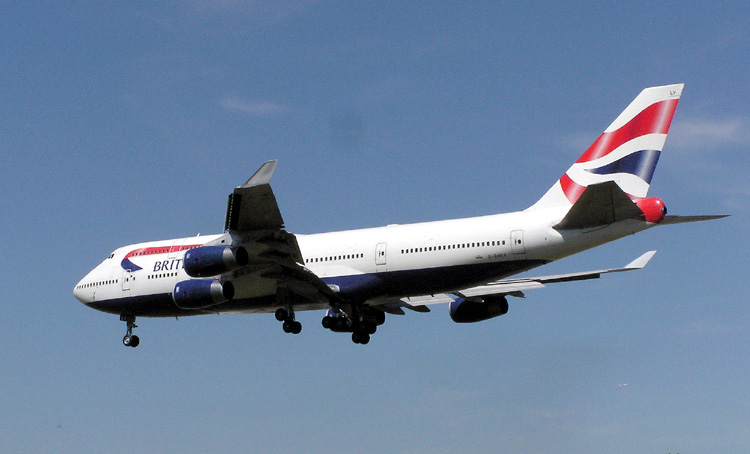
The aircraft, a Boeing 747-436 registered G-BNLV, was parked on stand at London Heathrow Airport on 22 August 2013. The auxiliary power unit (APU) had been running for approximately five minutes when the flight crew received an APU fire warning on the Engine Indication and Crew Alerting System (EICAS). The crew carried out the 'APU Fire' checklist, which involved shutting down the APU and discharging the fire extinguisher bottle into the APU bay. A 'Precautionary Rapid Disembarkation' announcement was made, and the 257 passengers vacated the aircraft via the jetty to the terminal. The Airport Rescue and Fire Fighting Service attended; despite no visible fire at the rear of the aircraft, they sprayed water into the APU exhaust as a precaution. The 17 crew members reported no injuries.
Examination of the Aircraft
When the APU bay doors were opened, the APU starter motor was found hanging from its starter feeder cables because its gearbox mating flange had sheared. Internal parts of the starter motor, including the sprag clutch, had separated and were found on the bay doors. Damage included harm to the APU oil filter cluster mounts, charring to instrument lines, and blistered paint.
The starter motor and APU were removed for strip examination. The damage to the APU was caused by a catastrophic failure of the starter motor. The start contactor was examined; although an internal component had broken, the contactor was fully functional and not a cause of the starter motor failure. A strip examination of the starter motor revealed that the shear neck between the motor and the sprag clutch had failed. In the operator's experience, it would normally be the shear neck on the driveshaft that fails. However, due to excessive internal damage, the cause of the starter motor failure could not be determined, although the shear neck failure would be consistent with a seizure of the sprag clutch.
Operator's Assessment of the Cause
The operator determined that the starter motor had not disengaged after the start cycle, causing the catastrophic failure of the clutch housing and flange mount. This failure allowed hot oil to be released from the starter, which ignited and caused a fire. The cause of the starter motor's failure to disengage could not be determined. The start contactor was determined to have operated normally, but had been the cause of previous starter motor failures. As a safety precaution, the operator decided to embody the Boeing Start Contactor Service Bulletins applicable to all Boeing fleets, an optional modification that replaces the start contactors with a new design.