History of the Flight
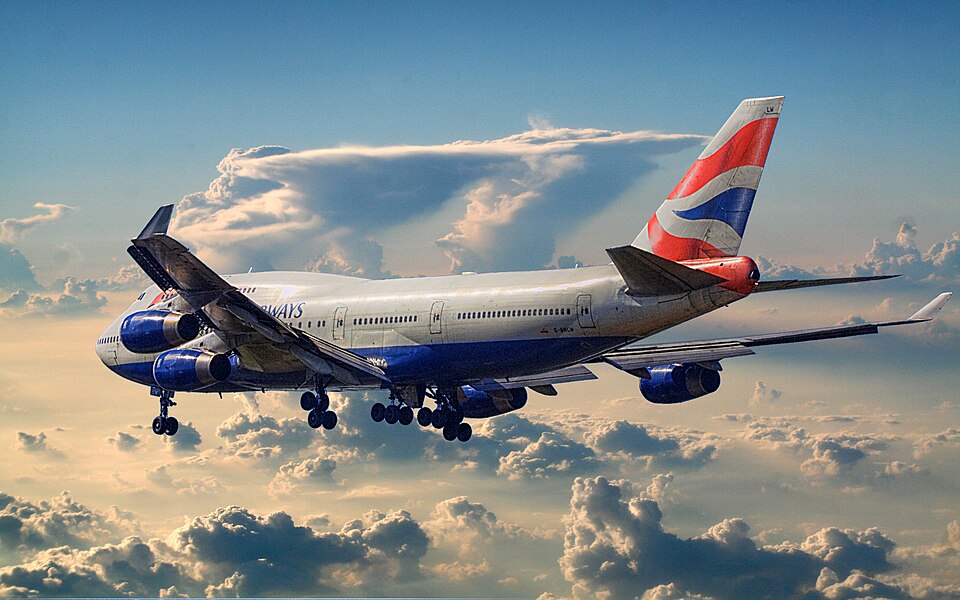
The aircraft, a Boeing 747-436 registered G-BNLW, was on an overnight commercial passenger flight from Dallas/Fort Worth Airport, USA, to London Heathrow Airport. At approximately 0628 UTC, about two hours from the destination, both pilots noticed a smell reminiscent of disinfectant. They checked the cockpit door surveillance system to see if the forward toilet on the upper deck was being cleaned. While they discussed the odor, an upper deck cabin crew member called to report a similar smell. During the conversation, the smell intensified to a strong, acrid electrical burning odor.
Shortly thereafter, a smoke lavatory EICAS message appeared, indicating smoke detection in a lavatory or the cooling duct of the In-Flight Entertainment (IFE) system. The upper deck cabin crew member went to investigate. The commander handed control to the co-pilot and consulted the Non-Normal Checklist (NNC) for the smoke lavatory caption in the Quick-Reference Handbook. The NNC contained no flight crew actions for this message. The flight crew decided not to don oxygen masks or broadcast a distress call.
About two minutes later, the commander received calls from two cabin crew members stating that flames were visible in Galley 4, located between doors 2 left and 2 right. The flames and smoke were emanating from a Video Modulator (VMOD) unit of the IFE equipment, situated in the Cabin Service Director’s (CSD) office in Galley 4. An open communication line was maintained throughout the event.
Response
Cabin crew tackled the fire with BCF extinguishers. One crew member mishandled the first extinguisher, so another took over. Ultimately, five extinguishers were used because the fire repeatedly re-ignited. Eventually, the cabin crew reported the fire was out.
The flight crew consulted the 'Smoke, Fire or Fumes' NNC but did not action any items, concerned that removing utility power would degrade cabin lighting. A senior cabin crew member later confirmed the fire was out. The flight crew then placed the air conditioning packs in high-flow to clear the odor. The VMOD had been removed and secured in a trolley. The event was deemed over by 0640 hrs, and normal cabin service resumed.
Investigation
The VMOD unit was sent to its manufacturer for investigation, but the report had not been received at the time of the bulletin. It was noted that the unit was certified to self-extinguish when electrically isolated. An internal investigation by the operator concluded that it was likely the VMOD had remained powered during the incident, which was the reason for the repeated re-ignition. One cabin crew member believed he had isolated the IFE, but his description suggested he had only acted on the 'seat/pc electrics isolation' part of the procedures, from memory.
The operator’s investigation resulted in several Recommended Actions concerning cabin crew training, including use of checklists, operation of extinguishers, and understanding of the electrical equipment in the CSD’s office. Additionally, the operator is reviewing the flight crew QRH to link annunciated smoke warnings to the 'Smoke, Fire or Fumes' NNC and is reviewing flight crew training for that drill, particularly use of oxygen and the functionality of the Utility Switches.