History of the Flight
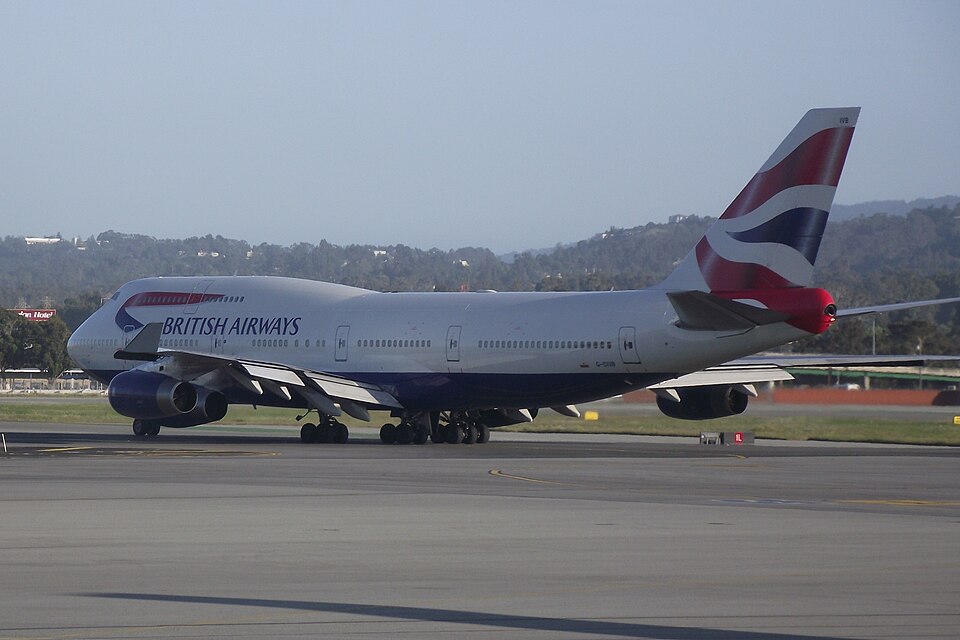
On 11 July 2009, a Boeing 747-436, registration G-CIVB, was preparing for a commercial passenger flight from Phoenix Sky Harbour Airport, Arizona. The flight crew consisted of three pilots: the commander in the left seat, the co-pilot (pilot flying) in the right seat, and an additional pilot on the jump seat. There were 15 cabin crew members and 300 passengers on board. The commander, aged 55, held an Airline Transport Pilot's Licence and had 18,235 flying hours, with 6,529 hours on type.
Pushback began at 0244 hrs from stand B25. The weather was CAVOK with surface wind from 260° at 8 kt, temperature 41°C, dewpoint 2°C, and pressure 1008 hPa. The incident occurred during the hours of darkness.
During pushback, all four Rolls-Royce RB211-524G2-T-19 turbofan engines were started, starting with No. 4, then No. 3. About one minute after the No. 4 engine start, the additional pilot noticed an acrid burning smell. Cabin crew also detected the smell and contacted the flight deck.
Response in the Cockpit
On the flight deck, the fumes intensified, and the pilots donned their oxygen masks. The additional pilot removed his mask to assess the situation outside the flight deck. The co-pilot asked the ground crew headset operator, a company maintenance engineer, if there was an unusual smell outside. The operator reported only a smell of burning rubber from a recently landed aircraft. The flight crew opened the overhead emergency escape hatch to clear the fumes, but this was ineffective.
Return to Stand
At 0250 hrs, the commander decided to return to the stand and disembark passengers. The engines were shut down, and a PAN call was made to ATC requesting steps. The cabin crew were instructed to set doors to manual. The tug was reconnected at 0254 hrs, but because the aircraft had been pushed back through more than 90°, the tug needed to manoeuvre several times to align with the stand, completing by 0258 hrs.
Meanwhile, in the cabin, the situation deteriorated, particularly at the rear. Several passengers left their seats and moved forward. One passenger called out that there was a fire. Two cabin crew members at doors 3L and 4L saw "whitish smoke" coming from a sidewall and discharged a fire extinguisher under the seats. More passengers left their seats; one opened the unattended door 3L. The cabin evacuation alarm was triggered at door 3L, but by whom is uncertain. The crew member at 4R contacted the flight deck, reporting smoke and possible fire. The commander advised ATC of a fire on board and requested emergency services.
Evacuation
The commander, seeing the situation deteriorate, decided to evacuate. He announced for crew to put doors to automatic and then gave the evacuation command, instructing evacuation from the right side due to the proximity of the airbridge. Doors on the right side were opened, and slides deployed successfully. The left upper deck door was opened in error, deploying the slide on top of the airbridge; the cabin crew member guarded the door and redirected passengers, not having heard the evacuation instruction.
At 0258 hrs, passengers evacuated via slides onto the apron. ATC was advised of the evacuation. A fire team entered the aircraft but detected no heat sources or fire damage. Passengers remained on the apron for about 20 minutes before being escorted into the terminal.
Engineering Investigation
A detailed four-day investigation by the operator and aircraft manufacturer found no source of the fumes or smoke. The aircraft was ferried to the main base for further examination and testing, but no explanation was found. It returned to revenue service on 21 July 2009, with no recurrence since.
Recorded Information
The Flight Data Recorder and Quick Access Recorder provided no further insight beyond corroborating engine and pushback activity. The Cockpit Voice Recorder (CVR) continued to run during post-event maintenance, overwriting the event audio. The operator's procedures for preserving flight recorder data were reviewed. The AAIB noted that out of 99 CVR replays in previous investigations, information was lost in 19 cases due to failure to electrically isolate the recorder.