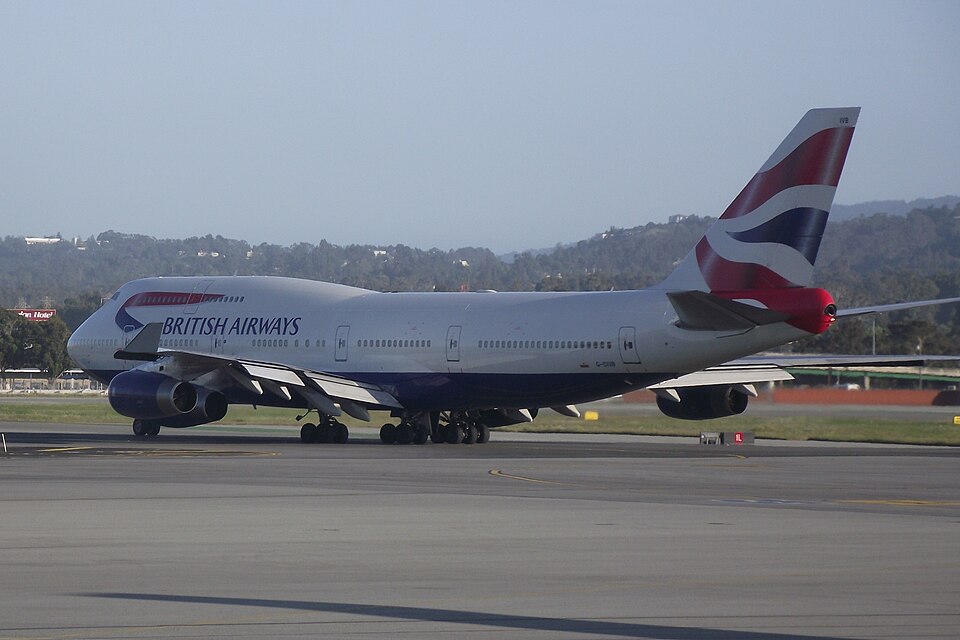
Aircraft and Flight Details
The aircraft involved was a Boeing 747-436, registration G-CIVB, manufactured in 1993. It was powered by four Rolls-Royce RB211-524G2-19 turbofan engines. The flight was a public transport passenger service from London Heathrow Airport to Boston, USA. At the time of the incident, there were 17 crew members and 334 passengers on board. None reported injuries.
History of the Flight
G-CIVB was parked on Stand 408 at London Heathrow's Terminal 4. After boarding was complete, the flight crew requested pushback from ground ATC, which was granted. A towbarless tug was attached to the nose gear, and the headset operator connected to the aircraft's communication system. The initial pushback proceeded without incident, and the commander started the engines. Once the aircraft was positioned on the taxiway facing north, the parking brake was applied, and the commander informed the headset operator. The tug driver began disconnecting the tug using standard procedures.
At that point, ground ATC requested that the aircraft clear Stand 441. The commander asked whether the tug was still attached. The headset operator replied "standby," but the commander mistakenly thought the reply was affirmative and instructed the headset operator to disconnect. The headset operator and tug driver then discussed whether they needed to move the aircraft to clear Stand 414 or 441. The commander asked ground ATC for clarification and was told to pull forward. After some confusion, the headset operator understood the instruction. The commander asked if the tug was connected; the headset operator replied "we are connecting." The commander then asked whether to release the parking brakes; the headset operator said "hold on." However, the commander thought he heard a positive response and released the parking brake. The aircraft rolled forward and struck the tug.
Damage and Injuries
The aircraft sustained damage to the right nose wheel tyre and the nose landing gear upper and lower torsion links. No injuries were reported among crew or passengers. The aircraft was later towed to the engineering base for repair.
Communication Breakdown
The incident was attributed to a breakdown in communication between the headset operator and the aircraft's commander. Non-standard phrases were employed due to the additional requirement to manoeuvre after the initial pushback, leading to misinterpretation and confusion. The Cockpit Voice Recorder recording was overwritten before the circuit breaker was pulled. The operator has since reviewed ground operations and updated standard phraseology for pushback manoeuvres.