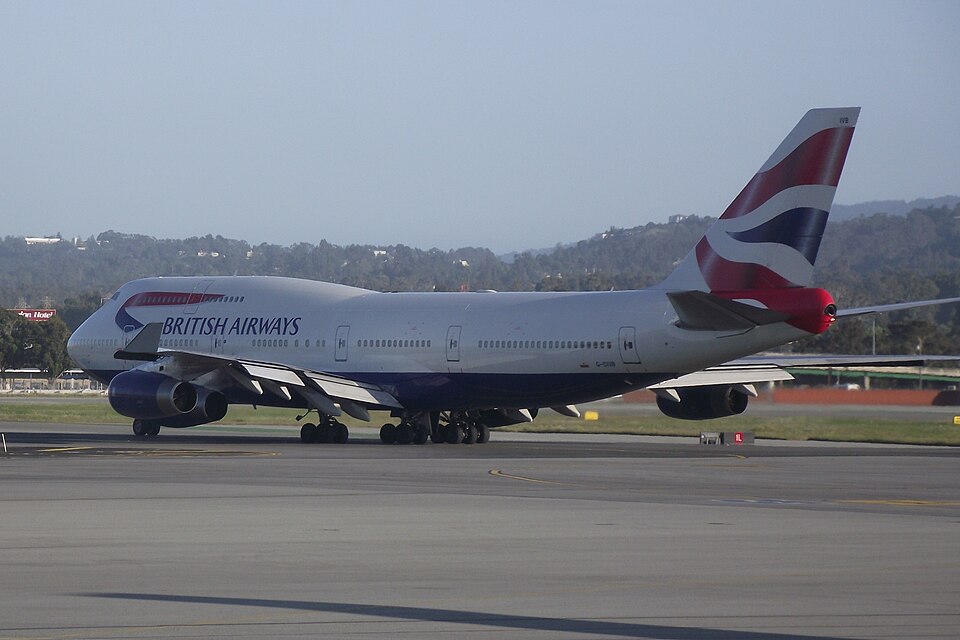
Incident Details
On 23 April 2001, a Boeing 747-436 (registration G-CIVB) operated by a public transport airline was involved in an incident during pushback from stand T4 at London Heathrow Airport. The aircraft was scheduled for a passenger service to Delhi, India. The flight crew consisted of 19 members, and there were 129 passengers on board. No injuries were reported to crew or passengers, and no damage to the aircraft was sustained.
Sequence of Events
After a delay to replace a faulty tug, the pushback commenced with a Tow Bar Less (TBL) tug. Air Traffic Control instructed the aircraft to face south to allow another aircraft to park. The pushback followed normal procedures, including starting all four engines. Due to the longer pushback, the engines had stabilized before the aircraft came to a stop abeam stands T6 and T7. The flight crew completed the memory recall 'after start procedure'.
Once the aircraft stopped, the tug driver set the handbrake, lowered the cradle, and signaled for the aircraft brakes to be set. The brakes were confirmed set via indicator light and headset operator signal. The towbar was disconnected, and the tug reversed approximately 20 feet to close the towing gate. During the 'After Start Checklist', the handling pilot informed the ground crew using non-standard phraseology that four good starts were achieved and expected clearance 'on the left'. The headset operator replied with non-standard phraseology and disconnected before the final visual clearance was given.
The aircraft began moving before the tug was clear. The headset operator tried but failed to reconnect. The tug driver attempted to move the tug but jumped clear, falling to the ground. The flight crew felt a jolt and realized they had collided with the tug. They applied brakes and shut down engines.
Investigation and Findings
The operator's Safety Services team conducted a thorough investigation. The immediate cause was identified as the aircraft starting to taxi before the final visual clearance from the headset operator. Both flight and ground crew deviated from standard pushback procedures and phraseology. The report highlighted several shortcomings in the operator's stated pushback procedures. Several internal safety recommendations were made to amend procedures and prevent recurrence, emphasizing the need for clear and timely verbal and visual communication between flight and ground crew.