Incident Summary
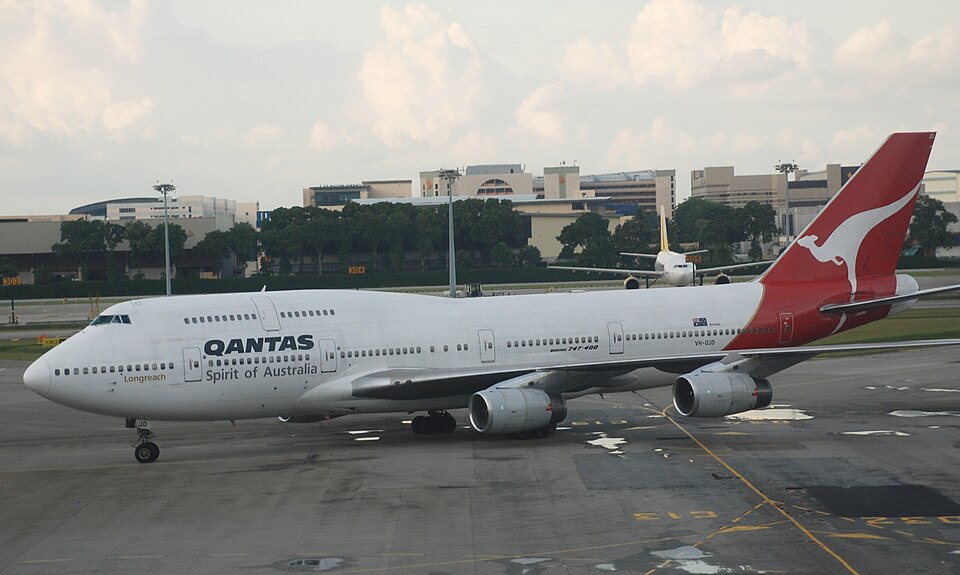
On 28 November 1998, approximately 45 minutes after departing London Heathrow Airport (LHR), the crew of a Boeing 747-438, registration VH-OJD, received an amber 'equipment cooling' message on the Engine Indication and Crew Alerting System (EICAS). After consulting with maintenance, the crew returned to Heathrow, where the aircraft landed without incident. No injuries were reported among crew or passengers.
Findings from the Central Maintenance Computer
Post-flight data from the aircraft's Central Maintenance Computer indicated a fault related to the Electronic Equipment (E/E) bay cooling system ground exhaust valve. A circuit breaker associated with the valve had tripped. The valve, located on the lower centreline near Station 540 in an open bay below the forward cargo compartment floor, normally vents cooling air overboard when on the ground and closes in flight to recirculate air. It also serves as a smoke clearance valve by opening in flight if smoke is detected in the electronic equipment cooling system.
Troubleshooting and Discovery
To expedite dispatch under the Minimum Equipment List, maintenance personnel manually closed the exhaust valve and installed a shorting link to clear the EICAS message, but the warning persisted. Subsequent replacement of the valve, the ECS card, and an associated relay did not resolve the issue. Due to crew duty time limitations, the aircraft remained overnight at Heathrow, allowing further investigation.
Wiring continuity checks revealed an area of damaged wires near the exhaust valve. The damaged wires were hidden beneath a thermal insulation blanket that had been incorrectly installed next to the fuselage skin. A localized fire had occurred between the outer film of the blanket and the fuselage structure, consuming the outer film over an area approximately 18 inches by 6 inches. The underlying insulating foam was thermally singed but did not burn. Condensation water present in the bilge may have limited the fire's extent. The wires, sooted by combustion, were repaired by inserting in-line splices after trimming the damaged ends; the severed ends were not retained for examination.
Insulation Blanket Materials
The aircraft's thermal and acoustic insulation blankets are fabricated from a fire-retardant foam (polyimide foam) encapsulated in a reinforced plastic bag (polyester scrim-reinforced polyester film). The bag's purpose is to protect the insulation from moisture and contaminants. At the time of the incident, the blanket in question had recently been replaced with a lightweight version made from approved materials. The polyimide foam did not burn, but the polyester film bag burned.
Certification Tests
Certification of these materials requires passing vertical flammability tests per Federal Aviation Regulation (FAR) 25.853, Appendix F. However, a recent FAA report questioned the validity of this test, noting that blanket film materials tend to shrink away from the heat source during thermal degradation. The report proposed an alternative flaming cotton swab test as more rigorous for certification. Boeing has since incorporated this test into its material specifications. The report also evaluated two other blanket bag materials: metallised PET film, considered flammable and possibly capable of propagating fire, and Kapton polyimide film, which demonstrated excellent flammability resistance and is being re-evaluated for widespread use.
Post-Incident Observations
When examined one week after the incident, the damaged insulation bag had not been resealed, and evidence of the burnt bag material remained.