Synopsis
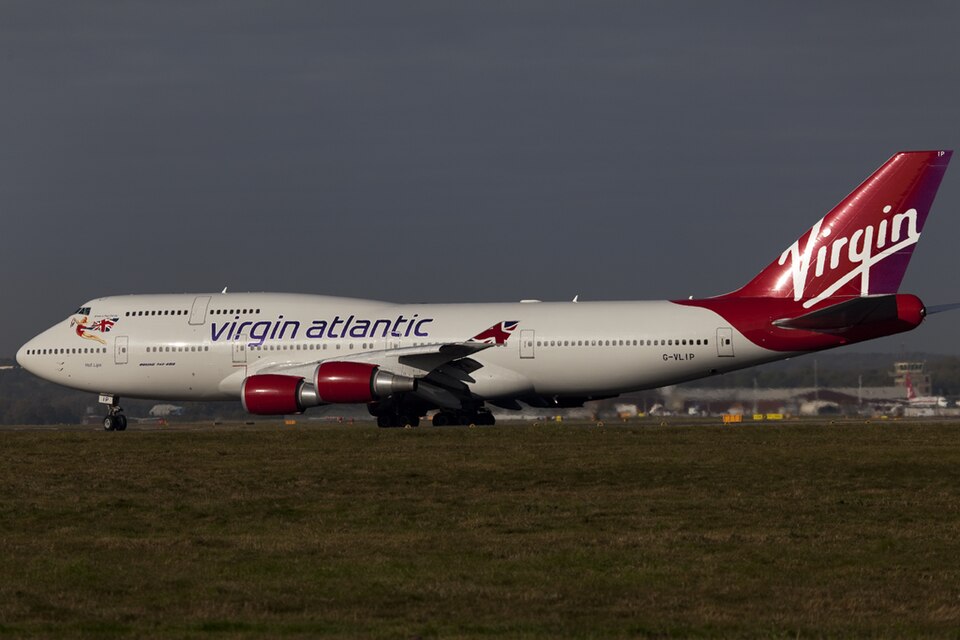
On 20 March 2007, a Boeing 747-443, registration G-VLIP, was landing on Runway 26L at London Gatwick Airport after an uneventful scheduled passenger flight from Barbados. The commander, who was pilot flying, reported that conditions became 'quite rough' as the aircraft entered the flare. The aircraft was observed to roll markedly in both directions during touchdown. The surface wind at the time was 350°/15 kt. The flight crew did not suspect any damage at the time.
Flight Details
The approach was stable until the flare. The aircraft was fully configured for landing with 30° of flap at 142 kt IAS. The commander disengaged the autopilot and autothrottle at or just before the Decision Altitude. The co-pilot noted a crosswind of 20 kt from the right, but the last wind information from ATC, one minute before landing, was 350°/15 kt. During the flare, the right wing dropped significantly, and the co-pilot joined the commander on the controls. The aircraft rolled left and right before touchdown. The landing was firm, and the aircraft touched down on the runway centreline.
Damage and Detection
Later that morning, the next flight crew performing pre-flight checks noticed that the drain mast underneath the No 4 engine was shorter than normal. Further investigation revealed evidence of ground contact on the underside of the engine cowling. Similar damage was found on the No 3 engine cowling. The damage was restricted to the two right engine nacelles: light scoring on engine bay doors, distortion of drain masts, and, in one case, denting of an engine oil pipe and distortion of internal fire-wall structure. The previous crew’s co-pilot confirmed no damage was present during the pre-flight check in Barbados.
Turn-Round and Maintenance
After arrival, the crew disembarked without reporting any abnormal landing. The commander made an entry in the technical log regarding yaw damper EICAS messages but did not mention other faults. During turn-round, one engineer was allocated to G-VLIP while two technicians handled another aircraft. The damage was not immediately noticed during routine checks. The engineer later identified a yaw damper problem and a worn tyre. The damage to the nacelles could have passed undetected unless the displaced drain mast was observed. Had the aircraft been dispatched, the compromised fire-wall integrity would have constituted a dormant fault.