Incident Overview
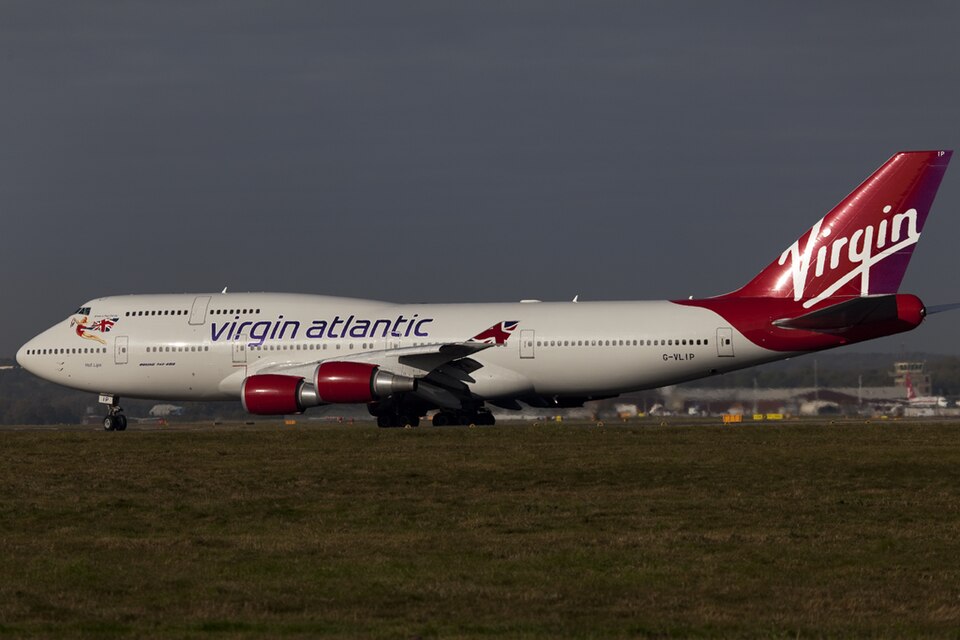
On 5 July 2006 at 0905 hours UTC, a Boeing 747-443 (registration G-VLIP) operated as a scheduled passenger flight from London Gatwick Airport to Antigua, West Indies. The aircraft was parked on Stand 36 Middle and was pushed back onto Taxiway Lima. During the pushback, the right wingtip collided with a blast fence, causing damage to the trailing edge skin of the right winglet. No injuries were reported among the 18 crew and 289 passengers.
Pushback Sequence
The flight crew requested a "long push" from Ground Movement Control (GMC) to allow an approaching aircraft to manoeuvre onto the vacated stand. Five ground personnel were involved: a tug driver, a driver's assistant, two wing walkers, and a ground engineer. The engineer positioned himself on the left side of the aircraft and could not see the right wingtip. The wing walkers accompanied the aircraft until it crossed the stand-taxiway boundary but did not enter the taxiway, as airport regulations were widely interpreted to prohibit pedestrians from entering the manoeuvring area. The tug driver continued pushing the aircraft clockwise along Taxiway Lima until satisfied that G-VLIP was clear of the approaching aircraft.
Collision and Response
Neither the flight crew nor ground personnel were aware of the collision. A passenger seated in seat 50K, a right-side window seat, observed the impact and alerted cabin crew. The flight crew then cancelled the taxi request, reported a technical problem, and arranged for the engineer to inspect the aircraft. A local emergency was declared by GMC, and the Aerodrome Fire and Rescue Service and police attended. The aircraft was towed to Stand 34 for passenger disembarkation.
Damage
Inspection revealed damage only to the trailing edge skin of the right winglet; no further structural damage was found. The aircraft was returned to service after repair.
Contributing Factors and Observations
The collision occurred when the aircraft was pushed back into an area of Taxiway Lima where clearance between the blast fence and the taxiway centreline was insufficient for the aircraft's wingspan. The pushback was conducted in accordance with standard procedures, and the request for a long push was not specifically prohibited by local instructions. The tug driver had no means to determine when the aircraft's extremities entered the restricted area. Ground staff remained under the impression that they were prohibited from entering the manoeuvring area, although the airport operator later stated it would not object to wing walkers entering the taxiway while performing duties. The aircraft fuselage was over the taxiway centreline when the wingtip struck the blast fence.
Follow-Up Action
The airport operator issued a Managing Director's Instruction on 5 July 2006 prohibiting pushbacks into the area of Stands 37 and 38. The ground handling organisation published instructions prohibiting long pushbacks of Boeing 747 and Airbus A330/A340 aircraft. The aircraft operator issued an internal notice discontinuing long pushbacks from Stand 36 due to restricted wing tip clearance. A safety recommendation was made to Gatwick Airport Limited: ground staff involved in pushback operations should be permitted to enter the manoeuvring area adjacent to stands to the extent necessary to provide position guidance.