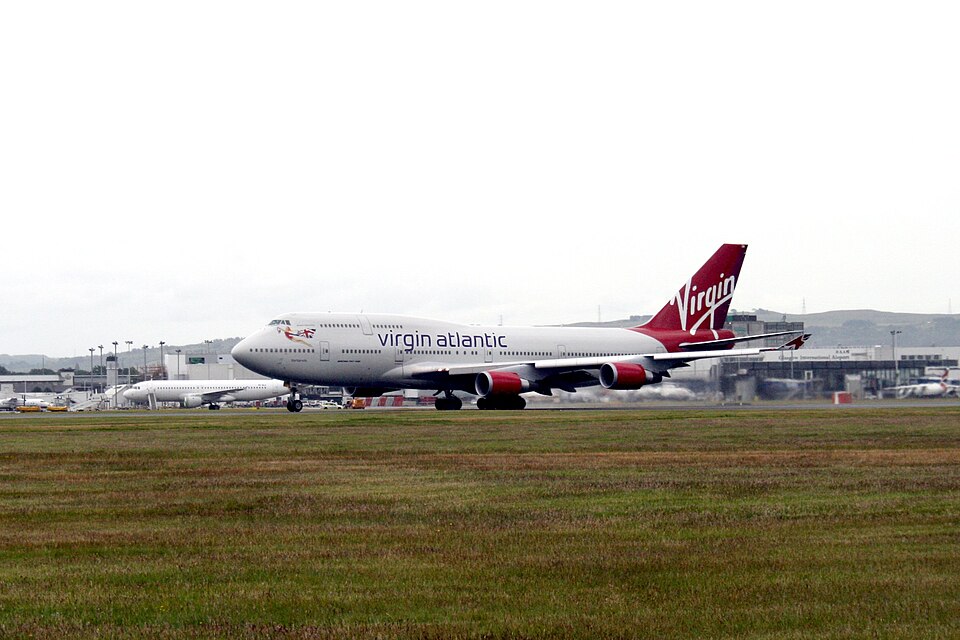
Aircraft and Crew Information
The incident involved a Boeing 747-443, registration G-VROM, powered by four General Electric CF6-80C2B1F turbofan engines. The aircraft was manufactured in 2001. The commander, aged 53, held an Airline Transport Pilot's Licence and had accumulated 14,754 flight hours, including 6,340 hours on type. In the preceding 90 days, he had flown 112 hours, with 52 hours in the last 28 days. There were 19 crew members and 365 passengers on board.
History of the Flight
Towards the end of a transatlantic flight, the crew checked the ATIS for London Gatwick Airport. The weather was good, with visibility greater than 10 km and the lowest cloud at 1,200 ft above aerodrome level. The crew was instructed to take up the hold at 'Goodwood' before commencing an approach and was told to expect a 10-minute delay. Due to earlier route diversions caused by adverse weather and a lower than forecast tailwind during the cruise, the crew had insufficient fuel to accept any delay.
Fuel Situation
The Company Minimum Reserve (CMR) Fuel for the flight was 7.4 tonnes, which comprised Final Reserve Fuel of 3.9 tonnes (required for 30 minutes holding at 1,500 ft) and 3.5 tonnes for the planned diversion. The aircraft landed with 7 tonnes of fuel remaining. The commander estimated that accepting the hold would result in landing fuel close to Final Reserve Fuel.
Emergency Declaration and Landing
The commander advised ATC that he could not accept a delay and was asked if he wished to declare an emergency or divert. The nominated diversion was London Heathrow Airport, which the commander knew would be very busy at that time. With Gatwick operating on a single runway, the commander decided that declaring an emergency was the most sensible option and declared a 'Mayday'. The aircraft was given priority for an approach and landed uneventfully at Gatwick. The landing was achieved with 7 tonnes of fuel, while the Final Reserve Fuel was 3.9 tonnes.
Conclusion
The commander had to decide whether to accept the hold, divert, or declare an emergency. His main concern was that accepting a hold would result in landing with close to Final Reserve Fuel. Given the likelihood of another delay at the alternate, he declared an emergency for his primary destination. This was in accordance with his company procedures, but a 'Pan' call would have been more appropriate.